William W. Potter: A Legacy of Michigan Law and Leadership
William W. Potter was a distinguished American politician and jurist who dedicated his life to the legal and legislative framework of Michigan. From his early days as a law student to his tenure as the Chief Justice of the state's highest court, Potter's career spanned several of the most critical legal offices in the state.
Born on August 1, 1869, in Maple Grove Township, Barry County, Michigan, to Lucien B. and Clarinda L. Potter, he grew up with deep roots in the region. He eventually settled in East Lansing and shared his life with his wife, Margaret D. Richardson.
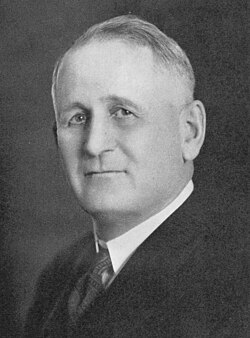
Key Facts
- Born: August 1, 1869, in Maple Grove Township, Michigan.
- Education: Graduate of the University of Michigan Law School (1895).
- Legislative Role: Member of the Michigan Senate for the 15th district (1899–1900).
- Executive Role: Attorney General of Michigan (1927–1928).
- Judicial Peak: Chief Justice of the Michigan Supreme Court (1935).
- Death: July 21, 1940, following an automobile accident.
A Career in Public Service
Early Legal and Legislative Beginnings
Potter's journey into public service began with a rigorous education at the University of Michigan Law School, where he graduated in 1895. Shortly after entering the legal profession, he transitioned into politics, serving as a member of the Michigan Senate representing the 15th district from 1899 to 1900. He succeeded Rebekah Warren in this role.
Following his time in the Senate, Potter continued to serve his home region as the Prosecuting Attorney for Barry County from 1909 to 1912, further establishing his reputation as a formidable legal mind.
Rise to State Leadership
By the 1920s, Potter's ambitions grew toward state-wide leadership. In 1924, he ran as a candidate in the primary for Governor of Michigan. While he did not secure the governorship, his influence continued to rise. Under the administration of Governor Fred W. Green, Potter was appointed Attorney General of Michigan, serving from 1927 to 1928. He succeeded Clare Retan and was eventually succeeded by Wilber M. Brucker.
Judicial Tenure and the Supreme Court
Potter's career reached its zenith when he resigned as Attorney General to accept an appointment as a justice of the Michigan Supreme Court. His expertise and leadership within the judiciary culminated in 1935, when he served as the Chief Justice of the state supreme court.
Personal Life and Final Years
Beyond his professional achievements, William W. Potter was active in several fraternal organizations, including the Freemasons, the Knights of Pythias, and the Odd Fellows.
Tragically, Potter's life was cut short just before his 71st birthday. He died while still in office on July 21, 1940, as a result of an automobile accident. He was interred at Wilcox Cemetery, returning to the land near his birthplace in Barry County.
| Office | Term/Year | Jurisdiction/Role |
|---|---|---|
| Michigan Senate | 1899–1900 | 15th District |
| Prosecuting Attorney | 1909–1912 | Barry County |
| Attorney General | 1927–1928 | State of Michigan |
| Chief Justice | 1935 | Michigan Supreme Court |
Frequently Asked Questions
Where did William W. Potter attend law school?
William W. Potter graduated from the University of Michigan Law School in 1895.
Which districts and counties did Potter serve?
He represented the 15th district in the Michigan Senate and served as the Prosecuting Attorney for Barry County.
When did Potter serve as the Attorney General of Michigan?
He served as the Attorney General from 1927 to 1928 before resigning to join the Michigan Supreme Court.
What was the highest judicial position Potter held?
The highest position he held was Chief Justice of the Michigan Supreme Court, a role he served in 1935.
How did William W. Potter die?
Potter died in office on July 21, 1940, following an automobile accident.