William Shakespeare: The Life and Legacy of the English Renaissance Master
Few figures have shaped the landscape of global literature as profoundly as William Shakespeare. A playwright, poet, and actor, Shakespeare operated at the heart of the English Renaissance, bridging the Elizabethan and Jacobean eras. His work, written in Early Modern English, continues to be performed and studied worldwide, offering timeless insights into the human condition.
Born in the market town of Stratford-upon-Avon, Shakespeare rose from modest beginnings to become the premier dramatist of his age, blending linguistic innovation with a deep understanding of psychology and politics.
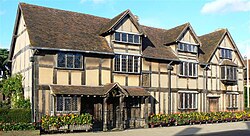
Key Facts
- Born: c. 23 April 1564, Stratford-upon-Avon, Warwickshire, England.
- Died: 23 April 1616 (aged 52), Stratford-upon-Avon.
- Primary Occupations: Playwright, poet, and actor.
- Active Years: Approximately 1585–1613.
- Major Companies: Lord Chamberlain's Men and the King's Men.
- Spouse: Anne Hathaway (married 1582).
- Children: Susanna Hall, Hamnet Shakespeare, and Judith Quiney.
Early Life and Family Roots
William Shakespeare was the son of John Shakespeare and Mary Arden. His early years were spent in Stratford-upon-Avon, where his father was a prominent citizen. The family's social standing is reflected in the coat of arms they were granted, which featured spears as a visual pun on the family name.
![Shakespeare's coat of arms, from the 1602 book The book of coates and creasts. Promptuarium armorum. It features spears as a pun on the family name.[d]](/images/87/4f/874fffc7d98acbe95a052892ce735eea7aa2d26cc50aa718d05eff7c2fd2fd5f.jpg)
In 1582, Shakespeare married Anne Hathaway. Together they had three children: Susanna, and twins Hamnet and Judith. While the details of his early education are not fully documented, his later mastery of language suggests a strong foundation in the classical traditions of the time.
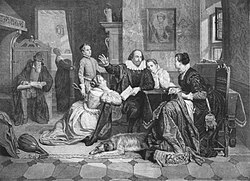
The London Years and Theatrical Career
By the mid-1580s, Shakespeare had established himself in London. He became a founding member of the Lord Chamberlain's Men, a leading playing company that later became the King's Men under the patronage of King James I. This transition marked his move from the Elizabethan era into the Jacobean era.
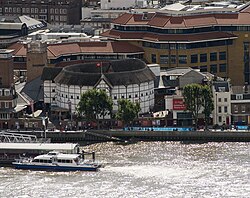
Central to his success was the Globe Theatre, an open-air playhouse on the south bank of the River Thames where many of his greatest works were first staged. As both an actor and a shareholder in the theatre, Shakespeare was intimately involved in the commercial and artistic side of the London stage.
Literary Contributions and Genres
Shakespeare's bibliography is vast, spanning several distinct genres:
- Plays: These are broadly categorized into comedies, histories, and tragedies.
- Poetry: He is renowned for his sonnets—14-line poems with a specific rhyme scheme—as well as narrative poems and epitaphs.
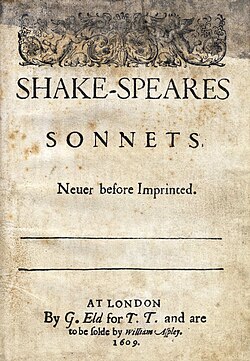
His style is characterized by the use of Early Modern English and a sophisticated command of metaphor and simile, often used to evoke intense emotion or complex philosophical arguments.
![Pity by William Blake, 1795, is an illustration of two similes in Macbeth:"And pity, like a naked new-born babe, Striding the blast, or heaven's cherubim, hors'd Upon the sightless couriers of the air."[201]](/images/e7/5b/e75b3e316d7fa3180ebcb296f4c8b453d0da070fe04ea38a79333bd3ee86008e.jpg)
Later Years and Final Resting Place
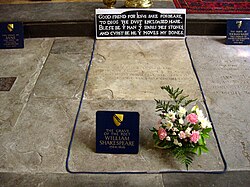
After a prolific career that lasted nearly three decades, Shakespeare retired to Stratford-upon-Avon. He passed away on 23 April 1616 at the age of 52. He was buried in the Church of the Holy Trinity, where he had been baptized as an infant.
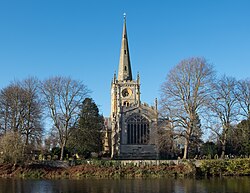
His grave lies alongside those of his wife, Anne Shakespeare, and his granddaughter's husband, Thomas Nash. A funerary monument was later erected in the church to honor his enduring contribution to literature.
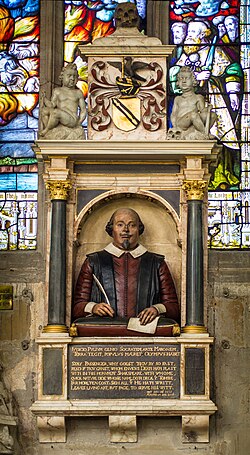
Enduring Legacy and Influence
Shakespeare's influence extends far beyond the 17th century. In 1623, seven years after his death, his colleagues published the First Folio, a collected edition of his plays that ensured his work survived for future generations.
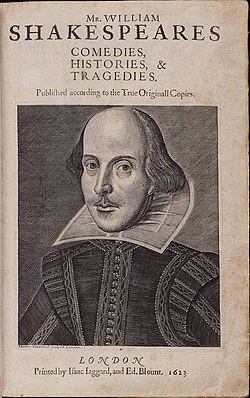
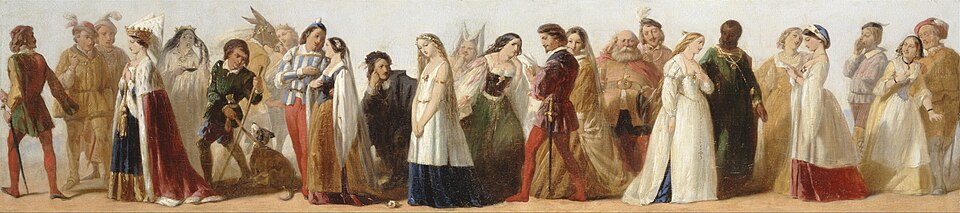
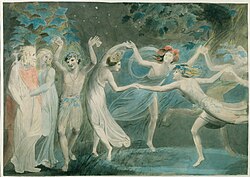
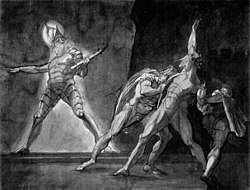
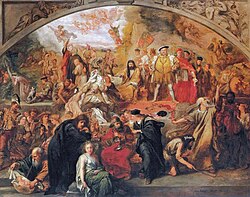
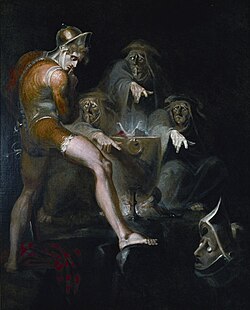
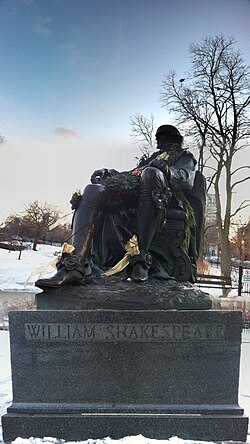
From the 19th century to the present, artists and writers have continued to reinterpret his characters and themes. His plays have been illustrated by masters like William Blake and Henry Fuseli, and his image has been immortalized in statues across the globe.
| Category | Details |
|---|---|
| Era | English Renaissance (Elizabethan & Jacobean) |
| Key Locations | Stratford-upon-Avon and London |
| Major Works | Plays (Comedy, History, Tragedy) and Sonnets |
| Theatrical Groups | Lord Chamberlain's Men, King's Men |
| Key Publication | First Folio (1623) |
Frequently Asked Questions
When was William Shakespeare born and when did he die?
William Shakespeare was born around 23 April 1564 and died on 23 April 1616.
What were the main types of plays Shakespeare wrote?
Shakespeare wrote plays in three primary genres: comedies, histories, and tragedies.
What was the First Folio?
The First Folio, published in 1623, was the first collected edition of Shakespeare's plays, compiled by his colleagues after his death.
Which theatre company was Shakespeare associated with?
He was a member of the Lord Chamberlain's Men, which later became the King's Men after receiving royal patronage from King James I.
Where is William Shakespeare buried?
He is buried in the Church of the Holy Trinity in his hometown of Stratford-upon-Avon.