William Bateson: The Architect of Modern Genetics
In the annals of biological science, few figures have left as indelible a mark on our understanding of life as William Bateson. An English geneticist of profound intellect and curiosity, Bateson did more than just study inheritance; he provided the very language and framework that allowed the field of genetics to emerge as a distinct scientific discipline.
From his early fascination with biological variation to his pivotal role in championing the laws of heredity, Bateson's career was a journey of rigorous experimentation and intellectual courage. His work bridged the gap between classical natural history and the modern era of genomic science.
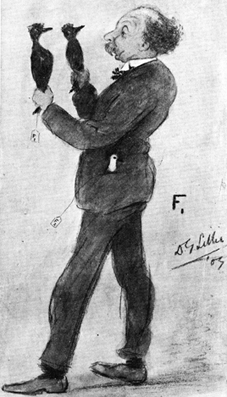
Key Facts
- Full Name: William Bateson
- Lifespan: August 8, 1861 – February 8, 1926
- Primary Contribution: Founding the discipline of genetics and promoting Mendelian heredity.
- Education: St. John's College, Cambridge.
- Major Award: The Royal Medal (1920).
- Key Research Areas: Biological variation, hybridization, and the mechanisms of inheritance.
Early Life and Academic Foundation
Born in Whitby, Yorkshire, England, William Bateson was the son of William Henry Bateson and Anna Bateson. He pursued his higher education at St. John's College, Cambridge, where he developed the analytical skills that would define his professional life. His early academic interests were broad, extending even to linguistics, as evidenced by his 1890 publication For Greek.
The Study of Biological Variation
Before the formal establishment of genetics, Bateson focused his research on biological variation—the differences in traits between individuals of the same species. Between the 1880s and 1900, he published extensively on a wide array of subjects, including the development of Balanoglossus, the ancestry of chordates, and numerical variation in teeth.
His work during this period was characterized by a meticulous observation of anomalies and patterns in nature. He explored color variation in flat-fishes and beetles, and the origin of cultivated Cineraria, seeking to understand the underlying rules that governed how traits appeared and disappeared across generations.
Founding the Discipline of Genetics
The turning point in Bateson's career came with his encounter with the work of Gregor Mendel. Bateson became a fervent advocate for Mendelian heredity—the theory that traits are passed from parents to offspring through discrete units (now known as genes) rather than by blending.
Bateson's contribution was not merely in the rediscovery of Mendel's laws, but in their application and dissemination. He conducted groundbreaking experiments on mice and plants, demonstrating that Mendel's principles were universal. In doing so, he coined the term genetics to describe this new science of heredity and variation.
Collaboration and Institutional Impact
Bateson collaborated closely with other scientists, most notably Reginald C. Punnett. Together, they explored the inheritance of sex and the interrelations of genetic factors. His leadership extended to the John Innes Horticultural Institute, where he applied genetic principles to plant breeding and agricultural improvement.
Summary of Life and Career
| Category | Details |
|---|---|
| Born | August 8, 1861 (Whitby, Yorkshire) |
| Died | February 8, 1926 (Merton, London) |
| Alma Mater | St. John's College, Cambridge |
| Key Spouse | Beatrice Durham |
| Notable Child | Gregory Bateson |
| Major Honor | Royal Medal (1920) |
Frequently Asked Questions
What is William Bateson most famous for?
William Bateson is most famous for founding the science of genetics and for introducing and promoting the laws of Mendelian heredity in England.
Did William Bateson coin the term "genetics"?
Yes, Bateson coined the term "genetics" to define the study of heredity and variation as a distinct scientific field.
What was Bateson's relationship with Mendel's work?
Bateson was a primary champion of Gregor Mendel's principles, providing the experimental evidence and theoretical framework necessary to make Mendelism widely accepted in the scientific community.
What other scientific areas did he research?
Beyond genetics, Bateson conducted significant research on biological variation, the development of chordates, and the genetics of plants and animals, including studies on the Primula and the silky fowl.
What major award did he receive?
William Bateson was awarded the Royal Medal in 1920 in recognition of his contributions to science.