Will Rogers: The Evolution of an American Icon
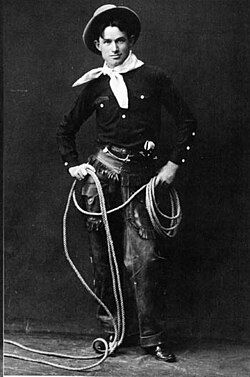
Will Rogers was more than just a performer; he was a cultural phenomenon who bridged the gap between the rugged American frontier and the sophisticated urban centers of the early 20th century. Starting as a trick roper in circus tents, Rogers transformed himself into one of the most influential commentators of his era, mastering vaudeville, cinema, print, and radio.
Key Facts
- Early Career: Started as a trick roper in "Texas Jack's Wild West Circus" in South Africa.
- Vaudeville Breakthrough: Gained fame after roping a wild steer at Madison Square Garden in 1905.
- The "Talkin' Fool": Transitioned from physical acts to political satire in the Ziegfeld Follies.
- Film Legacy: Appeared in 48 silent movies before becoming a major star in "talkies."
- Mass Reach: His daily column "Will Rogers Says" reached approximately 40 million readers.
- Radio Innovation: Used a wind-up alarm clock to manage his timing on The Gulf Headliners.
From the Circus to Vaudeville
Rogers' journey began in South Africa with "Texas Jack's Wild West Circus." Under the mentorship of Texas Jack, Rogers learned the art of showmanship and the critical importance of timing—specifically, knowing when to leave the stage to leave the audience wanting more. After a period performing with the Wirth Brothers Circus in Australia, Rogers returned to the United States in 1904, appearing at the Saint Louis World's Fair before entering the vaudeville circuit.
A pivotal moment occurred on April 27, 1905, at Madison Square Garden. When a wild steer broke loose and entered the viewing stands, Rogers roped the animal, earning front-page headlines. This feat led to an engagement at the Victoria Roof under Willie Hammerstein. For the next decade, Rogers worked nearly year-round in New York's vaudeville theaters, eventually increasing his salary from $140 to $250 per week as his popularity grew.
The Ziegfeld Era and the Birth of Satire
In 1915, Rogers joined Florenz Ziegfeld's Midnight Frolic at the New Amsterdam Theatre. It was here that he refined his act, blending his cowboy persona with monologues based on daily news. He would open his set by claiming, "All I know is what I read in the papers," using the news as a springboard for wit.
By 1916, he became a star in the Ziegfeld Follies. Initially, his act was a silent display of lariat tricks and riding, capitalizing on the image of the cowboy as an unfettered American archetype. However, he soon added laconic, pointed humor. His transition from the "Ropin' Fool" to the "Talkin' Fool" was cemented during a performance for President Woodrow Wilson, where Rogers improvised a roast of presidential policies that delighted the audience.
Cinema and the Transition to Sound
Hollywood's interest in Rogers peaked in 1918 when Samuel Goldwyn cast him in Laughing Bill Hyde. Rogers signed a three-year contract and moved west to the Pacific Palisades. While he produced 48 silent films—including several for Hal Roach in 1924 such as Two Wagons Both Covered—he found the medium restrictive because it silenced his greatest asset: his verbal wit.
The arrival of "talkies" in 1929 revitalized his film career. In They Had to See Paris (1929), Rogers finally exercised his commentary skills on screen. He often played versions of himself—homespun farmers, doctors, or politicians—in films like State Fair (1933) and Judge Priest (1934). He worked frequently with director John Ford and appeared alongside stars such as Boris Karloff and Hattie McDaniel.
| Medium | Key Contribution/Work | Notable Detail |
|---|---|---|
| Vaudeville | Ziegfeld Follies | Transitioned from trick roping to political satire. |
| Silent Film | Laughing Bill Hyde (1918) | First film; wrote many of his own title cards. |
| Sound Film | They Had to See Paris (1929) | First sound film; allowed for verbal ad-libs. |
| "Will Rogers Says" | Syndicated column reaching 40 million readers. | |
| Radio | The Gulf Headliners | Famous for using an alarm clock to time his segments. |
Print and Radio Influence
Rogers was a prolific writer. From 1922 to 1935, The New York Times syndicated his weekly column, which became a daily feature in 1926. Through his writing and contributions to The Saturday Evening Post, he advocated for democracy, neighborliness, and the development of a military air force, supporting the views of General Billy Mitchell.
In radio, Rogers became a household name through The Gulf Headliners (1929–1935). Because his conversational style often led him to exceed his half-hour time slot, he began using a wind-up alarm clock on air to signal the end of his broadcast, a quirk that eventually became part of his professional brand.
Controversy and Racial Slurs
Despite his popularity, Rogers' career was marked by a significant controversy in 1934. During a Gulf Oil radio broadcast, he used a racial slur to describe a spiritual song. The incident sparked immediate protests from the Black press and the NAACP, leading to calls for boycotts of his films and sponsors.
Rogers' initial attempt to apologize was poorly received, as he used another derogatory term ("darkies") the following week. Eventually, he issued a qualified apology in a letter to civil rights activist Channing Tobias. In the letter, Rogers claimed he intended to pay tribute to the art of the race and argued that the intention behind the words was more important than the wording itself.
Frequently Asked Questions
How did Will Rogers start his career?
He began as a trick roper and rider in "Texas Jack's Wild West Circus" in South Africa, where he learned the fundamentals of show business and timing.
What was the "Talkin' Fool" persona?
This was the stage persona Rogers developed during his time with the Ziegfeld Follies, where he shifted from purely physical roping acts to witty, improvised political satire and social commentary.
Why did Rogers use an alarm clock on the radio?
Because he tended to ramble and lose track of time during his broadcasts, he used a wind-up alarm clock to alert him when it was time to wrap up his segment.
How many films did Will Rogers make?
Rogers appeared in 48 silent movies before transitioning to sound films, where he starred in 21 feature films.
What was the reach of his newspaper column?
His daily column, "Will Rogers Says," reached an estimated 40 million newspaper readers at its peak between 1922 and 1935.