Wilhelm II and the Fall of the German Empire
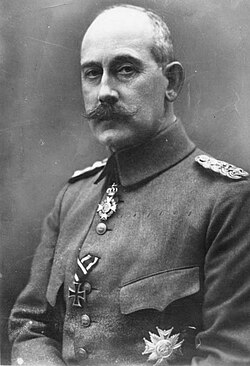
The end of the German monarchy was not a single event, but a cascading collapse triggered by military failure and domestic upheaval. On November 9, 1918, at the height of the German revolution and just days before the conclusion of World War I, Chancellor Max von Baden unilaterally declared the abdication of Emperor Wilhelm II. This act effectively ended the 300-year rule of the House of Hohenzollern over Prussia and their 500-year dominion over Brandenburg.
The loss of the Emperor's legitimacy created a domino effect across the realm. Because the Emperor embodied the monarchical authority of the state, the rulers of the Empire's 22 monarchical states also relinquished their royal titles and domains, clearing the path for the proclamation of a republic.
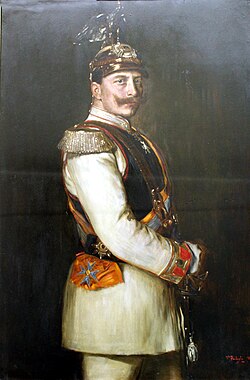
Key Facts
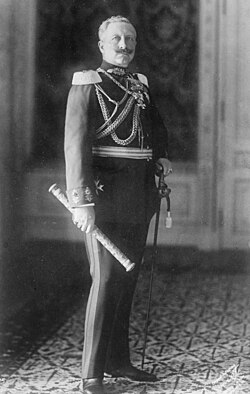
- Date of Unilateral Declaration: November 9, 1918, by Chancellor Max von Baden.
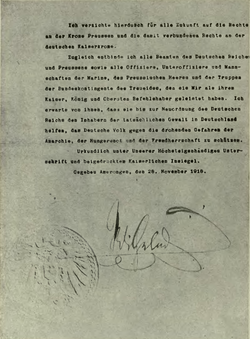
- Formal Affirmation: Signed by Wilhelm II on November 28, 1918, from exile.
- Dynastic Impact: Ended the Hohenzollern dynasty's 500-year rule over Brandenburg and 300-year rule over Prussia.
- Exile Location: Amerongen Castle, the Netherlands.
- Catalyst: Impending defeat in World War I and the outbreak of the German revolution.
The Road to Collapse: Military Failure and Deception
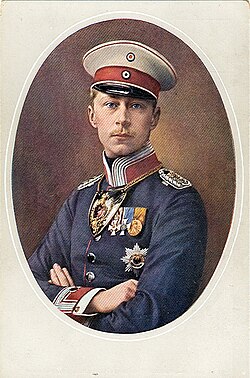
The catalyst for the abdication was Germany's inevitable defeat in World War I. Wilhelm II first learned of the military impossibility of victory on August 10, 1918, following the Allied breakthrough at the Battle of Amiens. Despite this, the Emperor remained insulated from the truth. While staying at Wilhelmshöhe Palace and later at Army Headquarters in Spa, Belgium, he was fed a sanitized version of the deteriorating military and political situation.
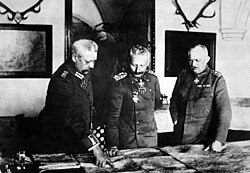
This culture of dishonesty was pervasive. Admiral Georg Alexander von Müller noted that the level of self-deception and egoism at Headquarters had reached an unsurpassable peak. While the Emperor was kept in the dark, the Supreme Army Command (OHL) was acutely aware of the crisis.
The "Revolution from Above"
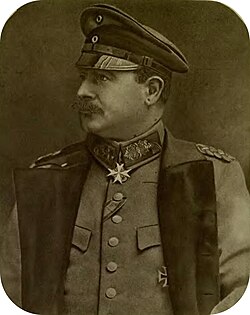
By late September 1918, the OHL informed government leaders that the war was lost. To secure more lenient peace terms from US President Woodrow Wilson, the military and government attempted a "revolution from above." This involved partially democratizing the Empire and including the Majority Social Democratic Party (MSPD) in the government.
This maneuver served two purposes: it aimed to satisfy Wilson's demands for a more democratic Germany and sought to shift the blame for the defeat onto the democratic parties in the Reichstag. During this period, First Quartermaster General Erich Ludendorff began planting the seeds of the stab-in-the-back myth—the false claim that the German army remained undefeated in the field but was betrayed by socialists and Jews on the home front.
Revolution and the Unofficial Abdication
Despite the government's attempts to democratize, President Wilson remained unsatisfied and insisted on Wilhelm's abdication as a condition for an armistice. While the military and government plotted ways to save the monarchy through a regency, the outbreak of the German revolution in early November 1918 accelerated the crisis.
Wilhelm continued to refuse to step down. To prevent further violence in Berlin and stabilize the volatile situation, Chancellor Max von Baden announced the Emperor's abdication on November 9, 1918, without Wilhelm's knowledge or consent. That same afternoon, Germany was proclaimed a republic.
Flight to the Netherlands
Following the announcement, Wilhelm II fled to the Netherlands, arriving the next day. He eventually settled at Amerongen Castle. While the transition of power was relatively quiet, many Germans—including some monarchists—viewed his flight as an act of cowardice and desertion, which severely damaged the prestige of the Hohenzollern dynasty.

The formal, written statement of abdication was finally signed by Wilhelm on November 28, 1918, legally cementing the end of the monarchy.
The Aftermath and the Quest for Restoration
The transition to the Weimar Republic did not entirely erase monarchist sentiment. The German National People's Party (DNVP) remained a strong force, achieving up to 20% of the vote in the mid-1920s. Similarly, the German People's Party (DVP) viewed the monarchy as the most natural form of government, though they pragmatically accepted the republic.
| Key Figure | Role/Action | Impact |
|---|---|---|
| Wilhelm II | Emperor/King of Prussia | Abdicated; ended Hohenzollern rule. |
| Max von Baden | Chancellor | Unilaterally declared abdication on Nov 9. |
| Erich Ludendorff | First Quartermaster General | Promoted the "stab-in-the-back" myth. |
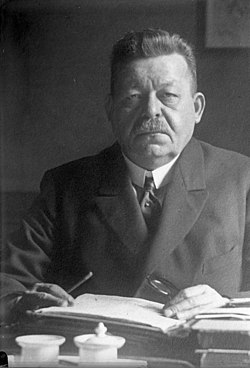
| Friedrich Ebert | Successor to Baden | Handed the chancellorship; unable to save monarchy. |
The Nazi Era and Final Rejection
In the late 1920s, Wilhelm and his second wife, Hermine Reuss of Greiz, hoped that Adolf Hitler and the Nazi movement would restore the monarchy. However, Hitler had no interest in returning the Hohenzollerns to power. In October 1933, Hitler bluntly told Wilhelm's confidant, Friedrich von Berg, that the monarchy was not "tough enough" to defeat communism and Judaism.
The Nazis further signaled their disdain when SA members stormed a reception for Wilhelm's 75th birthday, assaulting guests and destroying furniture. On January 30, 1934, Hitler publicly declared in the Reichstag, "What has been will never come again," permanently extinguishing the hopes of the monarchists.
![Monarchist[80] DNVP leader Kuno von Westarp and DNVP member Prince Oskar of Prussia with Prince Eitel Friedrich. December 1924](/images/15/b9/15b966f787773247f49a372b6d881effe97de4cc3adacae1a7c71ff3ab7ed637.jpg)
Frequently Asked Questions
Did Wilhelm II voluntarily abdicate the throne?
No. The abdication was first declared unilaterally by Chancellor Max von Baden on November 9, 1918, without the Emperor's knowledge or approval. Wilhelm only formally affirmed the abdication in writing on November 28, 1918, after he had already fled to the Netherlands.
What was the "stab-in-the-back" myth?
The "stab-in-the-back" myth was a conspiracy theory promoted by Erich Ludendorff. It claimed that the German military had not been defeated on the battlefield but was instead betrayed by civilians, specifically socialists and Jews, on the home front.
Why did the other 22 monarchical states also lose their rulers?
The rulers of these states relied on the monarchical legitimacy embodied by the German Emperor. Once Wilhelm II lost his position and the Empire's central authority collapsed, these regional rulers also relinquished their titles and domains.
Did Adolf Hitler ever consider restoring the monarchy?
No. Despite the hopes of Wilhelm II and his supporters, Hitler rejected the restoration of the Hohenzollerns. He viewed the monarchy as too weak for his goals and explicitly stated in 1934 that the monarchy would never return.
Where did Wilhelm II live after his abdication?
Wilhelm II went into exile in the Netherlands, where he resided at Amerongen Castle.