Wiley: A Legacy of Global Academic and Professional Publishing
Founded in 1807, Wiley (John Wiley & Sons) has evolved from a New York City startup into a global powerhouse in the dissemination of knowledge. For over two centuries, the company has specialized in nonfiction topics, focusing on science, technology, medicine, professional development, and higher education. Today, it operates as a major public entity traded on the NYSE under the symbols WLY (Class A) and WLYB (Class B).
The company's journey is marked by a transition from traditional print to a digital-first approach, managing a vast ecosystem of journals and textbooks that support researchers and students worldwide.
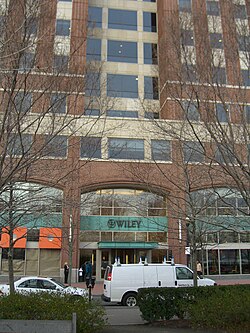
Key Facts
- Founded: 1807 in New York City by Charles Wiley.
- 2024 Revenue: US$ 1.87 billion.
- Workforce: Approximately 6,400 employees (2024).
- Core Focus: Scientific, Technical, Medical, and Scholarly (STMS) content.
- Digital Hub: Wiley Online Library, featuring over 4 million articles.
- Global Reach: Worldwide distribution with major hubs in the US and UK.
Historical Evolution
The business began with Charles Wiley, but it was his son, John Wiley, who took the helm in 1826. Over the following decades, the firm underwent several name changes—including Wiley, Lane & Co. and Wiley & Putnam—before officially becoming John Wiley & Sons in 1876 when William H. and Charles Wiley joined the business.
Throughout the 20th century, Wiley expanded its footprint into the sciences and higher education. A pivotal move occurred in 1960 with the establishment of a European branch in London, which later relocated to Chichester, England. This expansion was bolstered by strategic acquisitions, including Heyden & Son (1982), Liss (1989), and the German technical publisher VCH (1996).

Digital Transformation and the Wiley Online Library
Wiley transitioned into the digital age with the 1997 launch of Wiley Interscience, providing online access to journals and reference works. In 2010, this was replaced by the Wiley Online Library, a subscription-based platform that serves as the company's primary digital repository.
The Wiley Online Library provides access to over 4 million articles from 1,600 journals, 22,000 books, and numerous databases. This platform integrates content from various imprints, including Wiley-Blackwell, Wiley-VCH, and Jossey-Bass, and is powered by the Literatum platform (developed by Atypon, which Wiley acquired in 2016).
Strategic Acquisitions and Market Shifts
Open Access and the Hindawi Case
In an effort to embrace open access (research available free of charge to the public), Wiley collaborated with Hindawi starting in 2016. This culminated in the 2021 acquisition of Hindawi for $298 million. However, this venture faced significant challenges; in 2023, over 8,000 articles from "paper mills" (entities that produce fictitious academic papers) were retracted. Consequently, Wiley ceased using the Hindawi brand and shuttered 19 journals in 2024 after retracting more than 11,300 compromised studies.
Higher Education and Online Program Management
Wiley expanded into Online Program Management (OPM) through the purchase of Deltak for $220 million in 2011 and The Learning House in 2018. While this briefly made Wiley one of the largest OPM providers with 60 university partners, the company shifted strategy in 2023, divesting its OPM business to Academic Partnerships for $110 million.
Corporate Structure and Operations
Wiley organizes its current operations into three primary business divisions:
- Scientific, Technical, Medical, and Scholarly (STMS): Also known as Wiley-Blackwell.
- Professional Development: Focusing on career growth and skill acquisition.
- Global Education: Managing educational resources and textbooks.
| Category | Details |
|---|---|
| Headquarters | Hoboken, New Jersey, USA |
| Primary Markets | Science, Medicine, Technology, Higher Ed |
| Key Digital Asset | Wiley Online Library |
| Annual Revenue (2024) | US$ 1.87 Billion |
| Employee Count (2024) | 6,400 |
Legal and Ethical Challenges
Like many large publishers, Wiley has navigated various legal disputes. In 2018, a New York court awarded Wiley and other publishers over $39 million in a case against Book Dog Books for distributing counterfeit textbooks. The company has also been involved in copyright litigation regarding stock photography and high-profile cases such as Kirtsaeng v. John Wiley & Sons and lawsuits against the Internet Archive.
Additionally, the company has faced scrutiny over publication practices. In 2020, five Wiley journals had their 2019 impact factors suspended due to unusual levels of self-citation.
Frequently Asked Questions
What is the Wiley Online Library?
It is a subscription-based digital collection launched in 2010 that provides access to millions of articles, thousands of books, and various reference works across the life, health, physical, and social sciences.
What happened with the Hindawi acquisition?
Wiley acquired Hindawi in 2021 to expand its open access portfolio. However, due to the discovery of thousands of fictitious papers from paper mills, Wiley retracted over 11,300 studies, retired the Hindawi brand, and closed 19 journals.
What are Wiley's main business divisions?
The company operates through three divisions: Scientific, Technical, Medical, and Scholarly (STMS/Wiley-Blackwell), Professional Development, and Global Education.
How does Wiley handle fictitious manuscript submissions?
As of April 2024, Wiley receives roughly 10,000 monthly submissions, with approximately 10% to 13% being flagged as fictitious by their detection tools.
Did Wiley remain in the Online Program Management (OPM) business?
No. After expanding into OPM via acquisitions of Deltak and The Learning House, Wiley divested its OPM business to Academic Partnerships in November 2023 for $110 million.