White Flag: The History and Legal Meaning of the Universal Symbol of Surrender
Across the globe and throughout history, few symbols are as instantly recognizable as the white flag. While most people associate it simply with surrender, the white flag serves a complex role in international law, diplomacy, and military tradition. From the feudal courts of medieval France to the modern battlefields governed by international treaties, the white flag is a critical tool for communication in the midst of conflict.
Key Facts
- International Status: Recognized as a protective sign of truce, ceasefire, and negotiation.
- Legal Protection: Under the Hague Conventions, those carrying a white flag (parlementaires) are granted inviolability.
- War Crimes: Using a white flag as a ruse to attack the enemy is a war crime known as perfidy.
- Origins: Early mentions appear in the Eastern Han dynasty and the Roman Empire, but widespread European use is linked to the French Capetian dynasty.
- Diverse Meanings: Beyond surrender, it has served as a dynastic color for various Islamic caliphates and a temporary ensign for Antarctica.
Contemporary Use and International Law
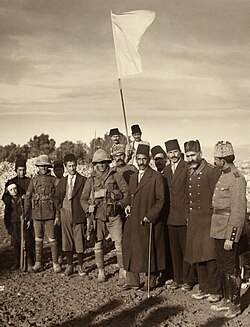
In modern warfare, the white flag is an internationally recognized sign used to request a truce, a ceasefire, or the opening of negotiations. Because the party requesting these terms is typically the weaker side, the flag has become synonymous with surrender. However, its primary legal function is to signal that an approaching person is unarmed and intends to communicate.
The legal framework for this practice is codified in the Hague Conventions of 1899 and 1907. According to Article 32 of the 1899 Convention, an individual authorized by one of the belligerents to communicate with the other while carrying a white flag is considered a parlementaire. This individual, along with accompanying trumpeters, drummers, flag-bearers, and interpreters, possesses a right to inviolability, meaning they must not be fired upon.
Conversely, the misuse of this symbol is strictly forbidden. Using a white flag to deceive the enemy—such as approaching under a flag of truce only to launch an attack—is classified as perfidy, a serious violation of the rules of war.

The Evolution of the White Flag
Early Mentions
The use of white flags to signal surrender is not a modern invention. Historical records from the Eastern Han dynasty (25–220 CE) mention the practice. Similarly, the Roman historian Cornelius Tacitus noted the use of a white flag of surrender in 109 CE, though prior to this, Roman armies typically signaled surrender by holding their shields above their heads.
The Influence of the Capetian Dynasty
The widespread adoption of the white flag in Europe is closely tied to the French Capetian dynasty. Philip II adopted a white flag as the family emblem, known as the oriflamme (meaning "golden flame"). During the Middle Ages, flying another lord's banner signified a change in allegiance.
A pivotal moment occurred during the siege of Fréteval castle in 1194, where English knights wore white tunics and held white cloths to signal their submission to King Philip. As the French royal domain expanded through the 13th century, this visual shorthand for submission proliferated across Europe. By the Renaissance, the white flag had evolved from a specific symbol of the French crown into a general sign that a person was exempt from combat.
Islamic and Global Variations
The color white has held significant symbolic value in Islamic history. The Umayyad dynasty (661–750) used white to commemorate Muhammad's first battle at Badr. Later, the Fatimid dynasty and Alids adopted white to visually distinguish themselves from the Abbasids, who used black. More recently, the Taliban-ruled Islamic Emirate of Afghanistan used a plain white flag between 1996 and 1997.

The White Flag in French National History
During the Ancien Régime (the political system of France before the 1789 Revolution), the plain white flag served as the royal standard, symbolizing purity. It was used by the French Navy for ships of the line and by commanding officers to identify French units and prevent friendly fire.
The French Revolution of 1794 introduced the blue, white, and red Tricolore. Following this, the plain white flag became a symbol of royalists. While it was briefly reinstated during the Bourbon Restoration, it was permanently abandoned after the July Revolution of 1830. The symbol's power remained evident as late as 1873, when the Count of Chambord refused to accept the throne unless the white flag was restored.
Unique Applications: The Antarctic Ensign
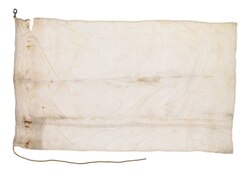
In a rare non-military application, the white flag was used to represent a landmass. In 1929, the British Australian and New Zealand Antarctic Research Expedition on the RRS Discovery used white cotton sheeting to create a courtesy ensign for Antarctica, as the continent had no official flag of its own.
| Era/Entity | Primary Meaning/Use | Context |
|---|---|---|
| Hague Conventions | Truce, Negotiation, Surrender | International Law |
| Capetian Dynasty | Submission to French Crown | Medieval Feudalism |
| Umayyad/Fatimid | Dynastic Identity | Islamic Caliphates |
| Ancien Régime | Royal Standard / Command | French Monarchy |
| RRS Discovery (1929) | Courtesy Ensign | Antarctic Exploration |
Frequently Asked Questions
Is waving a white flag a legal requirement for surrender?
While not a "requirement" to surrender, waving a white flag is the internationally recognized signal that an individual or group intends to negotiate or surrender, granting them specific protections under the Hague Conventions.
What happens if a soldier uses a white flag to trick the enemy?
This is considered perfidy. Under the rules of war, using a protective sign like the white flag to deceive the enemy for a military advantage is a war crime.
Who is a parlementaire?
A parlementaire is an individual authorized by one side of a conflict to enter into communication with the opposing side. They must carry a white flag and are granted inviolability, meaning they cannot be legally attacked.
Why did the French monarchy use a white flag?
The white flag was adopted by the House of Capet and later the Bourbon monarchy as a symbol of purity and royal authority, serving as the official royal standard of France until the 19th century.
Did other cultures use white flags before Europe?
Yes. Historical records indicate that the Eastern Han dynasty in China and the Roman Empire used white flags to signal surrender as early as the 1st and 2nd centuries CE.