Whitbread History: From Porter Brewing Giant to Hospitality Leader
The story of Whitbread is a remarkable chronicle of industrial evolution. What began in the mid-18th century as a bold venture into the brewing of porter grew into the largest brewery in the world, before pivoting entirely to become a titan of the UK hospitality and leisure sector. This transition reflects broader shifts in British consumer habits, from the Gin Craze of the 1700s to the modern era of global coffee chains and hotel groups.
Origins and the Rise of Porter
The business was established in 1742 when Samuel Whitbread entered a partnership with Godfrey and Thomas Shewell. The venture initially operated from a small brewery at the junction of Old Street and Upper Whitecross Street, as well as a site in Brick Lane, Spitalfields, which specialized in amber and pale beers. By 1750, the partnership shifted focus toward porter—a dark, hearty style of beer—with the acquisition of the derelict King's Head brewery in Chiswell Street. This site was renamed the Hind Brewery, inspired by the Whitbread family coat of arms.
While Whitbread did not invent porter, he was the first to commercialize it on a massive scale. This growth was fueled by a national increase in beer consumption as regulations tightened on gin sales following the excesses of the Gin Craze. By 1758, the Chiswell Street site was producing 65,000 barrels annually, making it the UK's largest porter brewery. Samuel Whitbread eventually bought out his partner Shewell in 1761 for £30,000, taking full management control.
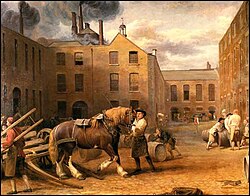
By the 1780s, Whitbread had ascended to become the largest brewery in the world, reaching a production peak of 202,000 barrels of porter by 1796. Following the death of Samuel Whitbread Sr., the business passed to his son and adopted the name Whitbread & Co. Ltd in 1799.
Expansion and the Martineau Partnership
In the early 19th century, Samuel Whitbread Jnr expanded the company's investment base, bringing in his cousin Jacob Whitbread and Master Brewer John Martineau I. This began a multi-generational legacy, with four generations of Martineau descendants serving on the board. In 1812, the company merged with Martineau Brewery holdings, and by 1815, annual production exceeded 46.5 million pints (161,672 barrels).
The company, known as Whitbread, Martineau & Co. until the mid-1840s, continued to grow its influence. Beyond brewing, the family showed an early interest in social welfare; by the 1870s, John Martineau II invested in rebuilding cottages in Eversley to provide decent and healthy housing for the working class.
Industrial Growth and Bottling
As the 19th century closed, Whitbread diversified its delivery methods. The company began producing bottled beers in 1870 and became a registered limited liability company on July 24, 1889. By 1914, the firm claimed the title of the largest beer bottler in the world.
Competition and the 20th Century Transition
The early 1900s were marked by a complex relationship with Guinness. While Whitbread bottled Guinness stout starting in 1904, they also competed fiercely. In the 1920s, Whitbread introduced "Double Brown," a beer designed to rival Guinness by recreating the profile of the original Whitbread porter.
The mid-century brought significant challenges and changes. The company expanded through the acquisition of other brewers, such as Forest Hill Brewery and Kent Brewery Frederick Leney & Sons. However, the Second World War caused severe disruption; the Blitz damaged 565 Whitbread pubs, and the company ceased regular porter production in 1940 to rationalize its range.
In 1948, under the direction of WH (Bill) Whitbread, the company went public on the London Stock Exchange. This sparked a period of aggressive consolidation, merging with over a dozen regional breweries, including Brickwoods in 1971. By this time, output had surged to 160 million imperial gallons.
Diversification into Leisure and Hospitality
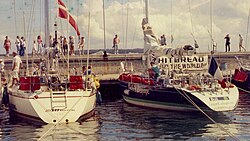
Starting in the 1970s, Whitbread shifted its focus toward broader hospitality and sponsorship. The company launched the Whitbread Book Awards in 1971 and sponsored the Whitbread Round the World Race from 1972 to 2001. They also ventured into spirits, purchasing Long John International (Laphroaig) and Beefeater Gin, though the spirits arm was eventually sold to Allied Distillers in 1989.
The 1980s and 90s saw a pivot toward branded dining and hotels, with investments in Pizza Hut, TGI Fridays, and Beefeater. In 1996, the company acquired the Pelican Group (including Café Rouge) for £133m and BrightReasons (including Bella Pasta) for £46m.
The 21st Century: A Complete Pivot
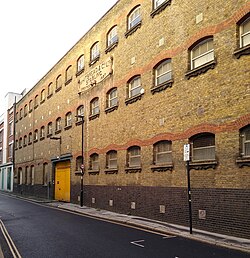
The turn of the millennium marked the end of Whitbread's brewing era. In 2001, the company sold all its brewing interests to Interbrew (now InBev). By 2002, it had also sold its pub estate and restaurant groups. The original Chiswell Street brewery, where brewing ended in 1976, now serves as a conference venue known as "The Brewery."
The company's modern era has been defined by its hotel operations and the growth of Costa Coffee. However, this period also saw challenges, including the 2013 horse meat scandal and job cuts in 2020 due to the COVID-19 pandemic. In 2018, following shareholder pressure, Whitbread sold Costa Coffee to The Coca-Cola Company for £3.9bn.
The transition from beer to leisure was championed by the last family chairman, Sir Samuel Whitbread, who passed away in January 2023. Most recently, in 2026, the company announced a restructure involving the closure of several restaurant brands, including Table Table and Beefeater, due to rising business rates and national insurance costs.
Key Facts
- Founded: 1742 by Samuel Whitbread and the Shewell brothers.
- Peak Brewing: Became the largest brewery in the world by the 1780s.
- Major Pivot: Sold all brewing interests to Interbrew in 2001.
- Major Sale: Sold Costa Coffee to Coca-Cola for £3.9bn in 2018.
- Legacy Site: The Chiswell Street brewery is now a conference and events venue.
| Era | Primary Focus | Key Milestone |
|---|---|---|
| 1742–1800s | Porter Brewing | Became world's largest brewery; established Hind Brewery. |
| 1900s–1970s | Brewing & Bottling | Listed on London Stock Exchange (1948); merged with regional brewers. |
| 1970s–2001 | Diversification | Entered spirits, branded restaurants, and global race sponsorship. |
| 2001–Present | Hospitality & Leisure | Exited brewing; focused on hotels and Costa Coffee (until 2018). |
Frequently Asked Questions
When did Whitbread stop brewing beer?
Whitbread sold all its breweries and brewing interests to Interbrew (now InBev) in 2001, effectively ending its role as a producer of beer.
What was the "Hind Brewery"?
The Hind Brewery was the name given to the large site at Chiswell Street, acquired in 1750 for the specific production of porter, named after the Whitbread family coat of arms.
Why did Whitbread sell Costa Coffee?
The sale to The Coca-Cola Company for £3.9bn in 2018 followed pressure from shareholders, including Sachem Head and Elliott Advisers, who believed a demerger would increase market value.
What happened to the original brewery building in London?
The building at 52 Chiswell Street still exists. Although brewing ceased there in 1976, it is currently used as a conference and events venue called "The Brewery."
How did the COVID-19 pandemic affect the company?
In September 2020, Whitbread announced potential job cuts for up to 6,000 staff due to a significant slump in hotel guest numbers during the UK lockdown.