Wetherby: Modern History from the 20th Century to Today
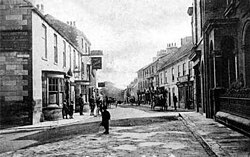
At the dawn of the 20th century, Wetherby was a town defined by a diverse and resilient economy. While the rise of the railways in the 1800s had slightly diminished its strategic importance as a stop on the Great North Road, the town remained a vital hub. A large mill provided significant local employment, while traditional trades—most notably the cattle market and numerous inns serving travelers on the A1—continued to thrive. By this era, Wetherby had established its own gas works for town gas and enjoyed rail connections to the major centers of Leeds, Harrogate, and York.
The Impact of the World Wars
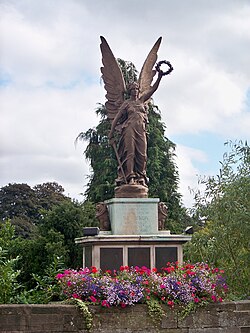
Wetherby, like many towns in the West Riding, felt the profound weight of the First World War. Many local men served with the Leeds Pals, a unit that suffered devastating casualties during the Battle of the Somme. On the home front, many residents supported the war effort by working at the Barnbow munitions works in Cross Gates. In 1922, a memorial designed by EF Roslyn was erected near the town bridge to honor those lost in the Great War.
The Second World War brought further industrialization to the area with the construction of ROF Thorp Arch, a munitions factory located just outside the town. This facility provided essential wartime employment for residents of both Wetherby and Leeds. In the post-war period, the town hosted the UK's only inland 'landship', HMS Ceres, on the site where Wetherby High School now stands. Notably, unlike the First World War, there is no dedicated memorial in the town for losses suffered during the Second World War.
Industrial Evolution and the Brewery
For many years, the Wharfedale Brewery was a cornerstone of local industry. During the inter-war period, it transitioned into Oxley's mineral water factory. The site underwent significant changes in the 1950s, culminating in the implosion of its chimney in 1959. The land was subsequently redeveloped into the West Yorkshire bus depot and station, and later expanded to include offices, shops, and a restaurant. Additionally, the nearby watermill by the weir has been transformed into luxury riverside apartments.
The Decline of Rail and the Rise of the Cycle Path
The mid-1960s marked a turning point for local transport. In 1965, both the Harrogate to Church Fenton line and the LNER Cross Gates to Wetherby line were closed as part of the Beeching Axe (a major restructuring of the British railway system). Although the council considered converting the disused tracks into a central relief road, these plans were never realized. Instead, the route was repurposed as the Harland Way, a cycle track that now connects Wetherby with Spofforth.
Town Centre Redevelopment
As the population grew during the 1960s, the town council sought ways to modernize the town center and introduce a purpose-built supermarket. Various proposals were debated, including expanding the town over the ings (low-lying floodplains) or creating a pedestrian precinct. Some plans suggested demolishing the Red Lion public house for offices and pedestrianizing either the High Street and North Street or the Market Place.
Ultimately, the council opted for the construction of the Horsefair Centre in the 1970s. By the 1990s, after Morrisons acquired the center, it became clear that the facility lacked sufficient parking and space. This led to a series of expansions over the former Burgess Factory and Wetherby High School playing fields. In 2003, the old supermarket was demolished and replaced by a flagship Morrisons store in 2004. This project required the temporary relocation of the Post Office to Crossley Street before it moved to its current site on the Market Place. To support residents during the construction, free shuttle buses were provided to supermarkets in Starbeck and Boroughbridge. The precinct was further modernized between 2005 and 2006 with the addition of a glass canopy roof over the Western wing.
Bypassing the Town
To alleviate traffic, the first bypass was constructed between 1957 and 1959, running from the A58 south of town to Kirk Deighton. Over time, the infrastructure was upgraded to handle increasing volumes. In July 1988, the A1 was diverted at a cost of £11.5 million to reduce queues at the Forte Posthouse hotel roundabout. Further changes occurred in December 2004, when the northern section was diverted to a new A1(M) section, bypassing Kirk Deighton. Between 2007 and 2009, the stretch between Bramham and Wetherby was upgraded, introducing a new motorway service station and hotel at the Wetherby North Junction.
Modern Industrialization
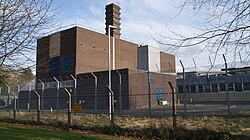
While the town lost its traditional mill and brewery, new industrial hubs emerged. The Sandbeck Industrial Estate and the Thorp Arch Trading Estate became primary employment drivers. The latter, which began as wartime munitions factories, attracted a variety of firms including Safepack, Farnell, Goldenfry, and Swift Research. It also housed the forensic science laboratory, which operated until its closure in 2012, with demolition beginning in May 2015.
Key Facts
- Transport: The town lost its rail links in 1965; the tracks are now the Harland Way cycle track.
- Infrastructure: The A1 was diverted in 1988 (£11.5m) and further upgraded to the A1(M) in 2004.
- Commerce: The Horsefair Centre was built in the 1970s and anchored by a flagship Morrisons since 2004.
- Industry: Thorp Arch Trading Estate evolved from WWII munitions factories into a diverse business hub.
- War History: A 1922 memorial commemorates WWI losses, specifically those in the Leeds Pals.
| Period/Year | Event/Development | Impact |
|---|---|---|
| Early 1900s | Mixed Economy | Reliance on mills, cattle markets, and A1 inns. |
| 1922 | WWI Memorial | Commemoration of losses, including the Leeds Pals. |
| 1957–1959 | First Bypass | Initial diversion of traffic from the town center. |
| 1965 | Beeching Axe | Closure of rail lines to Cross Gates and Church Fenton. |
| 1970s | Horsefair Centre | Establishment of a purpose-built shopping precinct. |
| 2004 | Morrisons Flagship | Modernization of the town's primary retail anchor. |
| 2012 | Forensic Lab Closure | End of a major employer at Thorp Arch. |
Frequently Asked Questions
What happened to the railways in Wetherby?
Both the LNER Cross Gates to Wetherby and the Harrogate to Church Fenton lines were closed in 1965 due to the Beeching Axe. The disused lines were eventually converted into the Harland Way cycle track.
What is the significance of the Leeds Pals to Wetherby?
Many men from Wetherby were members of the Leeds Pals during the First World War and suffered heavy losses, particularly during the Battle of the Somme.
How has the town center changed since the 1970s?
The town center saw the creation of the Horsefair Centre in the 1970s, which was later expanded in the 1990s and 2000s to include a flagship Morrisons supermarket and a glass-canopied Western wing.
What was HMS Ceres?
HMS Ceres was the country's only inland 'landship', located in Wetherby after the Second World War on the site now occupied by Wetherby High School.
What is the history of the Thorp Arch Trading Estate?
The estate began as munitions factories (ROF Thorp Arch) during the Second World War and later evolved into a commercial hub for companies like Farnell and the forensic science laboratory.