Wetheral: A Historic Village in the Heart of Cumbria
Perched high on a bank overlooking a dramatic gorge in the River Eden, Wetheral is a picturesque village and civil parish located in the ceremonial county of Cumbria, England. With a population of 6,293 as of the 2021 census, this settlement blends natural beauty with a rich tapestry of medieval history and unique local landmarks.
The village is defined by its geography, surrounded by ancient woodlands including the National Trust-owned Wetheral Woods. Historically, the river served as a vital artery; a ferry once connected Wetheral to the village of Great Corby, and evidence of this link remains today in the form of an iron ring still attached to the rocks on the Great Corby bank.
Key Facts
- Location: Situated in the North West region of England, within the unitary authority of Cumberland.
- Etymology: The name Wetheral (first recorded as Wetherhala circa 1100 AD) means "the haugh (flat land by a river) where wethers (castrated male sheep) were kept."
- Population: 6,293 residents (2021 census for the civil parish).
- Key Landmark: The Wetheral Cross, located on the village green.
- Notable Resident: Nursing theorist Nancy Roper was born here in 1918.
Historical Landmarks and Architecture
Wetheral Priory and the Gatehouse
During the Middle Ages, Wetheral was home to a priory. While much of the site is now occupied by farm buildings, the historic gatehouse remains and is currently preserved under the care of English Heritage. Low ruined walls behind the farms offer a glimpse into the priory's former extent.
The Village Green and Wetheral Cross
The heart of the village is its green, surrounded by diverse period houses and local amenities such as the Fantails restaurant, The Crown hotel, and The Wheatsheaf pub. A prominent feature here is the Wetheral Cross. Interestingly, the steps beneath the cross originally served as the base for a maypole erected by Henry Howard in 1814. These steps were moved to their current position between 1838 and 1844, when the cross was added. Because Wetheral was never a market town, this is not a market cross; the head of the cross is believed to be older than the shaft, suggesting it may occupy the site of an original medieval cross.
Faith and Artistry at the Parish Church
The Wetheral Parish Church is dedicated to the Holy Trinity and St Constantine. Local legend claims St Constantine, a Scottish king who became a monk, lived as a hermit in a cave accessible by walking down the River Eden.
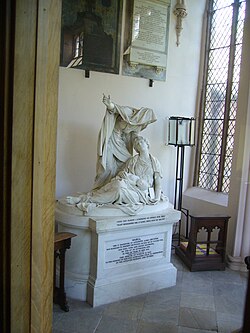
Inside the church is a remarkable piece of art: a life-size sculpture of 'Faith' by Joseph Nollekens. Commissioned by Henry Howard in memory of his wife Maria, who died in childbirth, the sculpture cost £1,500 in the late eighteenth century—an amount estimated to be worth nearly £2 million today.
Transport and Infrastructure
The Newcastle to Carlisle Railway serves the village with a station located at the west end of Corby Bridge (commonly called the Wetheral Viaduct). This bridge also functions as a footbridge to Great Corby. Although the station was closed in 1967 during the Beeching cuts (a period of major UK railway closures), it was reopened in 1981. The area also holds a place in railway history as the site of one of the earliest railway accidents in 1836.
Community and Education
While the village no longer has its own school, children typically attend primary schools in Scotby, Great Corby, or Warwick Bridge. For secondary education, students are in the catchment area for Richard Rose Central Academy in Carlisle, though many opt for the William Howard School in Brampton via a paid bus service.
The wider Wetheral ward encompasses several hamlets and villages, including Warwick-on-Eden, Aglionby, Scotby, Cotehill, Cumwhinton, Wetheral Shield, and Wetheral Pasture. Additionally, the Animals' Refuge, operated by the National Equine (and Smaller Animals) Defence League, is located at Wetheral Shield.
Notable Figures
Wetheral has been the birthplace of individuals who made significant contributions to healthcare. Pat Waddell, a World War I nurse and ambulance driver, was born nearby at Warwick Bridge. Nancy Roper, born in Wetheral in 1918, became a renowned nursing education theorist. After training at the Cumberland Infirmary, she developed the Roper-Logan-Tierney method, a nursing process based on Activities of Daily Living used throughout the UK and internationally.
| Category | Detail |
|---|---|
| Unitary Authority | Cumberland |
| Ceremonial County | Cumbria |
| OS Grid Reference | NY4654 |
| Postcode District | CA4 |
| Dialling Code | 01228 |
| 2021 Population | 6,293 (Civil Parish) |
Frequently Asked Questions
What does the name Wetheral mean?
The name is derived from "Wetherhala," meaning the haugh (a flat area of land by a river) where wethers (castrated male sheep) were kept.
What is the significance of the sculpture in the Parish Church?
The church houses a life-size sculpture of 'Faith' by Joseph Nollekens. It was commissioned by Henry Howard in memory of his wife Maria, who died in childbirth, and is valued today at nearly £2 million.
Is the Wetheral Cross a market cross?
No, it is not a market cross because Wetheral was not a market town. The cross was added to steps that previously served as a maypole base.
Who was Nancy Roper?
Nancy Roper was a nursing education theorist born in Wetheral in 1918. She developed the Roper-Logan-Tierney method, which focuses on Activities of Daily Living in nursing care.
How is Wetheral connected to Great Corby?
The two are connected by the Corby Bridge (Wetheral Viaduct), which serves as both a railway bridge and a footbridge. Historically, they were also linked by a ferryboat.