Western Comics: The Golden Age of the Frontier (1948–1960)
Following the end of World War II, the American comic book landscape underwent a dramatic shift. As the initial craze for superheroes began to fade, a new audience emerged. Returning servicemen and an older adult readership sought stories that mirrored the rugged individualism and adventure of the American West. This cultural pivot gave birth to the Golden Age of Western comics, a period of immense popularity spanning from 1948 to 1960.
Key Facts
- Peak Era: The genre flourished between 1948 and 1960, filling the void left by declining superhero popularity.
- Dominant Publishers: Marvel (via Timely and Atlas), DC, Dell, and Fawcett were the primary drivers of the genre.
- Naming Trends: A significant number of heroes featured the word "Kid" in their titles, such as Kid Colt and the Rawhide Kid.
- Celebrity Influence: Many titles were based on real-life cowboy actors and singers from film and radio.
- Diversity Milestone: Dell Comics' Lobo (1965) was the first African-American character to headline his own series.
The Rise of the Western Genre
The surge in Western comics was not an isolated event but a reflection of the broader popularity of the genre across comic strips and other media. Major publishers quickly pivoted to capture this market. Marvel Comics, operating through its forerunners Timely Comics and Atlas Comics, became the most prolific producer of the era. Their title Kid Colt Outlaw, debuting in 1948, became a staple of the industry, running until 1979.
Other industry giants followed suit. DC Comics launched long-running series like All-Star Western and Western Comics, while Harvey Comics produced the seminal six-issue series Boys' Ranch, created by the legendary duo Joe Simon and Jack Kirby. Smaller publishers also carved out niches; Charlton Comics offered a variety of titles including Billy the Kid and the unique Black Fury, which focused on a horse that righted wrongs across the West.
Iconic Characters and Archetypes
While Timely Comics introduced the Masked Raider as early as 1939, the 1950s saw a proliferation of "Kid" characters. Marvel leaned heavily into this trend with the Apache Kid, Outlaw Kid, Rawhide Kid, Ringo Kid, Two-Gun Kid, and Western Kid, along with more obscure figures like the Prairie, Arizona, and Texas Kids. This naming convention was mirrored by DC (Stuff the Chinatown Kid) and Dell (the Cisco Kid).
Beyond the "Kids," the era featured a diverse array of heroes. DC Comics introduced characters such as Johnny Thunder, Nighthawk, and Tomahawk. Meanwhile, Dell Comics published The Lone Ranger, and later, in 1965, introduced Lobo, marking a historic first for African-American leads in the medium.
The Influence of Cowboy Cinema and Radio
The intersection of comics and other entertainment media was particularly strong in the Western genre. Tom Mix, a massive star in radio and film, saw his popularity translate into print. His presence began with a 1935 advertisement for "Zyp-Guns" and evolved into narrative appearances in The Comics and Popular Comics. He even had a direct mail-order series sponsored by Ralston Purina, where fans could trade cereal boxtops for issues of Tom Mix Comics.
Between 1946 and 1949, a wave of titles featuring real-life cowboy actors and singers hit the stands. Stars like Gene Autry, Roy Rogers, and John Wayne had their own comics. Notably, Dale Evans and Reno Browne were the only two Western actresses to have comics based on their personas. Most of these titles featured photo covers of the stars to attract fans, though most were canceled by 1957.
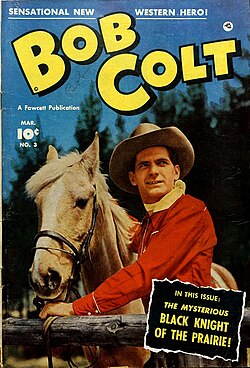
To save on costs or create new personas, some publishers used models to portray faux cowboy heroes—fictional characters based on real people. Steve Holland posed as Bob Colt for Fawcett Comics, while Timely Comics used similar models for characters like Tex Morgan. In a quirky moment of industry history, Timely editor Stan Lee once dressed up as the lead character for the cover of Black Rider #8 in March 1950.
The Architects of the Frontier
The popularity of the genre attracted some of the finest talent in the comic industry. Paul S. Newman and Tom Gill formed one of the longest-running creative partnerships in history with a 107-issue run on The Lone Ranger. Other specialists emerged, such as Gaylord DuBois, who became renowned for his realistic depictions of animals in series like Hi-Yo Silver and National Velvet.
The visual style of the era was defined by artists like Russ Heath, who worked across numerous Marvel titles, and John Severin, known for his work with Atlas. Rocke Mastroserio and Pat Boyette were instrumental in shaping the look of Charlton Comics' Western line, including Billy the Kid and Wyatt Earp, Frontier Marshal.
| Publisher | Notable Titles | Key Characters/Features |
|---|---|---|
| Marvel (Timely/Atlas) | Kid Colt, Rawhide Kid, Two-Gun Kid | Prolific use of "Kid" characters |
| DC Comics | All-Star Western, Tomahawk | Diverse cast of frontier heroes |
| Dell Comics | The Lone Ranger, Lobo | First African-American lead (Lobo) |
| Fawcett Comics | Hopalong Cassidy, Tom Mix | Heavy focus on movie star tie-ins |
| Charlton Comics | Billy the Kid, Black Fury | Included animal-centric stories |
Frequently Asked Questions
Why did Western comics become popular after World War II?
As superhero popularity declined, returning servicemen and adult readers sought more mature and grounded themes. The existing popularity of Westerns in radio, film, and comic strips made the genre a natural fit for the comic book medium.
Who was the most prolific publisher of Western comics during this era?
Marvel Comics, through its Timely and Atlas imprints, was the most prolific, producing a vast number of titles including Kid Colt Outlaw and The Rawhide Kid.
What were "faux cowboy" comics?
These were comics featuring fictional heroes portrayed by real-life models rather than established actors. For example, Steve Holland posed as the character Bob Colt for Fawcett Comics.
Which Western comic broke racial barriers in the 1960s?
Dell Comics' Lobo, which debuted in 1965, was the first series in the medium to feature an African-American character as the headline protagonist.
How did celebrity actors influence the genre?
Between 1946 and 1949, many film stars and singers like Roy Rogers and Gene Autry had their own comic series, often featuring photo covers to leverage their real-world fame.