West Hollywood: The Creative City of Los Angeles
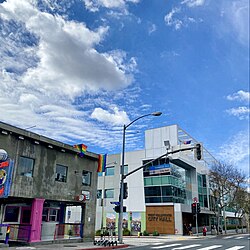
Known affectionately as WeHo, West Hollywood is a vibrant city located in Los Angeles County, California. With its official motto, "The Creative City," it has established itself as a global hub for arts, entertainment, and LGBTQ+ culture. Incorporated on November 29, 1984, the city occupies a compact but densely populated area, blending residential charm with world-famous commercial corridors.
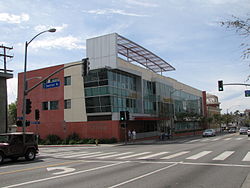
The city's identity is deeply tied to its geography, situated just west of Hollywood. From the iconic neon lights of the Sunset Strip to the architectural marvels of the Pacific Design Center, West Hollywood serves as a cultural epicenter within the greater Los Angeles metropolitan area.
Key Facts
- Incorporation Date: November 29, 1984
- Nickname: WeHo
- Motto: "The Creative City"
- Population: 35,757 (2020 Census)
- Land Area: 1.89 square miles
- Main Arteries: Santa Monica Boulevard and Sunset Boulevard
Geography and Climate
West Hollywood is a landlocked city covering 1.89 square miles. It sits at an elevation of 282 feet. The region experiences a Mediterranean climate characterized by mild winters and warm-to-hot summers.
| Metric | Winter (Jan) | Summer (Jul) | Annual Total/Record |
|---|---|---|---|
| Mean Daily Max (°F) | 67 | 80 | Record High: 111°F |
| Mean Daily Min (°F) | 46 | 62 | Record Low: 24°F |
| Avg Precipitation (in) | 3.19 | 0.02 | 13.12" (Yearly) |
History and Evolution
The area's roots trace back to early land developers like Thomas Bones and Moses Sherman. Sherman established a railway settlement that served as the precursor to the modern city.
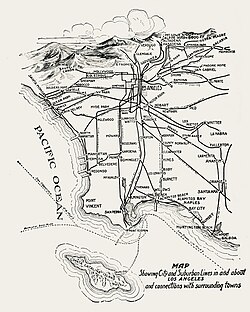
For decades, the area existed as an unincorporated part of Los Angeles County. It first appeared as an unincorporated place in the 1960 census, became a census-designated place in 1980, and finally achieved full city status by the 1990 census.
Demographics and Community
As of the 2020 census, West Hollywood has a population of 35,757, resulting in a high population density of approximately 18,900 people per square mile. The city is known for its diverse racial and ethnic composition.
- White (Non-Hispanic): 71.03% (2020)
- Hispanic or Latino: 12.58% (2020)
- Asian (Non-Hispanic): 6.36% (2020)
- Black or African American: 3.64% (2020)
Economy and Employment
The local economy is driven by transportation, retail, and hospitality. According to the 2021 Comprehensive Annual Financial Report, the largest employer is the Los Angeles County Metropolitan Transportation Authority. Other significant employers include Target, CityGrid Media, and luxury hotels such as the Andaz West Hollywood and the Argyle Hotel.
The city has also become a notable center for the cannabis industry, issuing various business licenses for adult-use retail, medical dispensaries, delivery services, and consumption lounges.
Arts, Culture, and Landmarks
West Hollywood is synonymous with entertainment history. The Sunset Strip remains one of the most famous stretches of road in the world, home to legendary venues like Whisky a Go Go and The Comedy Store.
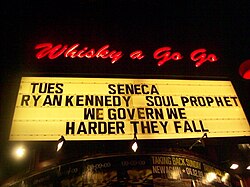
Other cultural landmarks include:
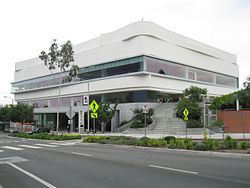
- The Pacific Design Center: A global hub for the design community.
- Westlake Recording Studios: The site where Michael Jackson recorded the albums Thriller (1982) and Bad (1987).
- Plummer Park: A historic green space for the community.
- West Hollywood Library: A modern facility located near the Pacific Design Center.
Government and Infrastructure
The city operates under a City Council/City Manager form of government. The current leadership includes Mayor John M. Erickson (2024–2025) and Councilmember Chelsea Byers (2025-current). The city is managed by City Manager David Wilson.
Education
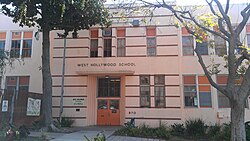
Public primary and secondary education is served by several elementary schools, including West Hollywood Elementary, Rosewood Avenue, Laurel, Melrose, and Gardner Street. Private options include the West Hollywood College Preparatory School, The Center for Early Education, and Pacific Hills School.
Transportation
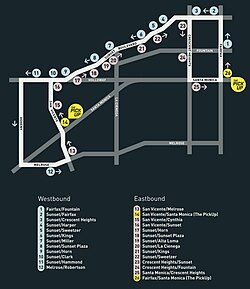
To facilitate movement within the compact city, West Hollywood offers specialized services such as "The PickUp" and the Sunset Trip shuttle service.
Legislation and Social Advocacy
West Hollywood is recognized for its progressive legislation, particularly regarding animal rights and LGBTQ+ equality. The city has declared itself a "Cruelty Free Zone" for animals and has implemented bans on the sale of most cats and dogs in pet stores, as well as a ban on rodent glue traps.
In a move toward sustainability and ethics, the city recently required plant-based dishes at all city events and endorsed the Plant Based Treaty.
Frequently Asked Questions
What is the nickname for West Hollywood?
West Hollywood is commonly referred to as "WeHo."
What are some of the most famous landmarks in the city?
The most famous landmarks include the Sunset Strip, the Pacific Design Center, and Westlake Recording Studios.
When was West Hollywood officially incorporated?
The city was incorporated on November 29, 1984.
What is the city's official motto?
The official motto of West Hollywood is "The Creative City."
Which famous albums were recorded in West Hollywood?
Michael Jackson recorded both Thriller and Bad at Westlake Recording Studios in West Hollywood.