West Beirut: History, Culture, and the Legacy of the Civil War
West Beirut refers to the western sector of Lebanon's capital, a region that gained significant prominence during the Lebanese Civil War (1975–1990). During this turbulent era, the city was fractured along sectarian lines, creating a stark divide between the western and eastern districts. This separation was physically marked by the Green Line, a volatile boundary where any attempt to cross was met with lethal force from opposing militias.
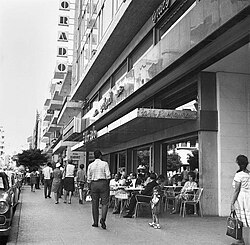
Beyond its wartime notoriety, West Beirut has historically served as the intellectual and cultural heartbeat of the city. It is home to prestigious academic institutions and vibrant neighborhoods that once defined the cosmopolitan spirit of Lebanon.
Key Facts
- The Green Line: The dividing line that separated West Beirut (primarily Muslim) from East Beirut (primarily Christian) during the civil war.
- Cultural Hub: Home to the American University of Beirut (AUB) and the Lebanese American University (LAU).
- Political Control: Controlled by the Lebanese National Movement, a coalition of leftist and sectarian militias.
- 1982 Siege: Subjected to a brutal Israeli siege from June to August 1982 during Operation Peace for Galilee.
- Tragic Legacy: Site of the Sabra and Shatila massacre in September 1982.
Cultural and Intellectual Landmarks
West Beirut is composed of several iconic neighborhoods, including Hamra, Ras Beirut, Mousaitbeh, and Ain El Mreisseh. Before the war, these areas flourished as centers of art, journalism, and political discourse, attracting a diverse population of activists and intellectuals.
The region is characterized by its high concentration of educational and leisure landmarks, such as:
- The American University of Beirut (AUB) and the Lebanese American University (LAU).
- The Corniche, a scenic waterfront promenade.
- A variety of theaters and cinemas that served as cultural anchors before the conflict.
The Lebanese Civil War and Political Division
During the civil war, West Beirut was governed by the Lebanese National Movement. This leftist framework included several key groups: the Druze Progressive Socialist Party, the Shiite Amal Movement, the Sunni Al-Mourabitoun, and the secular Lebanese Communist Party. In contrast, East Beirut was controlled by the Christian Lebanese Forces.
The political landscape was further complicated by external interventions. In the late 1970s, the Syrian 85th Infantry Brigade was deployed as part of the Arab Deterrent Forces. This period saw a dual-governance system in the capital: West Beirut was managed by the civil government of Salim al-Hoss (supported by Syria), while East Beirut was under a military government led by Michel Aoun.
The 1982 Israeli Invasion and Siege
In 1982, West Beirut became the center of global attention during Operation Peace for Galilee, an Israeli invasion aimed at dismantling the military infrastructure of the Palestine Liberation Organization (PLO) and expelling them from Lebanon.
From June to August 1982, Israeli forces encircled West Beirut in a brutal siege. The area suffered relentless airstrikes and shelling, leading to widespread destruction and heavy civilian casualties. The siege eventually concluded following a negotiated withdrawal of PLO fighters and the arrival of multinational peacekeeping forces from the United States, France, and Italy.
The Sabra and Shatila Massacre
One of the darkest chapters in the region's history occurred between September 16 and 18, 1982. Following the assassination of President-elect Bashir Gemayel on September 14, Israeli forces advanced into West Beirut on September 15.
Over the next three days, Lebanese Christian Phalangist militias, allied with Israel, entered the Sabra and Shatila refugee camps. While the stated goal was to root out remaining PLO fighters, the operation resulted in the massacre of hundreds of Palestinian civilians, including women and children. The event drew international condemnation, with accusations that Israeli forces facilitated the massacre by allowing the militias access to the camps.
West Beirut in Popular Culture
The experiences of those who lived through this era are captured in the 1998 film West Beirut, directed by Ziad Doueiri. The movie follows a group of children navigating the conflicts of the civil war, highlighting their dreams and struggles amidst the surrounding violence.
Summary of West Beirut's Wartime Dynamics
| Feature | West Beirut | East Beirut |
|---|---|---|
| Primary Sectarian Association | Muslim | Christian |
| Controlling Forces | Lebanese National Movement | Lebanese Forces |
| Governance | Civil government (Salim al-Hoss) | Military government (Michel Aoun) |
| Key Influence | Syrian support | Christian militias |
Frequently Asked Questions
What was the Green Line in Beirut?
The Green Line was the demarcation line that divided Beirut into West and East sectors during the Lebanese Civil War. It served as a dangerous boundary between the Muslim-dominated west and the Christian-dominated east, and crossing it often resulted in being shot by militias.
Which institutions are located in West Beirut?
West Beirut is home to several prestigious institutions, most notably the American University of Beirut (AUB) and the Lebanese American University (LAU), as well as the cultural landmark known as the Corniche.
What happened during the 1982 siege of West Beirut?
During Operation Peace for Galilee, Israeli forces encircled West Beirut from June to August 1982. The city endured heavy shelling and airstrikes intended to expel the PLO, ending only after a negotiated withdrawal and the deployment of multinational peacekeepers.
What was the Sabra and Shatila massacre?
Occurring from September 16 to 18, 1982, this was a massacre of hundreds of Palestinian civilians in the Sabra and Shatila refugee camps. It was carried out by Lebanese Christian Phalangist militias following the assassination of President-elect Bashir Gemayel.
Who controlled West Beirut during the civil war?
West Beirut was controlled by the Lebanese National Movement, a coalition that included the Druze Progressive Socialist Party, the Shiite Amal Movement, the Sunni Al-Mourabitoun, and the secular Lebanese Communist Party.