Wendens Ambo: A Journey Through the History of a Winding Valley
Nestled in the landscape of Essex, Wendens Ambo is a village whose story is etched into the very land it occupies. The name "Wenden" originates from Old English, meaning a winding or bending valley, a fitting description for a settlement shaped by its geography. From prehistoric footprints to the arrival of the railway, the area has served as a crossroads of human activity for millennia.
Ancient Roots and Roman Influence
Long before the village took its current form, the area was inhabited during the prehistoric and Bronze Age periods. Archaeological evidence confirms that early humans utilized this valley for settlement and survival. The region's significance continued into the classical era; in 1853, the remains of a Roman villa were discovered to the south-west of the village, indicating that the area was once part of the Roman Empire's rural infrastructure.
The Domesday Book and Norman Estates
By the time of the Domesday Book in 1086—a comprehensive land survey commissioned by William the Conqueror—the area was recorded as "Wendena" within the Uttlesford hundred of Essex. The survey listed four distinct estates. While the Domesday Book did not explicitly differentiate between them, historians have determined that these entries encompass both Wendens Ambo and Wenden Lofts, the latter located approximately 3 miles (5 km) to the north-west.
The distribution of land among Norman nobles shaped the village's early boundaries:
- Robert Gernon (or Greno): A Norman landowner with additional holdings in Takeley and Stansted, whose estate evolved into the parish of Great Wenden (Wenden Magna).
- William de Warenne: Another Norman figure whose estate became the parish of Little Wenden (Wenden Parva).
- Ralph Baynard: His estate is believed to be Wenden Lofts, referred to in a 1470 legal record as "Loutes Wenden," alongside mentions of the neighboring villages of Elmedon and Arkysden.
The Evolution of Wendens Ambo
The 17th and early 18th centuries marked a period of notable prosperity for the village, evidenced by the survival of several houses dating from this era.
A significant administrative shift occurred in 1662 when the previously separate parishes of Great Wenden and Little Wenden merged to form a single entity: Wendens Ambo. This merger led to a change in the village's spiritual center. The parish church of Little Wenden, located on the north side of Royston Road, was already in ruins by the time of the merger and was eventually demolished.
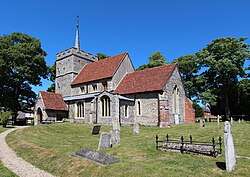
Consequently, the parish church of Great Wenden, dedicated to St Mary and dating back to the late 11th century, became the primary church for the newly unified parish.
The Arrival of the Railway
The 19th century brought industrial connectivity to the valley. In 1845, a station opened on the Eastern Counties Railway line connecting London and Cambridge. Located within Wendens Ambo, the station was originally named "Wendens" before being renamed Audley End.
Key Facts
- Etymology: "Wenden" is Old English for "winding or bending valley."
- Ancient History: Evidence of Bronze Age activity and a Roman villa (found in 1853).
- Domesday Record: Listed as "Wendena" in 1086 with four estates.
- Parish Merger: Great Wenden and Little Wenden merged in 1662 to form Wendens Ambo.
- Architecture: St Mary's Church dates to the late 11th century.
- Transport: Audley End railway station opened in 1845.
| Estate/Parish | Norman Owner | Alternative Name |
|---|---|---|
| Great Wenden | Robert Gernon | Wenden Magna |
| Little Wenden | William de Warenne | Wenden Parva |
| Wenden Lofts | Ralph Baynard | Loutes Wenden |
Frequently Asked Questions
What does the name Wendens Ambo mean?
The name is derived from the Old English word "Wenden," which translates to a winding or bending valley.
When did Great Wenden and Little Wenden merge?
The two separate parishes merged in 1662 to create the unified parish of Wendens Ambo.
Which church serves the parish today?
The parish is served by St Mary's Church, the original church of Great Wenden, which dates back to the late 11th century.
What happened to the church in Little Wenden?
The church of Little Wenden was already ruinous by the time of the 1662 merger and was subsequently demolished.
Why is the local railway station called Audley End?
The station opened in 1845 and was originally named "Wendens," but the name was later changed to Audley End.