Welsh Kingdoms and Their Heraldic Legacies
Before the conquest of Gwynedd by Edward I, the landscape of Wales was defined by a shifting mosaic of kingdoms and principalities. Ruled by various Kings and Princes, these dominions frequently merged or divided based on the unpredictable outcomes of war, strategic marriages, and inheritance laws. Central to the identity of these ruling houses was their heraldry—the system of visual symbols used to identify individuals and families.
While some coats of arms were created during the lives of the rulers, others were ascribed retrospectively to figures who lived before the formal dawn of heraldry. These symbols were not merely decorative; they were passed down through generations, preserving the lineage of the native Welsh dynasties long after their political power had waned.
![The coat of arms of Llywelyn ap Gruffudd,[2] the last Welsh Prince of Wales, depicted in the Chronica Majora.](/images/ab/45/ab456f98654cec14bd7a26a52c7cfe9497bfee3352461ee59dea6ff297a3e907.png)
The Principal Kingdoms of Wales
Among the various territories, two principal kingdoms stood above the rest: Gwynedd in the north and Deheubarth in the south.
The Kingdom of Gwynedd
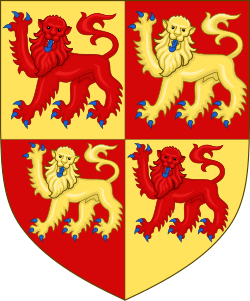
Gwynedd was the most successful of the Welsh kingdoms and the last to fall to English conquest. Its dynasty produced the last native Princes of Wales, including Llywelyn the Great and Llywelyn ap Gruffudd. The historic arms of the Gwynedd dynasty—featuring four lions passant guardant—continue to be used today as an escutcheon (a small shield placed within a larger one) in the arms borne by the Princes of Wales.
The Kingdom of Deheubarth
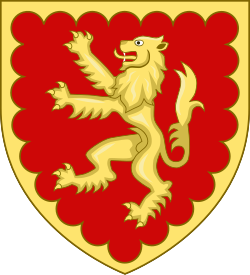
In the south, the dynasty of Deheubarth utilized a gold lion rampant on a red field, enclosed within an indented or engrailed gold border. While these arms were never incorporated into the English Royal Arms, they survived through descendants. Most notably, the Talbot family (the Earls of Shrewsbury) adopted these arms after marrying an heiress of the Deheubarth dynasty in the 14th century.
The Kingdom of Powys
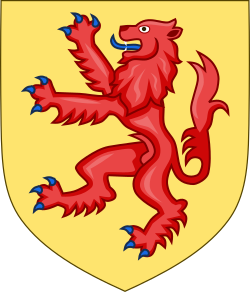
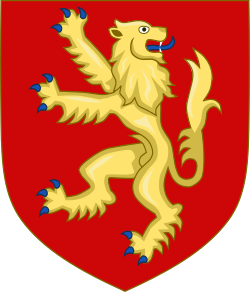
The Kingdom of Powys is associated with a red lion rampant on a gold field. These arms were used by the House of Mathrafal during Powys's period of independence and were later adopted by the Earls of Powis, specifically the de la Pole and de Cherleton families, until the late Middle Ages. Today, these symbols frequently appear in various civic coats of arms.
Key Facts
- Gwynedd was the last native Welsh kingdom to fall to Edward I.
- The current Prince of Wales uses the historic arms of the Gwynedd dynasty.
- Deheubarth arms are still borne by the Talbot family (Earls of Shrewsbury).
- Powys heraldry is characterized by a red lion on a gold field.
- Many ancient Welsh arms were attributed retrospectively to rulers who predated formal heraldry.
Heraldic Summary of Welsh Territories
| Kingdom / Principality | Heraldic Details | Notable Usage / Legacy |
|---|---|---|
| Gwynedd | Quarterly Or and Gules, four lions passant guardant counter charged, armed and langued Azur | Used by Princes of Wales since 1911 |
| Powys / Powys Wenwynwyn | Or, a lion Gules armed and langed Azure | House of Mathrafal; Prince Gwenwynwyn |
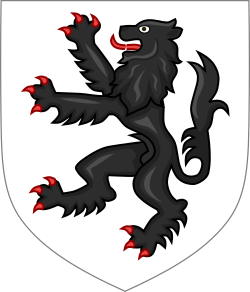
| Powys Fadog | Argent, a lion Sable armed and langed Gules | Madog ap Gruffydd Maelor |
| Deheubarth | Gules a Lion rampant Or, a border engrailed of the last | King Rhys ap Tewdwr Mawr; Talbot dynasty |
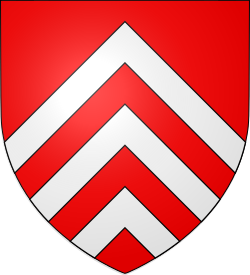
| Morgannwg | Gules, three Chevronels Argent | King Iestyn ap Gwrgant |
| Ceredigion | Sable, Lion rampant regardant Or | King Gwaethfoed Fawr; Pryse of Gogerddan |
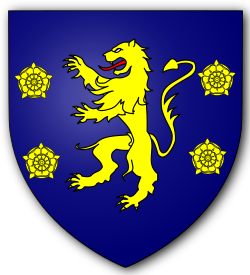
| Dyfed | Azures, Lion rampant between four Roses Or | Prince Gwynfardd of Nanhyfer |
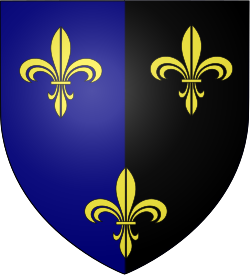
| Gwent | Per pale Azure and Sable three Fleurs-de-Lis Or | Merged with Glywysing to form Morgannwg |
| Rhwng Gwy a Hafren | Gules, a Lion rampant reguardant Or | Elystan Glodrydd; Five Royal Tribes of Wales |
Regional Variations and Attributed Arms
Beyond the major kingdoms, several other regions possessed attributed arms—symbols assigned to them by later historians or heralds. For instance, the Kingdom of Gwent, which eventually merged with Glywysing to form Morgannwg, is associated with three gold fleurs-de-lis on a split blue and black field.
The region of Rhwng Gwy a Hafren ("between the Wye and the Severn") is linked to Elystan Glodrydd, the founder of one of the Five Royal Tribes of Wales. His attributed arms, a gold lion rampant reguardant on a red field, were later utilized by the Radnorshire County Council.
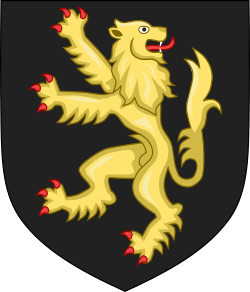
Similarly, the Kingdom of Ceredigion is linked to the mythical King Gwaethfoed Fawr, and the Kingdom of Dyfed to the historically dubious Prince Gwynfardd of Nanhyfer. Despite the questionable historical nature of some of these figures, their associated arms were adopted by local aristocratic families and county councils in later centuries.
Frequently Asked Questions
Which Welsh kingdom was the most successful?
The Kingdom of Gwynedd was the most successful and was the final native Welsh kingdom to fall to the conquest of Edward I.
How are the arms of the Princes of Wales connected to history?
The arms currently used as an escutcheon by the Princes of Wales are the historic arms of the dynasty of Gwynedd, used by native rulers such as Llywelyn the Great and Llywelyn ap Gruffudd.
Who currently bears the arms of the Deheubarth dynasty?
The Talbot family, including the Earl of Shrewsbury, continues to bear the arms of Deheubarth after marrying an heiress of that dynasty in the 14th century.
What does "retrospectively ascribed" mean in Welsh heraldry?
It means that certain coats of arms were assigned to ancient Kings and Princes by later heralds, even if those rulers lived before the formal system of heraldry was established.
What happened to the Kingdom of Gwent?
The Kingdom of Gwent merged with its neighbor, Glywysing, to form the Kingdom of Morgannwg.