Weinbach and Surrounding Communities: A Historical Overview
The region surrounding Weinbach is a tapestry of medieval fortifications, knightly feuds, and gradual administrative evolution. From the earliest documentary mentions in the 12th century to the municipal restructuring of the 1970s, the area has transitioned from a collection of independent settlements and strongholds into a unified community in Hesse.
The Early Settlements
The historical record begins with Fürfurt, which is the oldest mentioned part of the community, appearing in documents dated between 1148 and 1154. This was followed by Elkerhausen in 1191, Edelsberg in 1246, and Blessenbach in 1267. Weinbach itself entered the written record later, with its first documentary mention occurring in 1344.
Castles and Conflict
The landscape was once defined by strategic fortifications and the power struggles of the nobility. In Elkerhausen, a Wasserburg (a moated castle) served as a seat for a knightly family. During the 14th century, this family became embroiled in a fierce feud with their landlord, the Archbishop of Trier, leading to the destruction of the moated castle in 1352. By approximately 1500, a stronghouse was constructed on the site, which eventually evolved into a new castle.
Further architectural developments occurred around 1300 with the construction of Freienfels Castle, likely built by the Weilnau branch of the Diez family; it was first documented in 1327. To counter the influence of the Knights of Elkerhausen, a knightly order under the leadership of Nassau built Gräveneck Castle in 1395 to serve as a defensive guard.
Religious Architecture in Weinbach
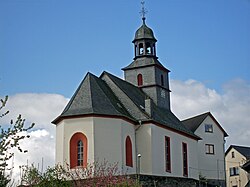
The current Evangelical church in Weinbach dates back to 1728. This structure is notable for its integration of history, as the Early Gothic quire—the area of the church surrounding the altar—from the previous church was incorporated into the newer building.
Municipal Evolution
The modern administrative structure of the region was formed through a series of mergers during the municipal restructuring of Hesse. The process began in 1970 when the previously self-administering communities of Weinbach, Blessenbach, Freienfels, and Gräveneck amalgamated. This was followed in 1974 by the merger of Elkerhausen, Fürfurt, and Edelsberg into the greater community.
Key Facts
- Oldest Mention: Fürfurt (between 1148 and 1154).
- Major Fortifications: Freienfels Castle (c. 1300), Gräveneck Castle (1395), and the Elkerhausen Wasserburg.
- Key Conflict: A 14th-century feud between the Elkerhausen knights and the Archbishop of Trier.
- Church History: The Weinbach Evangelical church (1728) preserves an Early Gothic quire.
- Administrative Shift: Full community unification was completed between 1970 and 1974.
| Community/Site | Year of First Mention |
|---|---|
| Fürfurt | 1148–1154 |
| Elkerhausen | 1191 |
| Edelsberg | 1246 |
| Blessenbach | 1267 |
| Freienfels Castle | 1327 |
| Weinbach | 1344 |
Frequently Asked Questions
Which community in the region is the oldest based on records?
Fürfurt is the oldest, with its first documentary mention occurring between 1148 and 1154.
What happened to the original Elkerhausen Wasserburg?
The moated castle was destroyed in 1352 following a feud between the local knightly family and the Archbishop of Trier.
Who built Gräveneck Castle and why?
It was built in 1395 by a knightly order under Nassau's leadership specifically to guard against the Knights of Elkerhausen.
What is unique about the Evangelical church in Weinbach?
Built in 1728, the church incorporated the Early Gothic quire from its predecessor.
When did the various communities merge into one?
The merger happened in two stages: the first group (Weinbach, Blessenbach, Freienfels, and Gräveneck) amalgamated in 1970, and the remaining communities (Elkerhausen, Fürfurt, and Edelsberg) joined in 1974.