Web of Science Citation Databases and Research Tools
Navigating the vast landscape of academic literature requires precise tools to track the influence and evolution of scientific ideas. The Web of Science (WoS) provides a comprehensive ecosystem of indexing databases and analytics tools designed to help researchers locate scholarly work and analyze how publications are cited over time.
The Web of Science Core Collection
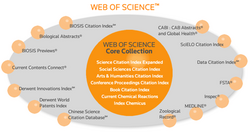
The Core Collection is the foundation of the platform, consisting of six primary online indexing databases. These databases allow for cited reference searching—the process of locating newer articles that have cited an earlier publication—as well as searches by topic, author, source title, and location.
- Science Citation Index Expanded (SCIE): Formerly the Science Citation Index, it covers over 9,200 journals across 178 scientific disciplines with 53 million records dating back to 1900.
- Social Sciences Citation Index (SSCI): Focuses on the social sciences, indexing more than 3,400 journals with 9.3 million records from 1900 to the present.
- Arts & Humanities Citation Index (AHCI): Covers over 1,800 journals in arts and humanities, containing 4.9 million records from 1975 onwards.
- Emerging Sources Citation Index (ESCI): A multidisciplinary index covering more than 7,800 journals with 3 million records since 2005.
- Book Citation Index (BCI): Includes over 116,000 editorially selected books, with 53.2 million records since 2005.
- Conference Proceedings Citation Index (CPCI): Indexes more than 205,000 conference proceedings, totaling 70.1 million records since 1990.
Regional Citation Indices
To increase global inclusivity, Web of Science has expanded to host regional citation indices since 2008. These indices capture research that may be published in languages other than English or focused on specific geographic regions.
- Chinese Science Citation Database: The first non-English indexing database, created with the Chinese Academy of Sciences.
- SciELO Citation Index: Established in 2013, covering Brazil, Spain, Portugal, South Africa, the Caribbean, and 12 Latin American countries.
- Korea Citation Index: Launched in 2014 with updates from the National Research Foundation of Korea.
- Russian Science Citation Index: Added to the platform in 2015.
- Arabic Regional Citation Index: The most recent regional addition, launched in 2020.
Abstracting, Indexing, and Specialized Databases
The platform indexes a wide variety of literature, including peer-reviewed journals, original research articles, scholarly books, reviews, editorials, chronologies, and abstracts. The scope is vast, spanning disciplines from agriculture, biological sciences, and engineering to law, architecture, and the performing arts.
For specialized fields, the platform offers targeted tools. Index Chemicus and Current Chemical Reactions allow users to create structure drawings to locate specific chemical compounds and reactions. Additionally, WoS includes BIOSIS and The Zoological Record, the latter of which serves as the unofficial register of scientific names in zoology.
| Database | Focus Area | Approx. Journals/Items | Coverage Start | Total Records |
|---|---|---|---|---|
| SCIE | Science (178 disciplines) | 9,200+ journals | 1900 | 53 Million+ |
| SSCI | Social Sciences | 3,400+ journals | 1900 | 9.3 Million+ |
| AHCI | Arts & Humanities | 1,800+ journals | 1975 | 4.9 Million+ |
| ESCI | Multidisciplinary | 7,800+ journals | 2005 | 3 Million+ |
| BCI | Books | 116,000+ books | 2005 | 53.2 Million+ |
| CPCI | Conference Proceedings | 205,000+ proceedings | 1990 | 70.1 Million+ |
Key Facts
- The Core Collection consists of six primary indexing databases.
- Coverage spans from 1900 to the present for the primary science and social science indices.
- Regional indices include databases for China, Korea, Russia, Arabic-speaking regions, and SciELO countries.
- Specialized chemistry tools enable searching via structure drawings.
- The Zoological Record acts as the unofficial register for scientific names in zoology.
Clarivate Research Products and Services
Beyond indexing, Clarivate provides a suite of workflow and analytics tools to support the research lifecycle:
- EndNote: A commercial software package for managing bibliographies and references.
- EndNote Click: A free plugin that helps researchers access subscription-based papers through their institutional libraries when off-campus.
- Publons: Launched in 2012 and merged into Web of Science in 2022, this service allowed researchers to track and verify peer review and editorial contributions. It integrated ResearcherID in 2019 and grew to over 3 million members.
- Analytics Tools: Other key products include InCites, Journal Citation Reports, Essential Science Indicators, ScholarOne, and Converis.
Frequently Asked Questions
What is a cited reference search?
A cited reference search is the process of using a citation database to find newer articles that have cited a specific earlier or current publication, allowing researchers to track the impact of a work.
Which database should I use for chemical compounds?
Researchers should use Index Chemicus or Current Chemical Reactions, as these databases allow for the creation of structure drawings to locate specific compounds and reactions.
What is the difference between SCIE and ESCI?
SCIE (Science Citation Index Expanded) is a long-standing index covering 178 scientific disciplines since 1900, while ESCI (Emerging Sources Citation Index) is a multidisciplinary index for emerging journals, covering records from 2005 onwards.
How does EndNote Click help researchers?
EndNote Click is a plugin that identifies a user's institutional subscriptions and searches for full-text versions of scientific papers, providing access even when the researcher is not on campus.
What happened to Publons?
Publons, which provided a way for academics to showcase peer review contributions, was acquired by Clarivate in 2017 and officially merged into the Web of Science platform in 2022.