Waterbirds: Diversity, Adaptations, and Conservation Challenges
Waterbirds, also known as aquatic birds, are a diverse group of avian species that live on or around bodies of water. While some definitions limit the term to birds in freshwater ecosystems, it more broadly encompasses any bird that depends on aquatic environments, including those in marine settings. These birds range from highly terrestrial wading birds to fully aquatic waterfowl, each possessing unique biological traits that allow them to thrive in their specific habitats.
To survive in these environments, waterbirds have developed specialized adaptations. These include webbed feet for swimming, specialized beaks for filtering or catching prey, and legs designed for wading. Many species are capable of diving from the surface or the air to secure food. It is important to distinguish waterbirds from piscivorous (fish-eating) birds of prey, such as ospreys and sea eagles; while these raptors hunt aquatic prey, they live primarily on dry land and are not classified as waterbirds.
Key Facts
- Broad Classification: Includes seabirds, shorebirds, waterfowl, and various wading birds.
- Physical Adaptations: Common traits include webbed feet, specialized beaks, and diving capabilities.
- Conservation Focus: Organizations like Ducks Unlimited focus on restoring degraded wetlands to protect habitat.
- Environmental Threats: Urbanization, pollution, and land reclamation are primary drivers of habitat loss.
- Health Risks: Waterbirds can act as carriers for lethal diseases like Duck Enteritis Virus (DEV) and H5N1 avian influenza.
Types of Waterbirds
Waterbirds are categorized into various orders and families based on their biology and habitat preferences.
Seabirds and Marine Birds
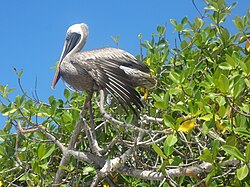
These birds are adapted for life on the open ocean. Examples include penguins (Sphenisciformes), albatrosses and petrels (Procellariiformes), and tropicbirds (Phaethontiformes). Other marine-associated birds include gulls, terns, and auks within the order Charadriiformes, as well as gannets and boobies from the order Suliformes.
Freshwater and Shorebirds
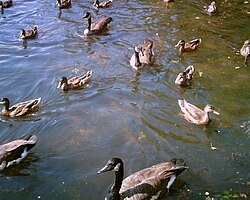
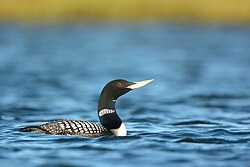
This group includes waterfowl such as ducks, geese, and swans (Anseriformes), as well as diving birds like loons (Gaviiformes) and grebes (Podicipediformes). Wading birds, such as herons, egrets, and storks (Ciconiiformes), are also prominent. Other examples include flamingos (Phoenicopteriformes) and various rails and cranes (Gruiformes).
Specialized Aquatic Birds
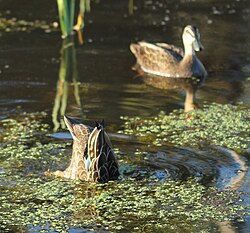
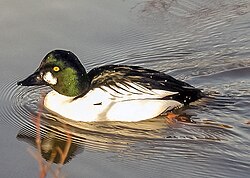
Some birds have highly specific niches, such as kingfishers (Coraciiformes), dippers (Passeriformes), and sunbitterns (Eurypygiformes). Within the duck family, there is a distinction between dabbling ducks, which feed on the surface, and diving ducks, which plunge deeper for food.
Evolution and Biological Adaptations
The evolution of waterbirds is primarily driven by the need for efficient feeding techniques. This has led to convergent evolution, where unrelated species develop similar traits. For instance, flamingos and ducks both utilize filter-feeding, and the shoebill shares a similar morphology (physical structure) with other wading birds.
Modern scientists use DNA sequence analysis, specifically mitochondrial gene sequencing and relative apparent synapomorphy analysis (RASA), to classify these birds. This genetic approach helps researchers differentiate between species and understand the evolutionary branches that separate domestic fowl from wild aquatic birds.
Conservation and Environmental Threats
Waterbird populations are heavily dependent on the health of wetlands. In the United States, organizations such as Ducks Unlimited work to restore degraded areas through conservation easements and land purchases, having conserved at least 15 million acres of waterfowl habitat in North America as of March 2021.
On a broader scale, the U.S. Fish and Wildlife Service established the Waterbird Conservation for the Americas to foster international cooperation and sustainability plans. However, global trends are concerning; a 2018 study of 461 species indicated that ineffective governance in regions like Sub-Saharan Africa, South America, and Central Asia strongly predicts population declines.
Habitat Loss and Extinction
Pollution and urbanization are driving species toward extinction. In China, 33% of wetlands were lost between 1978 and 2008. This has severely impacted the Baer's pochard, whose population has dwindled to between 150 and 700 birds due to hunting, fishing, and massive reclamation projects like the Oufei Project, which covers 8,854 hectares.
| Factor | Impact/Detail | Example/Region |
|---|---|---|
| Habitat Restoration | 15 million+ acres conserved | Ducks Unlimited (North America) |
| Wetland Loss | 33% loss (1978–2008) | China |
| Critical Species | Population: 150–700 birds | Baer's pochard |
| Governance | Ineffective governance leads to decline | Central Asia, South America |
Ecological Interactions and Health
Interspecific Competition
Waterbirds often compete with other species for food. Research has shown an inverse relationship between the goldeneye and benthic feeding fish (fish that feed at the bottom of a body of water). To avoid aggression and maintain fitness, mobile waterbirds often avoid areas of extremely high food density to reduce direct competition with resident species.
Disease and Pandemics
Waterbirds can be vectors for dangerous viruses. The Duck Enteritis Virus (DEV), which causes duck plague, is highly lethal and can reach a 100% mortality rate in young birds, spreading easily between wild and farmed populations.
More critically, the H5N1 highly pathogenic avian influenza virus (HPAIV) has spread across Eurasia and Africa since 1996. Migratory waterbirds are believed to facilitate the spread of H5N1, which has become endemic in several countries and can occasionally transmit to humans, making it a candidate for a future pandemic.
Frequently Asked Questions
What is the difference between a waterbird and a bird of prey that eats fish?
Waterbirds live on or around water and possess physical adaptations for that environment, such as webbed feet. Piscivorous birds of prey, like ospreys, hunt fish but live predominantly on dry land and do not stay in the water for long.
How does wetland loss affect specific species like the Baer's pochard?
Wetland loss due to urbanization and reclamation projects destroys breeding grounds. For the Baer's pochard, this, combined with hunting and fishing, has reduced its population to as few as 150 to 700 birds.
What is the role of migratory waterbirds in the spread of H5N1?
Migratory waterbirds can carry the H5N1 virus across vast distances, transporting it between Asia, Europe, and Africa, which helps the virus become endemic in various regions.
How do scientists classify different types of aquatic birds?
Scientists use DNA sequence analysis, specifically mitochondrial gene sequencing and relative apparent synapomorphy analysis (RASA), to identify genetic patterns and classify species.
Why do some waterbirds avoid areas with high food density?
High food density attracts more birds, which increases competition, aggression, and fighting. By spreading out, mobile waterfowl reduce conflict and improve their overall survival and fitness.