Washington, Virginia: A Journey Through the History of Little Washington
Nestled in the rural beauty of the Piedmont region, the town of Washington, Virginia, stands as a testament to American colonial expansion and small-town resilience. Known affectionately as Little Washington to distinguish it from the nation's capital, this community has evolved from a 1735 land grant into a world-renowned destination for gastronomy and history.
The Colonial Foundations
The origins of the town date back to 1735, when King George II of Great Britain granted 1,750 acres of land to siblings Thomas, James, and Elizabeth Kennerly. This vast tract, located between the mountains and the fork of the Rushy River in what was then Orange County, was awarded in exchange for importing six people into the Virginia colony, a payment of seven pounds five shillings, and an annual fee of one shilling per fifty acres.
By 1745, the land was divided among the siblings. Thomas Kennerly, who held the central portion, sold his holdings to Henry Gambill in 1753. Gambill further split the land between his son, William, and John Minor. The boundary between these two parcels eventually became Gay Street, a central artery of the future town.
Throughout the late 18th century, the land changed hands several times. By the 1790s, key figures including William Porter and George Calvert had acquired the primary parcels. Early structures were sparse, consisting mainly of a schoolhouse and stores owned by James Wheeler and James Jett Jr.
The Official Establishment of the Town
On November 1, 1796, George Calvert, James Jett Jr., and James Wheeler petitioned the Virginia General Assembly to establish a town on 25 acres of their land. The request was granted on December 14, 1796, making Washington one of thirteen new towns created in Virginia that year. A subsequent petition in 1797 expanded the town's boundaries using land from William Porter, with the street plan naming four of the six roads after the petitioners.
While local legend once suggested that George Washington surveyed the town in 1749, historians believe this claim originated from fictitious documents created in 1932.
Early Growth and the "Little Washington" Moniker
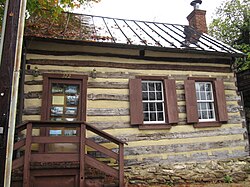
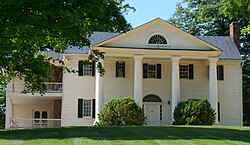
The town's early economy was driven by hospitality and commerce. In 1803, Anne Cox opened a tavern in the town center, and Mary Resor established another on Gay Street (which later became the home known as "Avon Hall"). By 1804, the town had its own post office and began using the name "Little Washington" to avoid confusion with the new federal capital located 70 miles to the northeast.
Becoming the County Seat
A pivotal shift occurred in 1833 when Rappahannock County was formed from part of Culpeper County. Washington was selected as the county seat, leading to a construction boom. Between 1833 and 1836, the courthouse, Court Clerk's office, and jail were erected.
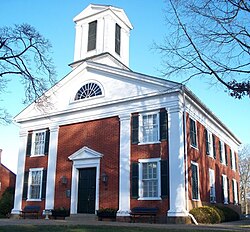
As the administrative hub of the county, the town expanded its infrastructure. Private schools were established before the advent of public education, and several churches were built between 1856 and 1890, including the Washington Presbyterian, Trinity Episcopal, Washington Baptist, First Baptist (African American), and Washington Methodist churches.
Modernization and the "She-town" Era
The town was officially incorporated in 1894. The early 20th century brought significant modernization: the Rappahannock National Bank opened in 1903, and electricity and telephones arrived in the 1920s. In the mid-1930s, the Works Progress Administration (WPA) helped install a new water system, and a volunteer fire department was formed.
A landmark moment in local governance occurred in the mid-20th century when seven women were elected to the Town Council, replacing seven men. This event garnered national attention and earned the town the temporary nickname "She-town." These women are credited with significantly improving the town's governance and aesthetic appeal.
The Influence of The Inn at Little Washington
In 1978, a former garage known as Thornton's was transformed into The Inn at Little Washington. Under the leadership of chef and owner Patrick O'Connell, the Inn achieved international acclaim, becoming a member of Relais & Châteaux and receiving a 5-Star award from the Mobil Travel Guide.
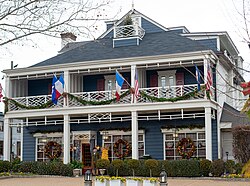
The Inn's success—including a 5-diamond rating from the AAA and a high ranking from the French guide La Liste—has turned the town into a magnet for art lovers and gourmet tourists. This influx of visitors spurred the growth of art galleries, boutique shops, and bed and breakfasts.
Preservation and Current Status
To protect its unique character, the town was listed on the National Register of Historic Places as the "Washington Historic District" in 1975. A review board was established to ensure that new developments respect the town's historic ambiance.
Today, Washington remains a quiet, safe community. While the original 1797 street grid is still in place, the town has grown from its original 25 acres to over 182 acres. It continues to operate without heavy industry or large commercial businesses, maintaining its rural charm within Rappahannock County.
Key Facts
- Founded: Officially established by the Virginia General Assembly on December 14, 1796.
- Original Size: Started as 25 acres; now encompasses 182.0171 acres.
- County Seat: Became the seat of Rappahannock County in 1833.
- Historic Status: Listed on the National Register of Historic Places in 1975.
- Culinary Fame: Home to The Inn at Little Washington, a world-renowned 5-diamond destination.
- Governance: Managed by a 7-member Town Council.
| Period/Year | Key Event | Significance |
|---|---|---|
| 1735 | Kennerly Land Grant | Initial English settlement of the area. |
| 1796 | Town Establishment | Official creation of the town of Washington. |
| 1833 | County Seat Designation | Construction of courthouse and jail; growth as a govt hub. |
| 1975 | National Register Listing | Formal recognition as a Historic District. |
| 1978 | Opening of The Inn | Shift toward international tourism and luxury dining. |
Frequently Asked Questions
Why is it called "Little Washington"?
The town adopted the name "Little Washington" as early as 1804 to distinguish itself from the new national capital, Washington, D.C., which is located approximately 70 miles to the northeast.
Did George Washington help design the town?
No. Although a local legend claimed he surveyed and laid out the town in 1749, this is believed to be based on fictitious documents created in 1932.
What is the significance of the "She-town" nickname?
The nickname was used temporarily after seven women were elected to the Town Council, replacing seven men, an event that received nationwide publicity for its rarity at the time.
How has the town's size changed since its founding?
The town began with a petition for 25 acres of land in 1796 and has since expanded to 182.0171 acres, though it still retains its original 1797 street grid.
What makes The Inn at Little Washington famous?
The Inn is internationally recognized for its luxury lodging and dining, holding a 5-diamond AAA rating and being ranked as one of the highest-rated restaurants in the world by La Liste.