Wai-Wai People: Guardians of the Amazon Rainforest
The Wai-Wai (also written as Waiwai or Wai Wai) are a Carib-speaking Indigenous people residing in the lowland forests of northern Brazil and Guyana. Comprising six smaller ethnic groups—the Shereo, Parukoto, Mawayana, Tunayana, Katwena, and Taruma—the Wai-Wai have maintained a strong cultural identity despite the introduction of Christianity in the late 1950s. Their influence extends even to the capital of Guyana, where the Umana Yana in Georgetown takes its name from the Wai-Wai term for "meeting place."
First documented by Westerners in December 1837 via the explorer Sir Robert Schomburgk, the Wai-Wai were described as skilled hunters celebrated for their dogs. Throughout the 20th century, the population shifted due to external pressures, including an influenza epidemic that devastated the Taruma tribe and the activities of the Boundary Commission between 1933 and 1938, which drove many deeper into the Guyanese interior.
Key Facts
- Total Population: Approximately 2,672 people.
- Distribution: Primarily in Brazil (2,502 as of 2014) and Guyana (170 as of 2006).
- Language: Wai Wai language, with close affinities to the Arara group.
- Religion: A blend of traditional Animism and Christianity.
- Conservation: Established Guyana's first Community Owned Conservation Area (COCA).
Geography and Settlements
The Wai-Wai are split between two nations, maintaining a deep spiritual and physical connection to the Amazonian landscape.
Guyana
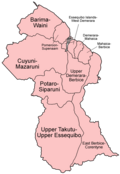
In Guyana, the Wai-Wai reside in the far south near the headwaters of the Essequibo River in a region known as Konashen. This area is a community-owned conservation zone. The Konashen Amerindian Community manages a land area of 648,860 hectares with a population of approximately 201 people.
Brazil
The majority of the population lives in northern Brazil, specifically in the states of Roraima and Pará. They occupy three primary Indigenous territories: the WaiWái, Trombetas-Mapuera, and Nhamundá-Mapuera territories. Key settlements include Mapuera, Jatapu-zine, Catual, Cobra, and Pequeno Paraíso.
Culture and Traditional Livelihoods
The Wai-Wai are versatile forest dwellers who balance hunting with agriculture. Due to thin soil and high annual rainfall (approximately 4 meters), they traditionally employ the slash and burn method of farming to produce food.
Artistry and Craftsmanship
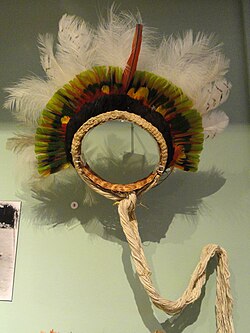
The Wai-Wai are renowned for their weaving skills. They twist cotton into yarn to create intricate textiles, most notably hammocks woven on square frames—a craft they share with the Lokono and Kalina peoples. Their artistic repertoire also includes pottery, bone flutes, and woven combs.
Social Identity and Hunting
Hunting primates is a significant cultural marker for the Wai-Wai, distinguishing them as "true forest people" compared to other Indigenous groups in Guyana. Primate hunting serves as a demonstration of masculinity and a means to improve betrothal prospects. Additionally, primate parts are repurposed for tools, such as bone arrow points and saki tail dusters.
Music and Arts
The community has a strong affinity for music, utilizing guitars, hand drums, and flutes. These instruments are typically crafted from natural materials harvested directly from the surrounding rainforest.
Social Structure and Marriage
Women are central to the stability and political strength of Wai-Wai society. A village's wealth and power are viewed as dependent on female labor and reproduction. Furthermore, the relationship between a father and daughter provides the father with a sense of control over both his daughter and his son-in-law.
Marriage, known as Mansiya, typically occurs after a woman has reached her first menses (around age thirteen), with most women married by the age of seventeen.
Religion and Spiritual Beliefs
Traditionally, the Wai-Wai follow animistic beliefs led by the yaskomo (a medicine man or shaman). The yaskomo is believed to perform "soul flights" to interact with different elements of existence:
- Sky: Consulting cosmological beings to name newborns.
- Earth: Visiting the cave of peccaries' mountains to ensure an abundance of game.
- Water: Diving deep into rivers to seek help from aquatic beings.
- Healing: Performing spiritual journeys to cure the sick.
In the mid-20th century, Western influence and Christianity significantly altered these traditions. In 1949, following the persecution of Christian missionaries by the government of Forbes Burnham, approximately 700 Wai-Wai migrated to Brazil to remain with their missionaries. Those remaining in Guyana were largely influenced by the Christian Brethren Bible Outreach.
Environmental Stewardship: The COCA
The Wai-Wai of the Konashen District established Guyana's first Community Owned Conservation Area (COCA). Spanning 625,000 hectares and legally protected by the Guyana parliament, this area was developed with support from Conservation International. The Wai-Wai received formal title to this land in 2004.
The COCA aims to provide economic benefits while protecting biodiversity. The Wai-Wai view the rainforest as essential for survival, providing clean air, soil stability for waterways, natural medicines, and food sources like fish, fruit, and nuts.
| Country | Primary Region/Territory | Approx. Population | Key Land Area/Feature |
|---|---|---|---|
| Guyana | Konashen | 170 - 201 | 648,860 ha (COCA) |
| Brazil | Roraima & Pará | 2,502 | WaiWái, Trombetas-Mapuera, Nhamundá-Mapuera |
Frequently Asked Questions
What is the meaning of "Umana Yana"?
Umana Yana is a Wai-Wai term meaning "meeting place," and it is the name of a well-known structure in Georgetown, Guyana.
What is a yaskomo?
A yaskomo is a Wai-Wai medicine man or shaman believed to be capable of performing soul flights to heal the sick or communicate with spiritual beings in the sky, earth, and water.
How do the Wai-Wai practice agriculture?
Due to challenging conditions including thin soil and heavy rainfall, the Wai-Wai traditionally use the "slash and burn" method of farming.
Why did many Wai-Wai migrate from Guyana to Brazil in 1949?
Many migrated to follow Christian missionaries who were being persecuted, imprisoned, or extradited by the authoritarian government of Forbes Burnham.
What is the significance of primate hunting in Wai-Wai culture?
Consuming primate meat distinguishes the Wai-Wai as "true forest people" and serves as a way for men to demonstrate masculinity and improve their chances of betrothal.