Volleyball: History, Rules, and Professional Gameplay
Volleyball is a dynamic team sport played worldwide, characterized by two teams separated by a net, each striving to ground the ball on the opponent's side. From its humble beginnings as a recreational activity to its status as a high-intensity Olympic event, volleyball combines athletic power with strategic precision.
The sport is governed globally by the Fédération Internationale de Volleyball (FIVB), which standardizes the rules and oversees international competitions. Whether played on an indoor court or the sandy shores of a beach, the core objective remains the same: keep the ball in the air and force the opposition into an error.
Key Facts
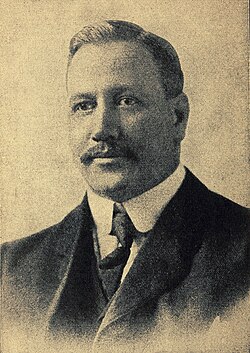
- Founder: Created by William G. Morgan in 1895.
- Olympic Debut: Indoor volleyball joined the Olympics in 1964; beach volleyball joined in 1996.
- Team Size: 6 players per side for indoor; 2 players per side for beach.
- Governing Body: FIVB (Fédération Internationale de Volleyball).
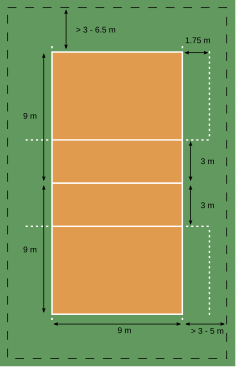
- Court Size: 9 m × 18 m (29.5 ft × 59.1 ft).
- Winning Condition: Best-of-five sets, with sets typically played to 25 points.
The Evolution of the Game
Origins and Early Rules
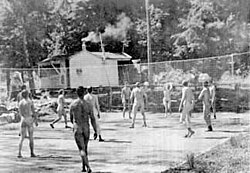
Volleyball was invented by William G. Morgan, who originally called the game "Mintonette." Drawing inspiration from baseball, basketball, handball, and badminton, Morgan designed a sport that was less physically jarring than basketball. The original rules featured a net only 6 feet 6 inches high and a court measuring 25 by 50 feet. In these early stages, there was no limit to how many times a team could touch the ball before sending it over the net.
Global Expansion and Refinements
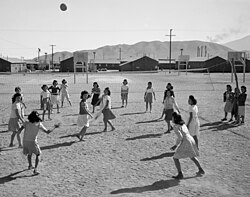
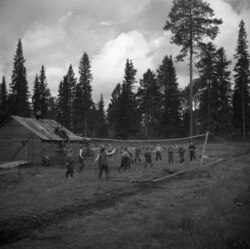
The sport spread rapidly through the promotion of the YMCA and YWCA. Canada became the first country outside the United States to adopt the game in 1900. During World War I, American Expeditionary Forces distributed thousands of volleyballs to troops, sparking growth across Europe and Soviet nations.
Significant technical evolutions occurred in the early 20th century. In 1916, players in the Philippines introduced the set and spike. By 1920, the "three hits" rule was established, and restrictions were placed on hitting from the back row. The FIVB was eventually founded in 1947, leading to the first men's World Championships in 1949 and women's in 1952.
The Rise of Beach Volleyball
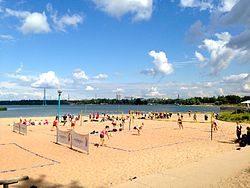
Likely originating around 1915 on Waikiki Beach in Hawaii, beach volleyball is a variation played on sand with two players per team. It gained official FIVB endorsement in 1987 and became an Olympic sport in 1996.
Rules and Court Specifications
Court and Equipment
A standard indoor court is 9 m × 18 m, divided into two equal squares. The net height varies by gender: 2.43 m (7 ft 11 11/16 in) for men and 2.24 m (7 ft 4 3/16 in) for women. The ball must be spherical, made of leather or synthetic leather, weighing between 260–280 g with a circumference of 65–67 cm.
Scoring System
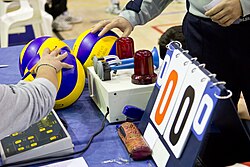
Modern volleyball uses rally point scoring, meaning a point is awarded on every single play regardless of which team served. A set is won by the first team to reach 25 points with at least a two-point lead. Matches are generally best-of-five sets; if a fifth set is required, it is played to 15 points.
Prior to 1999, the sport used "side-out scoring," where points could only be scored by the serving team. The shift to rally scoring was implemented to make matches more predictable in length and more appealing for television audiences.
Common Fouls and Violations
- Double Hit: When a single player touches the ball twice consecutively.
- Four Hits: When a team makes four consecutive contacts before sending the ball over.
- Net Foul: Touching the net during active play.
- Out of Bounds: Causing the ball to touch the floor outside the opponent's court boundaries.
Gameplay and Player Specialization
Essential Skills
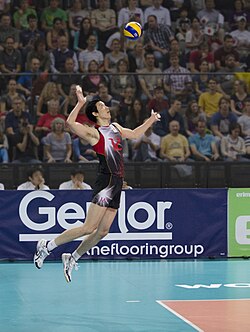
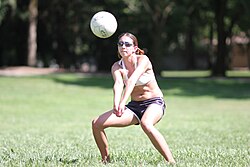
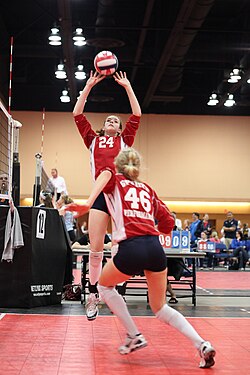
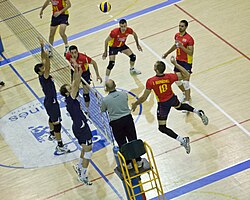
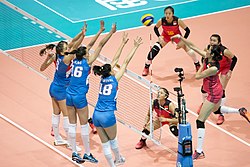
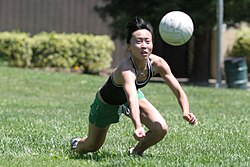
Players utilize a variety of techniques to control the ball. The serve starts the play, often utilizing a jump serve for power. The pass (or bump) is a forearm hit used to handle the serve. The set is a tactical overhead pass that positions the ball for an attack (spike). Defensively, players use blocking to stop the ball at the net and digging to prevent the ball from hitting the floor.
The Libero
Introduced internationally in 1998, the libero is a defensive specialist. Identifiable by a contrasting jersey color, the libero can replace any back-row player without counting toward the substitution limit. However, they are restricted from blocking or attacking the ball when it is entirely above the height of the net.
Team Formations
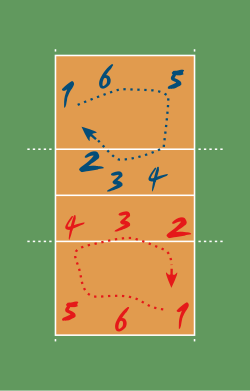
Teams organize themselves into specific formations based on the number of hitters and setters. The 5-1 system is the most common in high-level play, utilizing one setter and five hitters. Other systems include the 4-2 (basic/beginner) and the 6-2. Players rotate clockwise on the court each time their team wins the serve back from the opponent.
Summary of Volleyball Variations
| Feature | Indoor Volleyball | Beach Volleyball |
|---|---|---|
| Players per Team | 6 | 2 |
| Surface | Hard Court | Sand |
| Governing Body | FIVB | FIVB |
| Olympic Debut | 1964 | 1996 |
| Specialized Roles | Includes Libero | Generalists |


Frequently Asked Questions
How many hits is a team allowed before the ball must go over the net?
A team is allowed a maximum of three consecutive contacts to return the ball to the opponent's court. A fourth contact is considered a foul.
What is the role of the libero in volleyball?
The libero is a defensive specialist who wears a different colored jersey. They can substitute for any back-row player without official notice and focus on passing and digging, but they cannot spike or block.
What is the difference between side-out scoring and rally scoring?
In side-out scoring, only the serving team could score a point. In rally scoring, a point is awarded to the winner of every rally, regardless of which team served.
What happens if the ball hits the boundary line?
If any part of the ball touches the line, it is counted as "in" and the point is awarded accordingly.
Who invented volleyball and why?
William G. Morgan invented the sport in 1895 as "Mintonette." He wanted to create a game that combined elements of other sports but was less physically demanding than basketball.