Visual Impairment: Causes, Classifications, and Management
Visual impairment, also known as vision loss, is a broad term describing a decreased ability to see that cannot be fully corrected by standard means. This condition affects millions of people worldwide, ranging from mild sight loss to total blindness. While the prevalence of visual impairment has decreased since the 1990s, it continues to impose significant economic costs due to treatment expenses and a reduced capacity for employment.
As of 2015, an estimated 940 million people lived with some degree of vision loss. Of these, 246 million had low vision and 39 million were blind. The majority of affected individuals are over the age of 50 and reside in the developing world.
Key Facts

- Global Impact: Approximately 13% of the global population (940 million people) experienced vision loss as of 2015.
- Primary Causes: Refractive errors and cataracts are the leading causes of visual impairment and blindness globally.
- Age Distribution: Over 82% of blind individuals are aged 50 or older.
- Childhood Blindness: An estimated 1.4 million children under age 15 are blind.
- Legal Definition: In North America and Europe, legal blindness is generally defined as visual acuity of 20/200 (6/60) or less in the better eye with best correction.
Classifying Vision Loss

Medical professionals use specific categories to define the severity of distance vision impairment based on visual acuity (the clarity or sharpness of vision).
Distance Vision Categories
- Category 0: No or mild impairment (better than 6/18).
- Category 1: Moderate impairment (worse than 6/18, better than 6/60).
- Category 2: Severe impairment (worse than 6/60, better than 3/60).
- Category 3: Blindness (worse than 3/60, better than 1/60).
- Category 4: Blindness (worse than 1/60, but with light perception).
- Category 5: Irreversible blindness (no light perception).
In the United States, the American Medical Association defines blindness as a central visual acuity of 20/200 or less in the better eye with corrective glasses, or a visual field contracted to a diameter of 20 degrees or less.
Common Causes of Visual Impairment

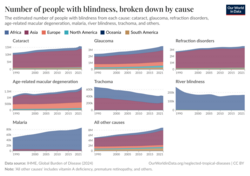
The causes of vision loss vary depending on whether the result is general impairment or total blindness. Refractive errors—such as myopia (nearsightedness)—are the most common cause of general impairment, while cataracts are the leading cause of total blindness.
| Cause | % of Visual Impairment | % of Total Blindness |
|---|---|---|
| Cataracts | 33% | 51% |
| Refractive Error | 42% | 3% |
| Glaucoma | 2% | 8% |
| Age-related Macular Degeneration | 1% | 5% |
| Corneal Opacification | 1% | 4% |
| Trachoma | 1% | 3% |
| Diabetic Retinopathy | 1% | 1% |
Among working-age adults in England and Wales, the causes differ, with hereditary retinal disorders (20.2%), diabetic retinopathy (14.4%), and optic atrophy (14.1%) being the most prevalent.
Management and Assistive Technology

While some forms of vision loss are irreversible, vision rehabilitation and environmental adaptations can significantly improve quality of life. Treatment often involves a combination of medical intervention and the use of assistive devices.
Mobility and Navigation
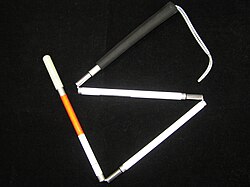
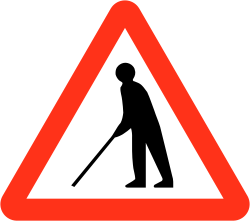
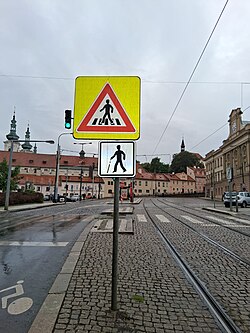
To navigate the world safely, individuals may use a white cane or be assisted by a guide dog. Many countries also use specific road signs to alert drivers to the presence of blind pedestrians.


Daily Living Aids
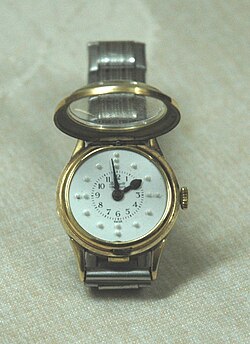
Tactile technology allows individuals to interact with their environment through touch. This includes Braille watches and tactile features on banknotes and coins to help identify currency values.

Environmental Adaptations
Simple changes in the home can foster independence, such as:
- Labeling and tagging clothing and personal items.
- Using a consistent clock-face system to place food on a dinner plate.
- Adding tactile markings to the controls of household appliances.
Visual Impairment in Culture and Art

Blindness has been a recurring theme in art and history, often depicted through the lens of touch and perception. From the classical works of Diego Velázquez to the depictions of Saint Cecilia, art has explored the sensory experience of those without sight.


Frequently Asked Questions


What is the difference between low vision and blindness?
Low vision refers to a visual impairment that cannot be corrected by glasses, contact lenses, medication, or surgery, but where some usable vision remains. Blindness is a more severe loss of vision, which can range from having only light perception to total absence of light perception.
What is the most common cause of blindness worldwide?
Cataracts are the most common cause of blindness globally, accounting for approximately 51% of cases in 2010.
How is legal blindness defined in the US?
In the United States, a person is considered legally blind if their central visual acuity is 20/200 or less in the better eye with the use of a correcting lens, or if their visual field is limited to 20 degrees or less in diameter.
Can visual impairment lead to other health complications?
Yes, visual impairment can lead to complications such as an increased risk of falls, particularly in older adults, and non-24-hour sleep–wake disorder.
What are some common assistive devices for the visually impaired?
Common devices include eyeglasses for refractive errors, white canes for navigation, guide dogs, Braille readers, and tactile markers on everyday objects like currency and appliances.