Viscount Trenchard: The Father of the Royal Air Force
Hugh Montague Trenchard, 1st Viscount Trenchard, was a pivotal figure in military history, widely recognized as the "Father of the Royal Air Force". From his humble beginnings and early struggles in the British Army to his role as the architect of an independent air arm, Trenchard's career spanned the most transformative years of 20th-century warfare.
Trenchard was not merely a commander but a visionary who advocated for strategic bombing—the use of air power to strike an enemy's heartland to undermine their will and capacity to fight. His leadership ensured that the RAF survived the post-war budget cuts of the 1920s and evolved into a professional, modern fighting force.
Key Facts
- Full Name: Hugh Montague Trenchard, 1st Viscount Trenchard.
- Primary Legacy: Instrumental in the establishment and survival of the Royal Air Force (RAF).
- Highest Rank: Marshal of the Royal Air Force (the first person to hold this rank).
- Key Commands: Chief of the Air Staff and Commander of the Royal Flying Corps in France.
- Notable Achievement: Orchestrated the Kabul Airlift in 1928 to rescue 600 civilians.
- Civilian Role: Served as the Commissioner of Police of the Metropolis in the 1930s.
Early Life and Military Beginnings
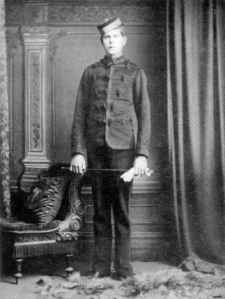
Born on February 3, 1873, in Taunton, England, Trenchard's early path to success was fraught with difficulty. When he was 16, his father's bankruptcy forced him to leave school, and he only returned through the charity of relatives. His early attempts to enter the military were similarly challenging; he failed the Woolwich examinations twice and struggled with the Militia's entry standards.
Despite these setbacks, Trenchard persevered. After a period of training as a probationary subaltern with the Forfar and Kincardine Artillery, he achieved a pass in March 1893. At age 20, he was commissioned as a second-lieutenant in the Second Battalion of the Royal Scots Fusiliers and posted to India.
The Transition to Aviation
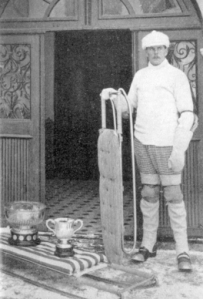
Trenchard's military career took a decisive turn in 1912. During the Army Manoeuvres in September of that year, he served as an air observer, an experience that convinced him of the vital cooperation needed between air assets and ground forces. He learned to fly in the summer of 1912, earning his aviator's certificate (No. 270) on July 31 while flying a Henry Farman biplane at the Sopwith School of Flying in Brooklands.
His aptitude for aviation led to his appointment as second-in-command of the Central Flying School. During this time, he crossed paths with Winston Churchill, then First Lord of the Admiralty, though Trenchard famously held a low opinion of Churchill's skills as a pilot.
Leadership in the First World War
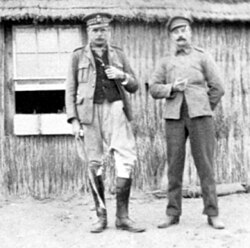
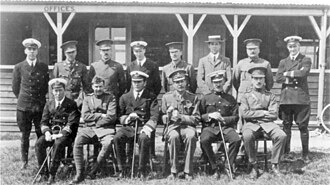
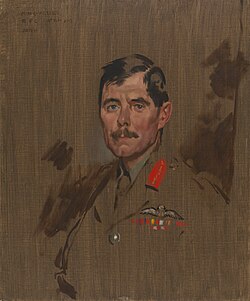
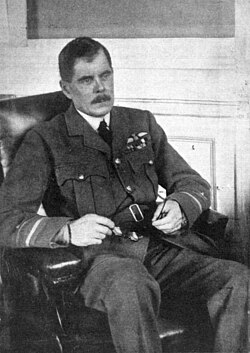
During the First World War, Trenchard rose rapidly through the ranks of the Royal Flying Corps (RFC). By the summer of 1915, he was promoted to brigadier-general and appointed Officer Commanding the RFC's units in France. He maintained a close partnership with General Haig, the commander-in-chief of the British Expeditionary Force.
As the RFC expanded, Trenchard was promoted to major-general in March 1916. In 1918, he briefly served as the first Chief of the Air Staff before leading the Independent Air Force in France. His tenure during the war established the operational foundations of British air power.
Establishing the Royal Air Force
Returning as Chief of the Air Staff in 1919 under Winston Churchill, Trenchard spent the next decade fighting for the RAF's existence. He focused on professionalizing the force through several key initiatives:
- Auxiliary Air Force: Created in late 1924 to expand the RAF's strength, resulting in 25 auxiliary squadrons.
- Short-Service Commission Scheme: Provided regular manning for new squadrons.
- University Air Squadrons: Established in 1925 at Oxford, Cambridge, and London to attract educated recruits.
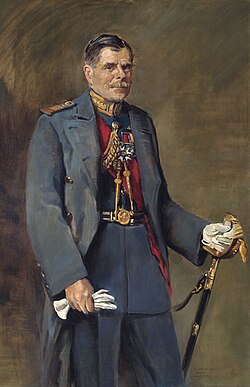
On January 1, 1927, Trenchard became the first person to be promoted to the rank of Marshal of the Royal Air Force. One of his most celebrated achievements during this period was the Kabul Airlift in 1928, where he coordinated the rescue of approximately 600 stranded civilians from Afghanistan over a nine-week operation.
Later Career and Public Service
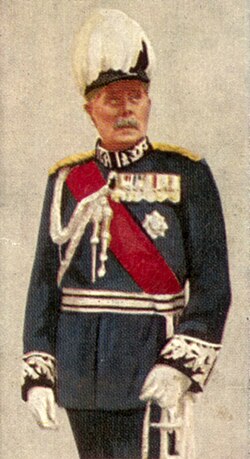
After retiring from the RAF, Trenchard transitioned to civilian leadership, serving as the Commissioner of Police of the Metropolis during the 1930s. He also served as the Chairman of the United Africa Company.
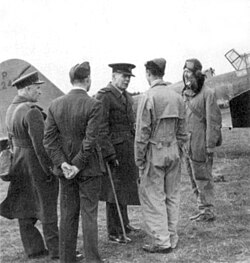
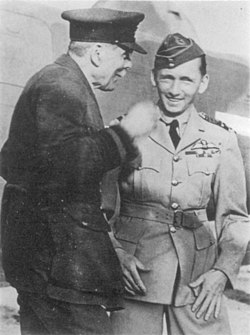
During the Second World War, although he held no official role, Trenchard remained a passionate defender of the RAF. He declined offers to organize training in Canada and coordinate national camouflaging, preferring to visit RAF units in the field and advocate for strategic strikes against Germany from bases in France.
Death and Legacy
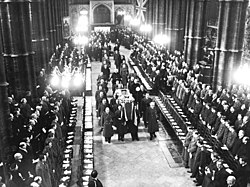
Lord Trenchard died on February 10, 1956, at the age of 83. He was buried in the RAF Chapel at Westminster Abbey. His legacy continues through the professional standards of the RAF and a permanent memorial unveiled in his hometown of Taunton in 2018, where a road was renamed Trenchard Way in his honor.
| Category | Details |
|---|---|
| Born/Died | 3 Feb 1873 – 10 Feb 1956 |
| Key Military Branches | British Army (1893–1918), Royal Air Force (1918–1930) |
| Highest Rank | Marshal of the Royal Air Force |
| Major Conflicts | Second Boer War, First World War, Second World War (semi-officially) |
| Major Awards | GCB, OM, GCVO, DSO |
| Civilian Role | Commissioner of Police of the Metropolis |
Frequently Asked Questions
Why is Lord Trenchard called the "Father of the Royal Air Force"?
He is given this title because he was instrumental in establishing the RAF as an independent service and spent a decade securing its future and professional structure against political and budgetary pressures.
What was the Kabul Airlift?
The Kabul Airlift was a rescue operation in 1928 coordinated by Trenchard to save around 600 British and European civilians stranded in Afghanistan during a civil war.
What was Trenchard's view on air warfare?
Trenchard was an early advocate of strategic bombing, believing that air power should be used to strike the enemy's home territory to disrupt their ability to wage war.
Did Trenchard serve in the police?
Yes, during the 1930s, he served as the Commissioner of Police of the Metropolis.
How did Trenchard's early academic struggles affect his career?
Trenchard failed several early military examinations, including the Woolwich exams, and only entered the military after a bare pass in 1893, demonstrating a level of perseverance that characterized his later leadership.