Villa Hortensia: A Historic Mansion Turned Municipal Hub in Rosario
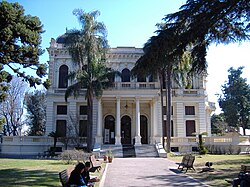
In the heart of Barrio Alberdi, located in the north-eastern region of Rosario, Santa Fe, stands Villa Hortensia. This architectural gem, situated at 1917 Warnes St., serves as a striking example of how historic preservation can blend with modern urban utility. Once a private sanctuary for the city's elite, it now functions as a vital administrative center for the local community.
A Legacy of Elegance and Architecture
The story of Villa Hortensia began in 1890 when it was designed by architect Boyd Walker. The mansion was originally commissioned for José Nicolás Puccio, the founder of Alberdi. Over the following years, the property changed hands, passing from Puccio to Ciro Echesortu, and eventually to Alfredo Rouillon.
The estate derived its name from María Hortensia Echesortu, the wife of Alfredo Rouillon. For the wealthy Rouillon family, the mansion served as a luxurious summer residence. Its appeal lay in its proximity to the Paraná River and its expansive gardens, which provided ample shade and tranquility away from the city's bustle.
Preservation and Public Transformation
Despite its grandeur, the mansion suffered from years of neglect. By the late 20th century, the structure was in such poor condition that it faced the threat of being condemned. Recognizing its cultural and architectural value, the property was declared a National Historic Monument in 1989.
On May 30, 1996, the Municipality of Rosario acquired the villa. This acquisition was part of a strategic decentralization plan—an urban strategy aimed at moving government services out of the city center and into local neighborhoods to improve accessibility for residents.
Following a meticulous restoration that prioritized original materials and architectural plans, Villa Hortensia reopened on October 13, 1997, as the city's first Municipal District Center.
Serving the North District Community
Today, Villa Hortensia is far more than a museum; it is a functional administrative hub. By hosting a variety of essential services, the center eliminates the need for residents of the North District to make the 40-minute bus ride to downtown municipal offices.
The facility currently houses:
- A citizen assistance office.
- A delegation of the Municipal Bank of Rosario.
- Payment and request offices for natural gas, power, and water companies.
- A marriage office.
The impact of this decentralization was immediate. A survey conducted one month after the center's opening revealed that the average distance residents traveled for administrative business dropped from 8 km to just 1.5 km. Furthermore, 80% of surveyed citizens reported that the service at Villa Hortensia was superior to that of the downtown offices.
Key Facts
- Location: 1917 Warnes St., Barrio Alberdi, Rosario, Argentina.
- Built: 1890 by architect Boyd Walker.
- Status: Declared a National Historic Monument in 1989.
- Current Use: First Municipal District Center of Rosario (opened 1997).
- Efficiency Gain: Reduced average travel distance for residents from 8 km to 1.5 km.
| Category | Details |
|---|---|
| Architect | Boyd Walker |
| Original Owner | José Nicolás Puccio |
| Acquisition Date | May 30, 1996 |
| Re-opening Date | October 13, 1997 |
| Primary Function | Municipal District Center |
Frequently Asked Questions
Where is Villa Hortensia located?
Villa Hortensia is located at 1917 Warnes St. in Barrio Alberdi, in the north-eastern part of Rosario, Santa Fe, Argentina.
Who was the mansion named after?
The house was named after María Hortensia Echesortu, who was married to one of the mansion's former owners, Alfredo Rouillon.
What services are available at the Municipal District Center?
Citizens can access a citizen assistance office, the Municipal Bank of Rosario, a marriage office, and payment centers for electricity, water, and natural gas services.
Why was Villa Hortensia converted into a government center?
It was converted as part of an official decentralization plan to bring administrative services closer to the residents of the North District, reducing travel time and improving service quality.
When did Villa Hortensia become a protected site?
The mansion was declared a National Historic Monument in 1989 to save it from the threat of being condemned due to neglect.