Vigan City: The Historic Heritage Heart of Ilocos Sur
Nestled in the Ilocos Region of the Philippines, Vigan City stands as a living testament to the fusion of native Filipino, Chinese, and Spanish influences. Known as the "Heritage City," Vigan is not merely a destination but a journey back in time, where cobblestone streets and ancestral homes preserve the atmosphere of the Spanish colonial era. Its unique architectural blend earned it the prestigious designation as a UNESCO World Heritage Site in 1999.
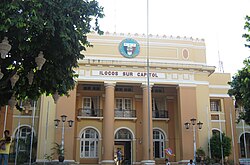
Located approximately 403.88 kilometers from Manila, Vigan serves as a cultural beacon for the province of Ilocos Sur. From its early days as a trading post to its current status as a global tourist attraction, the city continues to balance modern governance with the meticulous preservation of its historic core.
Key Facts
- UNESCO Status: Inscribed as a World Heritage Site in 1999 under the official name "Historic City of Vigan."
- Foundation: Established in 1572.
- Population: 54,498 residents as of the 2024 census.
- Geography: A component city covering 25.12 square kilometers with 39 barangays.
- Climate: Tropical savanna with distinct wet (May to October) and dry (November to April) seasons.
- Economy: Classified as a 4th city income class with a 2024 revenue of ₱ 861.2 million.
Historical Evolution
Pre-Colonial and Spanish Eras
Vigan's history is marked by its strategic location for trade. During the Spanish colonial period, it was known as Villa Fernandina de Vigan. Records from the 17th century indicate a structured social geography: Spanish settlers lived in Los Españoles de la Villa, while Chinese migrants resided in El Pariancillo (the Parian). By 1818, the city had become a significant hub, housing thousands of native families alongside a growing Spanish-Filipino population.
Conflict and Liberation
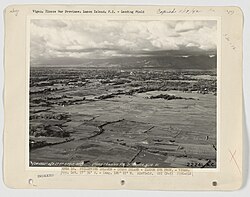
The 20th century brought significant upheaval. Vigan was among the first Philippine locations invaded by Japanese forces on December 10, 1941. The city remained under occupation until 1945, when combined U.S. and Philippine Commonwealth ground troops, supported by local Ilocano resistance fighters, successfully liberated the city.
Geography and Urban Structure
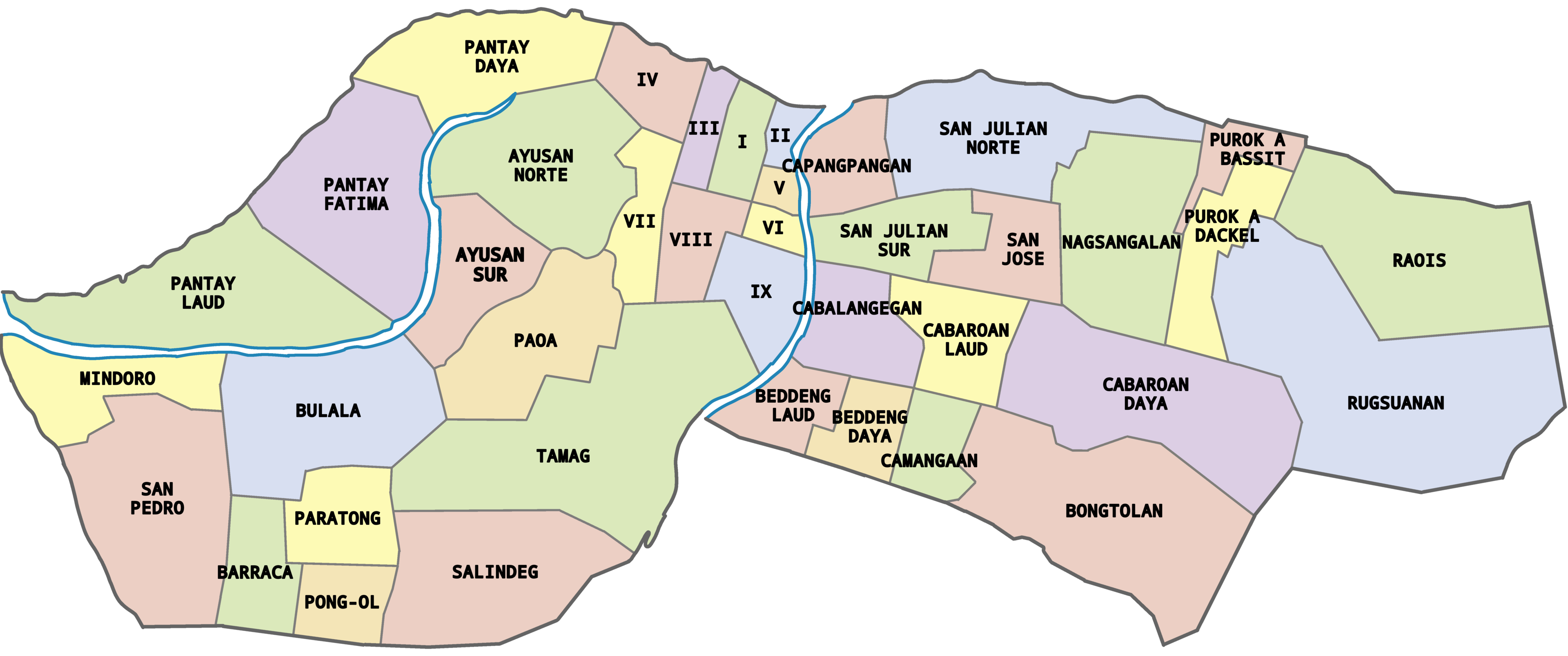
Vigan is divided into 39 barangays (the smallest administrative divisions in the Philippines). The city's layout is split between nine poblacion (town center) barangays, which occupy 144.75 hectares, and thirty rural barangays covering 2,366 hectares.
Climate and Environment
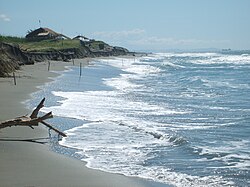
The city experiences a tropical savanna climate with an average annual temperature of 26°C. It is characterized by heavy rainfall during the wet season, with an annual average of 2,506 millimeters. The region is also prone to typhoons, averaging 7 to 10 hits per year.
Culture, Architecture, and Tourism
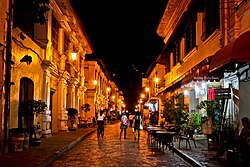
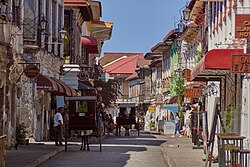
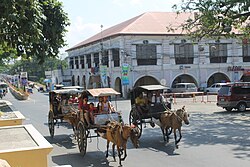
Vigan is world-renowned for its preserved Spanish colonial architecture. The city's most iconic landmark, Calle Crisologo, features ancestral houses and cobblestone paths that are often traversed by kalesas (traditional horse-drawn carriages), which remain a primary mode of transport for tourists.
Prominent Landmarks
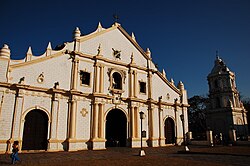
- Saint Paul's Metropolitan Cathedral: A centerpiece of the city's spiritual and architectural heritage.
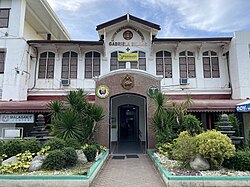
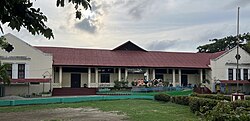
- Nueva Segovia Archbishop's Palace: Recognized as the oldest palace of its kind in the Philippines.
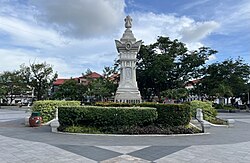
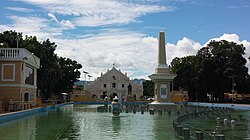
- Plaza Salcedo: A public square that serves as a gateway to the city's historic district.
![The Nueva Segovia Archbishop's Palace, the oldest of its kind in the Philippines[22]](/images/77/bf/77bf9561f6d98a402c90ae730d7c9a1ebb6ac4e8b43defd46e045ffbfdc3b2c2.jpg)
Festivals and Education
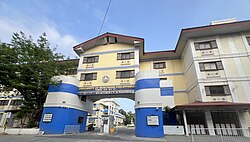
The city celebrates its local identity through the Longganiza Festival, highlighting its famous local sausage. Education is also a priority, with institutions ranging from the Vigan Central School to the University of Northern Philippines.
City Profile Summary
| Category | Detail |
|---|---|
| Official Name | City of Vigan |
| Nickname | Heritage City |
| Mayor | Randolf V. Singson |
| Total Area | 25.12 km² |
| Population (2024) | 54,498 |
| Native Languages | Ilocano, Tagalog |
| Income Class | 4th City Income Class |
Frequently Asked Questions
Why is Vigan a UNESCO World Heritage Site?
Vigan is recognized for its unique fusion of Asian and European architecture and urban planning, representing a rare and well-preserved example of a Spanish colonial town in Asia.
What is a kalesa?
A kalesa is a traditional horse-drawn carriage that was once a primary mode of transportation during the Spanish era and is now a popular way for visitors to tour the historic streets of Vigan.
When is the best time to visit Vigan based on weather?
The dry season, which runs from November to April, is generally the most favorable time to visit, as the wet season (May to October) brings significant rainfall and typhoons.
What are the main languages spoken in Vigan?
The primary native languages spoken by the residents of Vigan are Ilocano and Tagalog.
What is the Longganiza Festival?
The Longganiza Festival is a local celebration that honors Vigan's famous traditional sausage, featuring parades and culinary events.