Vidin: Bulgaria's Historic Danube Port City
Situated on the southern bank of the Danube in north-western Bulgaria, Vidin is a city where ancient history meets strategic geography. As the administrative center of Vidin Province and a vital port, it serves as a gateway between Bulgaria, Romania, and Serbia. Known for its fertile hinterland and renowned wine production, Vidin is an industrial, agricultural, and trade hub with a legacy stretching back to Celtic times.
Key Facts
- Location: North-western Bulgaria, on the Danube River.
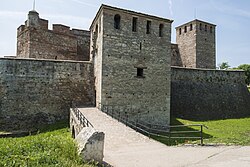
- Key Landmark: The Baba Vida fortress (10th–14th century).
- Connectivity: Linked to Calafat, Romania, via the New Europe Bridge.
- Climate: Humid subtropical, shifting toward temperate continental.
- Population: Approximately 34,797 (city) as of 2022.
Geography and Connectivity
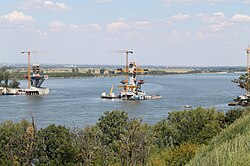
Vidin is the westernmost major Bulgarian port on the Danube. Its strategic position has historically made it a critical point for trade and military defense. A major milestone in the city's modern infrastructure was the 2013 completion of the New Europe Bridge, which replaced a slow ferry service and provided a direct road link to the Romanian town of Calafat.
A Journey Through History
Ancient and Roman Origins
The city began as a Celtic settlement called Dunonia, a name meaning "fortified hill." Later, the Romans established a fort known as Bononia as part of the Danubian Limes (the frontier system of the Roman Empire). This grew into a significant center for the province of Upper Moesia, covering parts of modern Bulgaria and eastern Serbia.
The Middle Ages and the Bulgarian Empires
When Slavs settled in the region, they renamed the town Bdin, which evolved into the modern name Vidin. During the First Bulgarian Empire (681–1018), Vidin served as a bishop's seat and a provincial capital. It was a stronghold for Emperor Samuil between 971 and 976 before falling to Basil II in 1003.
The city's prominence returned during the Second Bulgarian Empire (1185–1422), particularly under the Shishman dynasty. By the mid-14th century, the Tsardom of Vidin operated as a de facto independent monarchy under Ivan Stratsimir.
Foreign Occupations and Ottoman Rule
Vidin's strategic value led to several foreign occupations. In 1365, Magyar crusaders occupied the city, renaming it Bodony, before it was restored to Bulgarian rule in 1369. However, in 1396, the Ottoman Empire seized the city following the Battle of Nicopolis, turning it into a sandjak (an administrative division).
The city experienced a brief Austrian occupation from 1689 to 1690 during the Great Turkish War, a period marked by heavy casualties and the destruction of many local buildings. In the final years of Ottoman rule, Vidin became the center of a breakaway state led by the rebel Osman Pazvantoğlu.
Culture, Tourism, and Landmarks
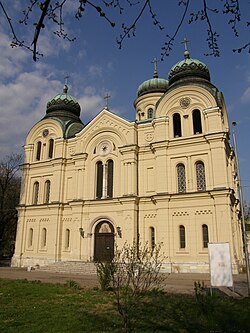
Vidin is rich in architectural heritage, blending medieval, Ottoman, and Renaissance styles. The Baba Vida fortress remains the city's most iconic landmark. Visitors can also explore the Kaleto fortress and several historic Orthodox churches, including the 19th-century Orthodox Cathedral of St Dimitar.
Other notable sites include the Vidin Synagogue (built in 1894), which is planned to become an interfaith cultural center, and the first Bulgarian theatre built on a "European model" in 1891. Beyond the city limits, the region is famous for the Belogradchik Rocks—unique geological formations—and the prehistoric paintings of the Magura Cave.
Demographics and Climate
Vidin has faced significant demographic challenges over the last few decades. After peaking at over 65,000 residents between 1988 and 1991, the population has steadily declined, reaching 38,669 by 2022. The population is predominantly Bulgarian (91.8% in 2011), with Roma and Turkish minorities.
The climate is characterized as humid subtropical, though global warming is pushing it toward a temperate continental pattern. The average annual temperature is 11.8°C, with frequent winter inversions.
Vidin Population Trends
| Year | Population | Change (%) |
|---|---|---|
| 1887 | 14,772 | — |
| 1956 | 23,932 | +29.5% |
| 1985 | 62,693 | +18.1% |
| 2011 | 48,071 | -16.2% |
| 2022 | 38,669 | -2.3% |
Infrastructure and Sports
Transportation in Vidin is centered around the Danube port and the rail network, which connects the city to Sofia and Romania. While Vidin Airport exists, it currently lacks scheduled passenger service, though there are state plans for its restoration.
In the realm of sports, the city is represented by FC Bdin, a football club established in 1923.

Frequently Asked Questions
What is the most famous landmark in Vidin?
The most famous landmark is the Baba Vida fortress, a medieval fortification built between the 10th and 14th centuries.
How does Vidin connect to Romania?
Vidin is connected to the Romanian town of Calafat via the New Europe Bridge, which opened in June 2013.
What is the historical significance of the name Dunonia?
Dunonia was the name given to the original Celtic settlement on the site of Vidin, meaning "fortified hill."
What are the main tourist attractions near Vidin?
Key nearby attractions include the Belogradchik Rocks, the Belogradchik Fortress, and the Magura Cave with its prehistoric paintings.
What is the current population trend in Vidin?
Vidin has experienced a significant population decline since the early 1990s, dropping from a peak of over 65,000 to under 40,000 by 2022.