Videoconferencing Evolution and Its Global Impact
The landscape of human communication has been fundamentally altered by the rise of high-speed internet and the democratization of video capture hardware. Once a luxury reserved for high-budget corporate boardrooms, videoconferencing—the use of telecommunications to allow people in different locations to communicate via simultaneous two-way video and audio—is now a ubiquitous part of daily life. From the integration of webcams in personal computers to the ubiquity of smartphones, the barriers to real-time visual connection have largely vanished.
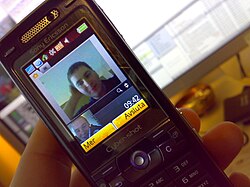
The widespread adoption of this technology is driven by the availability of affordable broadband and freeware applications. Mobile telephony has played a pivotal role; nearly all devices supporting UMTS (Universal Mobile Telecommunications System) networks can function as videophones. By the second quarter of 2007, over 131 million UMTS users across 59 countries had the potential to make wireless video calls. Today, this has expanded through Wi-Fi and broadband wireless Internet, enabling seamless connectivity between mobile and fixed-line users.
Key Facts
- Accessibility: High-speed internet and low-cost hardware have moved videoconferencing from corporate use to general public accessibility.
- Healthcare: Telemedicine reduces costs and travel for patients in remote areas and enables remote vital signs monitoring.
- Education: Virtual exchange and telecollaboration allow students to interact globally and access resources regardless of geography.
- Legal: US agencies like the Social Security Administration use video hearings to clear massive case backlogs.
- Inclusivity: Video Relay Services (VRS) and Video Remote Interpreting (VRI) are critical for sign language users.
Impact on Accessibility and Sign Language
For deaf, hard-of-hearing, and mute individuals, videotelephony is more than a convenience; it is a vital tool for communication. While Video Relay Service (VRS) supports communication between a sign language user and a spoken language user, videoconferencing allows two signers to communicate directly.
Historically, this was hindered by slow analog copper lines. However, the introduction of efficient video codecs and high-speed IP services in the 1990s removed these barriers. A major milestone occurred in 2003 when Sorenson Media Inc. developed the VP-100, a stand-alone videophone designed specifically for the deaf community, which output video to televisions to reduce costs.
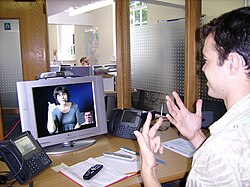
Today, Video Remote Interpreting (VRI) provides on-site translation via remote interpreters. These professionals use live feeds to bridge the gap between sign languages (such as ASL, BSL, or LSF) and their corresponding spoken languages. Advanced equipment even allows interpreters to remotely control cameras to better capture the signer's movements.
Applications in Medicine and Health
The integration of videoconferencing into healthcare, known as telemedicine and telenursing, has revolutionized diagnostic and consultative services. This is particularly impactful for the elderly, disabled, and those in remote locations. For instance, a nurse-led clinic in Letham reported that 60 pensioners were able to be assessed by medics via video-link, eliminating the need for travel.
Beyond simple consultations, specialized peripherals—including digital microscopes, videoendoscopes, and ultrasound imaging devices—can transmit critical patient data. In Ohio, a rural medical center used this technology to reduce the number of sick infant transfers to a distant hospital, saving nearly $10,000 per transfer. Institutions like the Mayo Clinic utilize these tools to coordinate multidisciplinary teams of specialists for complex cases.
Transforming Education and Government
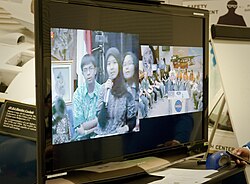
Education has seen a massive shift toward online provision, accelerated by the COVID-19 pandemic of 2020. Through telecollaboration and virtual exchange, students from diverse backgrounds can share ideas and explore the world via virtual field trips to museums and cultural sites.
The benefits extend to faculty and administration, enabling:
- Guest lectures from international institutions.
- Collaborative research without travel time.
- Remote thesis defenses and scholarship auditions.
- Teleseminars and alternative enrollment structures.
In the legal and governmental sectors, the U.S. Social Security Administration (SSA) has used videoconferencing to combat hearing backlogs. In Fiscal Year 2009, the SSA conducted 86,320 video hearings, a 55% increase over the previous year. The agency has established several National Hearing Centers (NHCs), including a large facility in St. Louis, Missouri. While useful, the use of video testimony in U.S. courts remains controversial regarding the Confrontation Clause of the Sixth Amendment.
Business, Press, and Corporate Telepresence
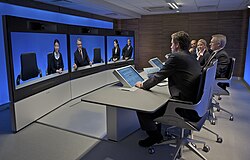
In the corporate world, the evolution from basic video calls to telepresence—which uses high-resolution displays and advanced telecommunications—has reduced travel costs and environmental impacts. Companies like Intel and Industrial Light & Magic use these tools for 24-hour global production environments.
The film industry has leveraged this for creative collaboration. For the film Frozen (2013), songwriters in New York and animators in Burbank conducted two-hour videoconferences nearly every weekday for 14 months. Similarly, the press has adopted these tools; the PanAfrican Press Association (APPA) and the International Monetary Fund (IMF) use video briefings to allow journalists to participate in international press conferences from their own offices.
| Tool | Owner | Mobile Support | Required Hardware | Deaf Made? |
|---|---|---|---|---|
| Facebook Messenger | Yes | Any mobile | No | |
| FaceTime | Apple Inc. | Yes | Apple hardware | No |
| Skype | Microsoft | Yes | Any Desktop/Mobile | No |
| Tikatoy | - | Android only | Desktop/Android | Yes |
| videomail.io | Binary Kitchen | Android only | Desktop/Android/iPhone | Yes |
Frequently Asked Questions
What is the difference between VRS and VRI?
Video Relay Service (VRS) is designed to facilitate communication between a sign language user and a spoken language user via an interpreter. Video Remote Interpreting (VRI) provides on-site sign language translation using a remote interpreter via live video and audio feeds.
How has videoconferencing helped the medical field?
It enables telemedicine, allowing for remote diagnosis, consultation, and the transmission of medical images. It reduces the need for expensive patient transfers and allows specialists to collaborate on complex cases regardless of their physical location.
What is telepresence?
Telepresence is a high-end form of videoconferencing that employs advanced telecommunication technologies and high-resolution displays to create a more immersive experience, simulating the feeling of being in the same room.
How is the U.S. government using video hearings?
The U.S. Social Security Administration uses videoconferencing through National Hearing Centers to conduct administrative judicial hearings, which helps clear substantial backlogs of cases more efficiently.
What are the educational benefits of virtual exchange?
Virtual exchange and telecollaboration allow students to interact with peers from diverse global backgrounds, participate in two-way communication forums, and take virtual field trips to cultural sites they otherwise could not visit.