VG&CE and VideoGames: The Evolution of a Gaming Publication
The landscape of early gaming journalism was shaped by publications that evolved alongside the hardware they covered. One such example is VG&CE, a magazine that transitioned from a niche computing spinoff into a mainstream gaming powerhouse before its eventual acquisition.
The Origins of VG&CE
VG&CE began its life as a spinoff of ANALOG Computing, a publication produced by LFP that focused specifically on Atari 8-bit computers. Launched by publisher Lee H. Pappas, the magazine sought to capture the growing interest in interactive entertainment during the late 1980s.
The editorial leadership of the early years was marked by unique staffing decisions. Andy Eddy served as the executive editor; although he was a freelance contributor for the first issue (dated December 1988), he relocated to California in September 1988 to take over the editorial helm before the debut issue reached the public. Notably, the magazine operated without a designated editor-in-chief during Eddy's tenure due to unconventional titling choices by the staff.
The publication attracted several industry veterans. Arnie Katz and Bill "The Game Doctor" Kunkel, who co-founded Electronic Games (the first-ever video game magazine), contributed to the publication. Other key editorial figures included Chris Bieniek, the editor-in-chief of Tips & Tricks, and Mike Davila, the editor-in-chief of Computer Player, who served as an associate editor and later as executive editor. Additionally, David Moskowitz, known for his work on Knights of Xentar, served as an associate editor focusing on news and computer games.
Transition to VideoGames - The Ultimate Gaming Magazine
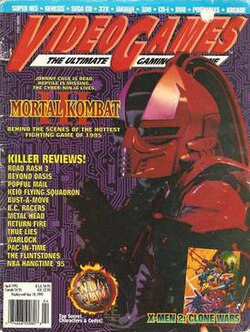
As the industry shifted, so did the publication. Starting with the September 1993 issue, the magazine was rebranded as VideoGames - The Ultimate Gaming Magazine. This shift was accompanied by a strategic decision to drop coverage of computer games to focus exclusively on consoles.
To compete with contemporary giants like GamePro, the magazine adopted a more child-friendly aesthetic characterized by vibrant colors. A hallmark of this era was the inclusion of a "free code"—a video game cheat printed directly on the cover—a practice that continued until late 1994.
During this period, Chris Gore served as the editor-in-chief and authored a popular monthly news and gossip column titled "The Gore Score." This era represented the magazine's most mainstream push, targeting a younger, more energetic audience.
The End of an Era
The publication's run came to an end in late 1996. The brand was purchased from LFP by Ziff-Davis, a major publishing house, which subsequently folded the VideoGames brand, bringing an end to its trajectory from an Atari spinoff to a mainstream gaming monthly.
Key Facts
- Founder: Lee H. Pappas (Publisher).
- Original Format: Spinoff of ANALOG Computing.
- Rebrand Date: September 1993 (became VideoGames - The Ultimate Gaming Magazine).
- Key Shift: Dropped computer game coverage in 1993 to focus on consoles.
- Final Acquisition: Purchased and folded by Ziff-Davis in late 1996.
| Period/Date | Milestone | Key Change |
|---|---|---|
| December 1988 | First Issue | Launched as a spinoff of ANALOG Computing |
| September 1993 | Rebranding | Renamed to VideoGames; ceased computer game coverage |
| Late 1994 | Cover Feature Change | Discontinued "free code" cheats on covers |
| Late 1996 | Closure | Acquired and folded by Ziff-Davis |
Frequently Asked Questions
What was the original purpose of VG&CE?
VG&CE started as a spinoff of ANALOG Computing, a magazine published by LFP that was dedicated to Atari 8-bit computers.
Why did the magazine change its name in 1993?
The magazine was renamed VideoGames - The Ultimate Gaming Magazine to better compete with popular titles like GamePro, adopting a more child-friendly look and focusing exclusively on console gaming.
Who was the editor-in-chief during the "VideoGames" era?
Chris Gore served as the editor-in-chief during much of this era and wrote the monthly gossip column "The Gore Score."
What happened to the magazine in 1996?
In late 1996, the publishing company Ziff-Davis bought the VideoGames brand from LFP and subsequently folded the publication.
Did the magazine always cover computer games?
No. While it began as a spinoff of a computing magazine and covered computer games in its early years, it dropped all computer game coverage starting with the September 1993 issue.