Velvet Fabric: History, Construction, and Varieties
Velvet is a luxurious woven fabric characterized by a dense, even pile—the raised surface of fibers—that provides its signature soft feel and depth of color. While historically synonymous with silk and nobility, modern advancements have expanded velvet into a versatile material available in a wide array of fibers and textures.
Key Facts
- Construction: Woven on special looms that create two layers of fabric simultaneously, which are later cut apart to create the pile.
- Materials: Ranges from high-end silk and wool to durable cotton and synthetic fibers like polyester and nylon.
- Distinction: Velvet pile is created by cutting warp yarns, whereas velveteen pile is created by cutting weft yarns.
- Historical Status: Long associated with royalty and the clergy due to the high cost and complexity of its production.
Construction and Composition
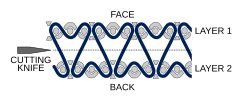
The creation of velvet is a complex engineering feat. It is produced on a specialized loom that weaves two thicknesses of material at once. These layers are connected by an extra warp yarn woven over rods or wires. Once the weaving is complete, the two layers are cut apart, creating the characteristic pile, and wound onto separate rolls.
Because of this intricate process, high-quality velvet remains a costly fabric. One unique characteristic of velvet is that it can be cut "pile up" or "pile down," which alters the fabric's appearance, affecting either the level of shine or the saturation of the color.
The method of production varies by style. For example, the face-to-face method involves a knife cutting through the middle of the weave to produce two distinct layers of cloth.
Fiber Varieties
The choice of fiber significantly impacts the cost, feel, and durability of the fabric:
- Silk: The most expensive and luxurious, offering maximum shine and softness. Pure silk velvet is rare and commands high market prices.
- Cotton: More durable and affordable, though it lacks the deep luster of silk.
- Synthetics: Polyester, nylon, viscose, and acetate are common in modern velvet. Viscose is often blended with silk to create a soft, reflective finish.
- Blends: Many "silk velvets" are actually blends of silk with rayon or cotton. Some include a small percentage of spandex to create "stretch velvet."
- Specialty Fibers: Linen, mohair, and wool are also used. Notably, the Kuba people of the Democratic Republic of Congo produce a unique "Kuba velvet" from raffia palm fibers.
The History of Velvet
Due to its softness and high production cost, velvet has historically been a symbol of nobility and power. It was introduced to Baghdad during the rule of Harun al-Rashid (786–809) by Kashmiri merchants and brought to Al-Andalus by Ziryab. During the Mamluk era, Cairo became the world's leading producer, exporting the fabric to the Mali Empire, Iberia, and Venice.
In the Mali Empire, the ruler Mansa Musa brought Arab velvet makers back to Timbuktu after his pilgrimage to Mecca. Later, the ruler Suleyman was noted for wearing a locally produced crimson velvet kaftan. In the Ottoman Empire, under Mehmed II, Bursa velvet was used for the attire of assistant cooks.
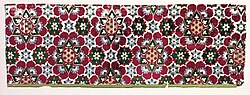
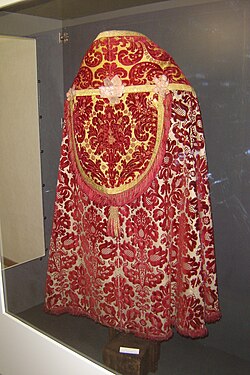
In Europe, velvet became a staple for ecclesiastical vestments and royal robes. Italian cities such as Venice, Florence, Genoa, Lucca, and Catanzaro were early centers of artistic velvet production. By the 16th century, Flemish weavers in Bruges also gained a reputation for high-quality velvet. Even in the Kingdom of Kongo, palm fiber fabrics with a velvet-like nap were recorded as being as beautiful as those from Italy.
The 19th century brought mechanization, making velvet accessible to the middle class. The introduction of "double velvet" in the 1830s via Jacquard looms doubled production capacity and halved the cost.
Types of Velvet
Velvet exists in many specialized forms, each defined by its weaving or finishing technique:
| Type | Description |
|---|---|
| Ciselé | Uses a mix of cut and uncut loops to create patterns. |
| Devoré (Burnout) | Treated with caustic solutions to dissolve pile in specific areas. |
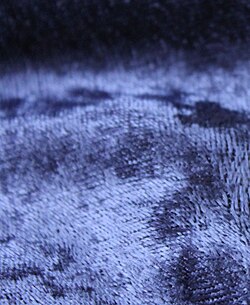
| Crushed | Produced by pressing the fabric in different directions or twisting it while wet. |
| Pile-on-pile | Woven with piles of differing heights to create a 3D pattern. |
| Nacré | Pile and base are different colors, creating an iridescent effect. |
| Voided | Deliberately woven with pile-free ground (usually satin) patterns. |
| Panne | Pile is forced in a single direction via heavy pressure. |
Specialty Varieties
- Chiffon Velvet: A lightweight velvet on a sheer base, sometimes called "wedding ring velvet" because it is fine enough to be drawn through a ring.
- Embossed: Patterns created using a heated metal roller.
- Lyons: A stiff, heavy-weight velvet used for collars and hats.
- Ponson: A heavy, expensive silk velvet used for cloaks and dresses.
Frequently Asked Questions
What is the difference between velvet and velveteen?
The primary difference lies in the construction of the pile: velvet pile is created by cutting the warp yarns, while velveteen pile is created by cutting the weft yarns.
Why is silk velvet so expensive?
Silk velvet is costly due to the high price of raw silk fibers and the complex, time-consuming weaving process required to create the dense pile.
How is "burnout" or Devoré velvet made?
Devoré velvet is created by applying a caustic chemical solution to the fabric, which dissolves the pile in specific areas to reveal the sheer base fabric underneath in a pattern.
Can velvet be stretched?
Yes, modern "stretch velvet" is achieved by blending polyester with a small percentage of spandex, allowing the fabric to stretch in one or two directions.
Is velvet difficult to clean?
Because of its dense pile, velvet can trap dirt and is more difficult to clean than flat-woven fabrics; however, modern dry cleaning methods have made its maintenance more feasible.