Vandalia Railroad Lineage and Indiana's Early Rail Networks
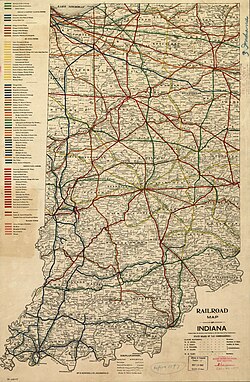
The expansion of the American Midwest in the 19th century was driven by the rapid development of rail infrastructure. In Indiana, a complex web of charters, leases, and mergers formed the foundation of what would become the Vandalia Railroad lineage. These early lines were more than just transport routes; they were ambitious projects designed to connect agricultural hubs to major cities and link the interior of the country to distant coasts.
The Terre Haute and Richmond Railroad
Chartered in January 1847, the Terre Haute and Richmond Railroad began construction in late 1849. Under the leadership of its first President and promoter, Chauncey Rose of Terre Haute, the line saw its first major milestone in February 1852 with the completion of 73 miles (117 km) of track connecting Indianapolis and Terre Haute.
As the network evolved, the company rebranded as the Terre Haute & Indianapolis Railroad on March 6, 1865. By April 26, 1870, the railroad extended its reach from Terre Haute to the Illinois state line, where it successfully connected with the St. Louis, Vandalia and Terre Haute line.
The Indianapolis and Vincennes Route
Launched in 1867, the Indianapolis and Vincennes railroad was born from a grand vision to create a route extending all the way to the Gulf of Mexico. This ambitious project received early promotion from A.E. Burnside, a Major General in the Union Army during the Civil War. To secure the necessary funding, the Indianapolis, Cincinnati and Lafayette Railroad provided financial assistance in exchange for a lease on the line.
By 1868, two companies associated with the Pennsylvania Railroad (PRR) joined as guarantors. Although the line was completed between Indianapolis and Vincennes in 1869 and subsequently taken over by the PRR in 1871, the original dream of reaching the Gulf of Mexico was never realized.
Terre Haute and Logansport Expansion
The Terre Haute and Logansport Railroad began its operations in 1871, initially connecting Rockville, Crawfordsville, Frankfort, and Clymers, Indiana. Because Clymers is located six miles (9.7 km) southwest of Logansport, the railroad utilized trackage rights—an agreement allowing one railroad company to operate over the tracks of another—on a Wabash Railroad predecessor for four years before constructing its own direct line into Logansport.
In 1872, the company expanded its reach by leasing a 23-mile (37 km) segment of the Evansville and Crawfordsville Railroad between Rockville and Terre Haute. Further growth occurred in 1884 with the completion of a 69-mile (111 km) line connecting Logansport to South Bend. This segment was leased to the Terre Haute and Indianapolis, which later leased the Indiana and Lake Michigan Railway in 1890, providing critical access to St. Joseph, Michigan.
The Detroit, Eel River and Illinois
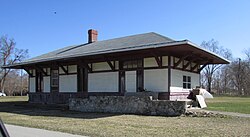
Completed in 1874, the Detroit, Eel River and Illinois was designed as a farm-to-market road, intended to help rural farmers transport goods to larger commercial centers. It spanned the distance between Logansport and Butler, Indiana.
In 1879, the Wabash, St. Louis and Pacific leased the line to create a middle link for a larger St. Louis–East Coast route. However, this arrangement ended following a protracted legal battle. The line was eventually reorganized as the Logansport and Toledo Railway before being acquired by the Pennsylvania Railroad in 1901.
Key Facts
- Chauncey Rose served as the first President of the Terre Haute and Richmond Railroad.
- The Indianapolis and Vincennes line was promoted by Union Army Major General A.E. Burnside.
- The Pennsylvania Railroad (PRR) took control of the Indianapolis and Vincennes line in 1871.
- The Terre Haute and Logansport Railroad used trackage rights for four years before entering Logansport.
- The Detroit, Eel River and Illinois was originally intended as a farm-to-market railroad.
Railroad Lineage Summary
| Railroad Name | Key Connection/Route | Notable Event/Date |
|---|---|---|
| Terre Haute and Richmond | Indianapolis to Terre Haute | Completed 73 mi in 1852 |
| Indianapolis and Vincennes | Indianapolis to Vincennes | PRR took control in 1871 |
| Terre Haute and Logansport | Logansport to South Bend | Line completed in 1884 |
| Detroit, Eel River and Illinois | Logansport to Butler | Bought by PRR in 1901 |
Frequently Asked Questions
Who was the first President of the Terre Haute and Richmond Railroad?
Chauncey Rose of Terre Haute served as the promoter and the first President of the railroad.
Did the Indianapolis and Vincennes railroad ever reach the Gulf of Mexico?
No, despite being promoted as a route to the Gulf of Mexico, the line never reached its intended destination.
How did the Terre Haute and Logansport Railroad initially enter Logansport?
The railroad used trackage rights on a predecessor of the Wabash Railroad for four years before building its own tracks into the city.
What was the original purpose of the Detroit, Eel River and Illinois railroad?
It was planned as a farm-to-market road to facilitate the transport of agricultural goods between Logansport and Butler, Indiana.
Which major company eventually acquired the Logansport and Toledo Railway?
The Pennsylvania Railroad (PRR) purchased the Logansport and Toledo Railway in 1901.