Vairo's Coaching Legacy: Bridging Soviet and North American Hockey
The evolution of American ice hockey has been shaped by visionaries who looked beyond national borders to refine the game. One such figure is Vairo, a coach whose career is defined by a unique synthesis of Soviet discipline and Canadian grit. From his humble beginnings in New York to leading national teams on the world stage, Vairo's journey reflects a lifelong commitment to player development and international collaboration.
Early Coaching and the Soviet Influence
Vairo entered the coaching world unexpectedly when a friend asked him to lead a midget-age team (a minor hockey category for 15-year-olds). Lacking formal training, he began his education through self-study, utilizing The Hockey Handbook and observing New York Rangers practices to grasp the fundamentals of the sport.
A pivotal moment occurred in 1970 when Vairo watched a televised match between the Soviet Union and Sweden. Fascinated by the European style of play, he contacted Anatoly Tarasov, the legendary coach of the Soviet national team. This connection led Vairo to take a US$ 3,500 bank loan to travel to Moscow in the summer before the 1972 Summit Series.
Staying with the Tarasov family, Vairo immersed himself in Soviet training methods, including dry-land workouts and psychological motivation techniques that were virtually unknown in North America. Tarasov taught him that leadership requires a balance of hardness and support, famously stating that one must coach with the "heart and brain" rather than just the feet.
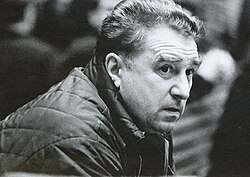
Upon returning to the United States, Vairo blended these Soviet concepts with Canadian methods to create a style tailored to American culture. Coaching in the Metropolitan Junior Hockey League, he prioritized speed, passing, and puck control over fighting. His success was immediate, securing five Junior B-level championships in Brooklyn and the Bronx, and a New York State junior championship in 1975. He later achieved a national championship in 1976 with the Austin Mavericks.
Leading the U.S. National Programs
In 1978, Vairo joined the Amateur Hockey Association of the United States (AHAUS) as coaching director. He championed inclusivity, lobbying for funding to invite players from the Sun Belt (non-traditional hockey regions in the southern U.S.) to national development camps, believing that opportunity should not be limited by geography.
Vairo's leadership extended to the U.S. men's national junior team from 1979 to 1982, where he consistently maintained a top-ten global ranking. He also contributed to the historic 1980 "Miracle on Ice" era as an advance scout for coach Herb Brooks.
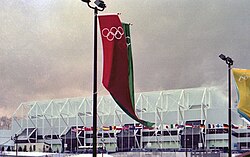
By 1983, Vairo ascended to head coach of the U.S. men's national team. He led a remarkably young squad to the 1984 Winter Olympics in Sarajevo, featuring an average age of 20.7 years. This roster included future NHL star Chris Chelios and the "diaper line"—a trio of young forwards consisting of Pat LaFontaine, David Jensen, and Eddie Olczyk. Despite a seventh-place finish, which Vairo later attributed to his own coaching being "too soft," the experience marked a significant era in U.S. hockey transition.
International Ventures and European Success
Vairo's career took him abroad in 1986, starting with the Tilburg Trappers in the Netherlands. After a stint as the head coach of the Netherlands national team, he moved to Italy, where he spent five seasons in Serie A (the top professional league in Italy).
While coaching HC Fassa in the village of Canazei, he led the team to a Serie A playoff final in 1989. He later achieved greater success with HC Milano Saima, winning the Serie A playoffs as champions in the 1990–91 season.
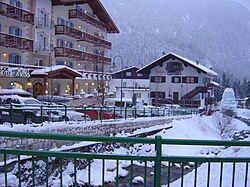
His influence in Italy extended to the national team, where he served as an assistant coach during the 1991 World Championships, helping Italy earn promotion to Group A and a berth in the 1992 Winter Olympics.
Administrative Leadership and Later Career
Returning to the U.S. in 1992, Vairo served as the director of special projects for USA Hockey. He focused on systemic improvements, implementing coaching education standards and launching a diversity task force to bring hockey to inner-city and minority youth.
On a global scale, Vairo worked with the International Ice Hockey Federation (IIHF) coaching committee to establish development camps in Europe and Asia, promoting the international exchange of coaching philosophies.
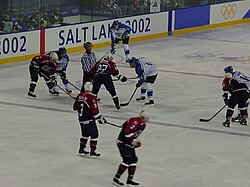
Vairo returned to the U.S. national team helm from 2000 to 2003, achieving a fourth-place finish at the 2001 World Championships. He also served as an assistant coach during the 2002 Winter Olympics in Salt Lake City, where the U.S. team earned a silver medal.
In 2014, Vairo returned to Italy as the technical coordinator and head coach of the national team. His goal was to build a team "made in Italy," focusing on the development of Italian-born players to elevate the country's standing in the IIHF.
Key Facts
- Soviet Influence: Studied under Anatoly Tarasov in Moscow to integrate European training into U.S. hockey.
- Olympic Experience: Head coach of the 1984 U.S. Olympic team and assistant coach for the 2002 silver-medal winning team.
- European Success: Led HC Milano Saima to a Serie A championship in 1991.
- Development Focus: Pioneered the inclusion of Sun Belt players in U.S. national development camps.
- Global Impact: Established IIHF development programs to grow hockey in Asia and Europe.
| Period/Year | Role/Team | Key Achievement |
|---|---|---|
| 1975-1976 | Austin Mavericks | National Championship (1976) |
| 1984 | U.S. Men's National Team | Olympic Head Coach (Sarajevo) |
| 1990-1991 | HC Milano Saima | Serie A Playoff Champions |
| 2001 | U.S. Men's National Team | 4th Place, IIHF World Championship |
| 2002 | U.S. Men's National Team | Olympic Silver Medal (Assistant Coach) |
Frequently Asked Questions
How did Vairo learn the Soviet style of hockey?
Vairo wrote a letter to Soviet coach Anatoly Tarasov after watching a televised game. This led to an invitation to a coaching clinic in Moscow, where Vairo spent a summer learning dry-land training and motivational techniques.
What was the "diaper line"?
The "diaper line" was a nickname given to the young forward line of Pat LaFontaine, David Jensen, and Eddie Olczyk on the 1984 U.S. Olympic team, referring to their youth.
How did Vairo contribute to diversity in U.S. hockey?
As coaching director for AHAUS and later as director of special projects for USA Hockey, he lobbied for the inclusion of players from the Sun Belt and oversaw a task force to introduce hockey to minority groups and inner-city children.
What was Vairo's goal with the Italian national team in 2014?
Vairo aimed to develop a national team that was "made in Italy," focusing specifically on the growth and integration of Italian-born players.
Which NHL team did Vairo coach as an assistant?
Vairo served as an assistant coach to Doug Carpenter for the New Jersey Devils during the 1984–85 and 1985–86 seasons.