V-Dem Democracy Indices 2026: Measuring Global Political Regimes
The landscape of global governance is constantly shifting, making precise measurement essential for understanding the health of political systems. The V-Dem Institute provides this clarity through its annual publication of democracy indices, which utilize complex datasets to describe the varying qualities of different democratic and autocratic regimes. By employing a combination of qualitative and quantitative measurements, V-Dem offers a granular view of how power is exercised and how citizens are represented worldwide.
As of 2026, the data reveals a significant global trend: 74% of the world is under authoritarian rule. To understand this shift, researchers rely on a massive framework consisting of 251 high-level indices and 531 specific indicators. These indicators are derived from carefully developed survey questions, a process that began during a planning phase from 2008 to 2013 before official annual data collection commenced in 2014.
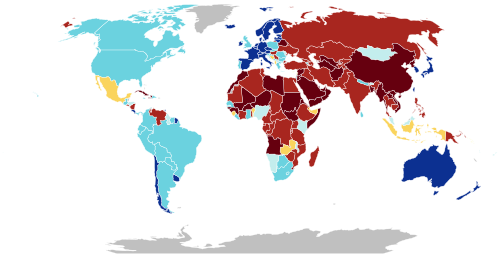
Key Facts
- Global Status: 74% of the world is under authoritarian rule as of 2026.
- Data Scope: The V-Dem dataset covers 202 polities from 1789 to 2025.
- Methodology: Uses 531 indicators and 251 indices to measure democracy.
- Core Indices: Focuses on electoral, liberal, participatory, deliberative, and egalitarian dimensions.
- Historical Depth: Includes historical data dating back to the 1800s for certain countries.
The Five Core Dimensions of Democracy
V-Dem does not view democracy as a single metric. Instead, it breaks down the concept into five core indices to capture the multifaceted nature of political participation and rights.
Electoral Democracy
This index serves as the foundation for all other indices. It measures electoral or representative democracy, specifically focusing on whether elections are free and fair and the presence of a free, independent media.
Liberal Democracy
Building upon the electoral foundation, this index incorporates the rule of law, checks and balances, and civil liberties. It ensures that the government is limited in its power to prevent the "tyranny of the majority."
Participatory Democracy
This dimension measures how much citizens engage with their government through civil society organizations, local democratic institutions, and direct democracy.
Deliberative Democracy
The deliberative index assesses whether decisions are made in the best interest of the people, rather than being driven by coercion or narrow, specialized interest groups.
Egalitarian Democracy
This index evaluates the level of equal access to power, resources, and freedoms across different societal groups, alongside the baseline of electoral democracy.
![Countries autocratizing (red) or democratizing (blue) substantially and significantly (2010–2020). Countries in grey are substantially unchanged.[17]](/images/62/45/62459d2ef417037bcb6a11d774a8d8534f4381e81ba32342994ea5dfb4d0d29d.webp)
Classifying Regimes: From Autocracy to Liberal Democracy
V-Dem uses the Regimes of the World index to classify governments. This classification is heavily influenced by Robert Dahl's theory of polyarchy, which relies on six institutional guarantees: elected officials, free and fair elections, freedom of expression, alternative sources of information, associational autonomy, and inclusive citizenship.
Autocratic Regimes
In autocracies, leaders are not de facto accountable to the citizenry, and Dahl's institutional prerequisites are often unmet. These are divided into two categories:
- Closed Autocracy: Governments that lack multiparty elections for the legislature or chief executive, often characterized by one-party states where legislative institutions are undermined.
- Electoral Autocracy: Regimes where elections occur de jure, but fall short of democratic standards due to irregularities, limited competition, or violations of democratic prerequisites.
Democratic Regimes
Democracies are characterized by de facto multiparty, free, and fair elections. V-Dem distinguishes between two primary types:
- Electoral Democracy: These regimes meet the bare minimum for democracy by being accountable to citizens through periodic elections, but they may lack entrenched individual rights or robust judicial oversight.
- Liberal Democracy: Often called "Madisonian" democracy, these regimes provide full rule of law, strong checks and balances, and protections for individual liberties and minority rights.
The Digital Society Project
Recognizing the impact of technology on politics, the Digital Society Project analyzes how the internet and social media influence political landscapes. This subset of indicators assesses five key areas: disinformation, digital media freedom, state regulation of digital media, online media polarization, and online social cleavages. It specifically tracks issues like internet censorship, misinformation, and internet shutdowns.
Summary of Democracy Indices
| Index Type | Primary Focus Area | Key Components |
|---|---|---|
| Electoral | Representation | Free/fair elections, independent media |
| Liberal | Legal Protections | Rule of law, civil liberties, checks and balances |
| Participatory | Citizen Engagement | Civil society, local institutions, direct democracy |
| Deliberative | Decision Quality | \nInterest of the people vs. coercion/interest groups|
| Egalitarian | Social Equity | Equal access to power, resources, and freedoms |
Frequently Asked Questions
What is the difference between an electoral autocracy and a closed autocracy?
An electoral autocracy holds elections that are legally recognized (de jure) but are flawed or unfair. A closed autocracy lacks multiparty competition entirely, often functioning as a one-party state where legislative accountability is non-existent.
How does V-Dem measure the quality of democracy?
V-Dem uses 531 specific indicators based on expert survey questions. These indicators cover qualitative and quantitative aspects, including electoral processes, civil liberties, and the level of citizen participation.
What is the "tyranny of the majority"?
This refers to a situation where a majority of a population uses its democratic power to infringe upon the rights of minority groups. Liberal democracies use checks and balances and the rule of law to prevent this.
Does the V-Dem dataset cover every country in the world?
No. The dataset does not include certain countries such as Andorra, Monaco, San Marino, the Vatican, and several island nations like Kiribati, Nauru, and Tuvalu.
What does the Digital Society Project track?
It tracks 35 indicators related to the political impact of the internet, including internet censorship, the spread of disinformation, and the polarization of online media.