University of Gibraltar: A Fusion of Academic Ambition and Ancient History
Perched at the southernmost tip of the Rock of Gibraltar, the University of Gibraltar campus at Europa Point is more than just a center for higher learning; it is a crossroads of human civilization. From prehistoric inhabitants to military fortifications and religious landmarks, the site embodies the strategic and cultural significance of the point where the Atlantic Ocean meets the Mediterranean Sea.
A Landscape of Ancient Heritage
The history of the campus area stretches back to the earliest days of human existence. The nearby Gorham's Cave complex, once occupied by Neanderthals, is now recognized as a UNESCO World Heritage Site. In classical mythology, this location is identified as one of the Pillars of Hercules, marking the edge of the known world.
Archaeological evidence reveals that Europa Point served as a site for ritual offerings, particularly during the Phoenician period. This spiritual legacy continues today through the presence of the Ibrahim-al-Ibrahim Mosque, inaugurated in 1997, and the medieval Shrine of Our Lady of Europe, which was constructed over a 14th-century mosque. The area also features the Nun's Well, a Moorish cistern that may pre-date the arrival of Tarik in 711 AD.
Military Foundations and Architectural Evolution
The university's physical infrastructure is deeply rooted in Gibraltar's military past. The principal rooms are housed in bombproof barracks constructed by the Royal Engineers in 1841. These structures are architectural marvels of their time, featuring massive square limestone pillars and terracotta brick-tile vaulted ceilings. The durability of these buildings is evident in the window ledges, which exceed one meter in thickness.
The construction utilized a blend of local limestone and ashlar stone blocks, the latter of which were likely imported from Portugal. The campus also incorporates a second defensible barracks integrated into the sea-wall defenses. After serving as a school in the 1980s, these buildings remained dormant until a comprehensive restoration project transformed them into the university's home.
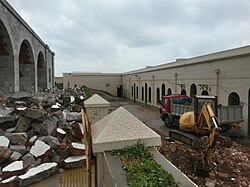
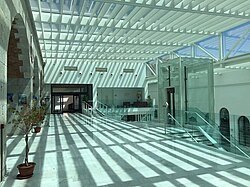
Designed by architects Xavier Ozores Pardo and Pedro Carcelen Fernandez, the renovation began in early 2015 and was completed in just seven months. The centerpiece of the design is a glass-roofed, marble-tiled Atrium that connects the previously separate buildings into a unified campus. This transformation, which also integrated outbuildings into a courtyard-surrounded office complex, earned the 2015 Heritage Award from the Gibraltar Heritage Trust. The buildings are now protected under the Heritage and Antiquities Act 2018.
The Europa Point Lighthouse
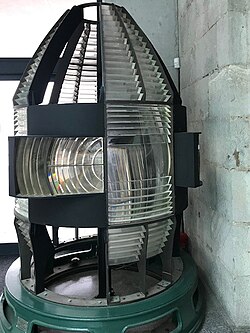
Overlooking the Strait of Gibraltar is the Europa Point Lighthouse, the southernmost lighthouse operated by Trinity House. When the lighthouse was automated in 2016, its 1950s second-order optic Fresnel Lens—a specialized lens used to concentrate light into a powerful beam—was donated to the university. It now serves as a symbolic installation in the main concourse.
Symbols and Leadership
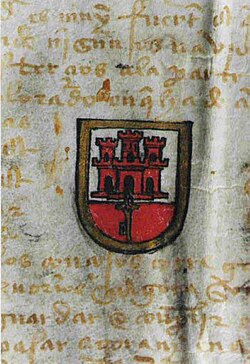
The university's identity is closely tied to the history of the territory. Its coat of arms is based on the original design granted to Gibraltar in 1502 by Isabella I, Queen of Castile, featuring the iconic castle and key. This imagery is complemented by the university motto, Scientia est Clavis ad Successum, which translates to "Knowledge is the Key to Success."
The institution has been guided by distinguished leadership since its inception, with the Right Honourable The Lord Luce serving as the Founding Chancellor and Professor Daniella Tilbury as the first Vice-Chancellor.
Key Facts
- Location: Europa Point, the southernmost tip of the Rock of Gibraltar.
- Architecture: Former Royal Engineers barracks (1841) with terracotta vaulted ceilings.
- Heritage Status: Recipient of the 2015 Heritage Award; protected by the Heritage and Antiquities Act 2018.
- Unique Artifact: A 1950s second-order optic Fresnel Lens on display in the concourse.
- Motto: "Scientia est Clavis ad Successum" (Knowledge is the Key to Success).
- Nearby Landmarks: Gorham's Cave (UNESCO site), Nun's Well, and the Ibrahim-al-Ibrahim Mosque.
| Category | Details / Personnel |
|---|---|
| Current Chancellor | The Right Honourable Sir Lindsay Hoyle (2019–present) |
| Founding Chancellor | The Right Honourable The Lord Luce (2015–2019) |
| Current Vice-Chancellor | Professor Catherine Bachleda (2018–present) |
| First Vice-Chancellor | Professor Daniella Tilbury (2015–2018) |
| Campus Architects | Xavier Ozores Pardo and Pedro Carcelen Fernandez |
Frequently Asked Questions
What is the historical significance of the university's buildings?
The university is housed in former bombproof barracks built by the Royal Engineers in 1841, which were originally part of the southern defenses of the Rock of Gibraltar.
What is a Fresnel Lens and why is it at the university?
A Fresnel lens is a specialized optic used in lighthouses to focus light. The university's second-order optic lens was donated by Trinity House following the automation of the Europa Point Lighthouse in 2016.
What does the university motto mean?
The motto "Scientia est Clavis ad Successum" is Latin for "Knowledge is the Key to Success."
Which UNESCO World Heritage Site is located near the campus?
The Gorham's Cave complex, which was inhabited by Neanderthals, is a UNESCO World Heritage Site located near the Europa Point campus.
Who designed the university's campus renovation?
The renovation was designed by local architects Xavier Ozores Pardo and Pedro Carcelen Fernandez, who won a design competition for the project.