University of Aleppo: A Pillar of Higher Education in Syria
The University of Aleppo is a prominent public institution of higher learning located in Aleppo, Syria. As the second largest university in the country, following Damascus University, it serves as a critical hub for academic research, professional training, and cultural development in the region.
The university operates on an urban campus and is currently led by Rector Dr. Mohammed Osama Raadon. It maintains a vast student body, including 55,732 undergraduates, 4,386 postgraduates, and 1,525 doctoral students.
Key Facts
- Established: 1958 (opened in 1960).
- Status: Public university.
- Scale: 25 faculties and 10 intermediate colleges.
- Medical Infrastructure: Operates six specialized hospitals.
- Library: Central Library houses over 1.5 million units.
- Affiliations: Member of UNAI, UNIMED, EPUF, and Confremo.
History and Evolution
The roots of the institution date back to 1946 with the opening of a Faculty of Engineering in Aleppo, which was originally affiliated with the Syrian University (now Damascus University). Following the end of French rule in 1946, Syria initially operated with only one university.
In 1958, the Syrian government passed legislation to establish the University of Aleppo. When it officially opened its doors in 1960, it began with two primary faculties: Civil Engineering and Agriculture. Over the following decades, the university expanded rapidly, developing prestigious programs in the sciences, literature, and engineering. It also placed a strong emphasis on linguistics, offering courses in English, French, Russian, and German.
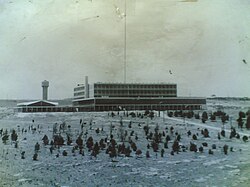
The university celebrated its golden jubilee in 2008. In more recent years, the institution has navigated significant political and social challenges. In 2015, two branches were opened in Mare' and Azaz by the Syrian opposition; these were later integrated back into the main university in 2025. Conversely, the Idlib Section of the University of Aleppo was abolished on December 27, 2024, as Idlib University became an officially separate entity.
The campus has also been the site of tragedy during the Syrian conflict. On January 15, 2013, bombings between the architecture faculty and halls of residence killed 82 people. More recently, a shelling attack on student dormitories on November 29, 2024, resulted in four deaths, including two students.
Academic Structure and Facilities
The University of Aleppo is a comprehensive institution comprising 25 faculties and 10 intermediate colleges. To support its academic mission, the university maintains a robust infrastructure, including 17 academic centers and a dedicated publishing and printing house.
Medical Centers and Hospitals
The university is a leader in medical education and healthcare, managing six hospitals within the city of Aleppo:
- Aleppo University Hospital (AUH)
- Aleppo University Cardiovascular Surgical Centre
- OB/GYN Hospital
- Oral and Maxillofacial Surgical Centre (located within the Faculty of Dentistry)
- Nursing School Hospital (affiliated with the Faculty of Medicine)
- Al-Kindi Hospital (currently non-operational)
Libraries and Media
The Central Library of the University is one of the largest in Syria, containing more than 1.5 million units. The university also contributes to the global academic community through its periodic scientific journal, Aleppo University Researches.
In a pioneering move for the region, the university opened its Radio & TV Centre on February 7, 2010. This was the first such center among Syrian universities and the third of its kind in the Middle East.
University Overview
| Category | Details |
|---|---|
| Type | Public |
| Location | Aleppo, Syria |
| Current Rector | Dr. Mohammed Osama Raadon |
| Total Undergraduates | 55,732 |
| Total Postgraduates | 4,386 |
| Doctoral Students | 1,525 |
| Website | alepuniv.edu.sy |
Notable Alumni
The university has produced a wide array of influential figures across politics, literature, and science, including:
- Waad Al-Kateab: Academy Award-nominated director of For Sama.
- Hrayr Hovakimyan: Renowned cardiac surgeon and National Hero of Armenia.
- Mohammad al-Bashir: Former Prime Minister of Syria.
- Khaled Khalifa and Ibtisam Ibrahim Teresa: Award-winning Syrian novelists.
- Mohammad Nidal al-Shaar: Syrian politician and economist.
Frequently Asked Questions
When was the University of Aleppo established?
The university was created by law in 1958 and officially opened its doors to students in 1960.
How many hospitals does the university operate?
The university runs six hospitals, including the Aleppo University Hospital and the Cardiovascular Surgical Centre, though Al-Kindi Hospital is currently not operating.
What is the size of the university's library?
The Central Library of the University is one of Syria's largest, housing more than 1.5 million units.
Is the University of Aleppo affiliated with international organizations?
Yes, it is a member of the Mediterranean Universities Union (UNIMED), the EuroMed Permanent University Forum (EPUF), the Regional Corporation Confremo, and UNAI.
What happened to the Idlib Section of the university?
On December 27, 2024, Idlib University was officially separated from the University of Aleppo, and the Idlib Section was subsequently abolished.