Understanding United States Forces Korea (USFK)
Since its establishment in 1957, United States Forces Korea (USFK) has served as a cornerstone of security on the Korean Peninsula. As a subordinate unified command of the U.S. Pacific Command, USFK plays a vital role in maintaining regional stability and supporting the Republic of Korea (ROK). Headquartered at Camp Humphreys in Pyeongtaek, the command manages a complex network of military components designed to respond to various security challenges.
Key Facts
- Founded: 1 July 1957
- Headquarters: Camp Humphreys, Pyeongtaek, South Korea
- Current Commander: GEN Xavier Brunson, USA
- Total Personnel: Approximately 28,000
- Primary Components: Eighth U.S. Army, Seventh Air Force, Marine Forces Korea, Naval Forces Korea, and Special Operations Command Korea.
Organizational Structure and Components
USFK is not a single monolithic entity but a collection of specialized military branches, each contributing specific capabilities to the mission. These components work in coordination to ensure comprehensive defense coverage across the peninsula.
Army and Ground Forces
The Eighth United States Army is the largest component, with an authorized strength of approximately 20,000 soldiers. Key installations include USAG Daegu, Camp George (housing and support), and Camp Carroll in Waegwan, which serves as a major logistics and maintenance hub. Additionally, the DLA Disposition Services in Gimcheon handles logistics and disposal.
Air, Sea, and Special Operations
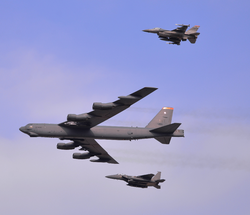
Air superiority is maintained by the Seventh Air Force, headquartered at Osan Air Base, which includes the 8th Fighter Wing "Wolf Pack" at Kunsan Air Base. The command also includes the United States Space Forces Korea, consisting of approximately 30 Guardians based at Osan. Maritime security is provided by Commander Naval Forces Korea (CNFK), based at Busan Naval Base, and the Marine Forces Korea (MARFORK). Specialized missions are carried out by Special Operations Command Korea (SOCKOR), which utilizes approximately 100 highly trained operators.
The United Nations Command (UNC)
The security landscape in Korea is also shaped by the United Nations Command (UNC). Established by the United Nations Security Council via Resolution 84 on 7 July 1950, the UNC was created in response to the North Korean attack on 25 June 1950. Its mission is to assist South Korea in repelling aggression and restoring international peace. During the Korean War, 53 nations provided support, with 16 contributing combat forces and five providing medical units. The hostilities concluded with the signing of the Armistice Agreement on 27 July 1953.
: Logo of the United Nations CommandHistorical Context and Security Incidents
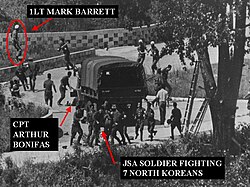
The history of the peninsula has been marked by significant tension and specific incidents that have shaped modern military posture. Border disputes, particularly regarding the Northern Limit Line (the disputed maritime border in the west), have frequently led to clashes over fishing rights and territorial jurisdiction.
Notable Historical Events
- The Blue House Raid (1968): A 31-man North Korean detachment attempted to assassinate the South Korean President, resulting in a violent firefight in Seoul.
- USS Pueblo Incident (1968): The U.S. Naval ship was captured by North Korean forces; the crew was held until December 1968.
- The ROKS Cheonan Sinking (2010): An international investigation concluded that a North Korean torpedo attack sank the South Korean naval vessel, resulting in the deaths of 46 sailors.
Summary of USFK Personnel Trends
The number of U.S. soldiers stationed in South Korea has fluctuated significantly since the start of the Korean War, peaking during the early 1950s before stabilizing at lower levels in subsequent decades.
| Year | Number of Soldiers | Year | Number of Soldiers |
|---|---|---|---|
| 1950 | 510 | 1970 | 52,197 |
| 1952 | 326,863 | 1980 | 38,780 |
| 1957 | 71,045 | 2000 | 36,565 |
| 1962 | 60,947 | 2020 | 28,500 |
Community and Modern Challenges
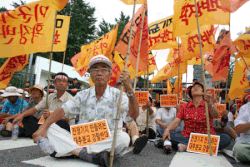
The presence of USFK has occasionally led to local friction. In 2006, the expansion of Camp Humphreys led to the Daechuri Protests, where residents protested the relocation of their homes. While many residents accepted government settlements averaging 600 million won, the expansion remains a significant chapter in local history.
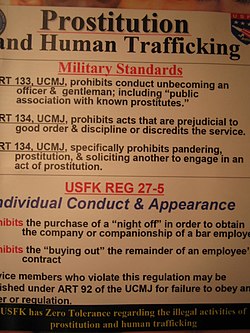
Additionally, USFK maintains strict standards regarding conduct to preserve relationships with the local population. This includes explicit warnings to personnel regarding human trafficking and prohibited activities.
Frequently Asked Questions
What is the primary mission of USFK?
USFK serves as a subordinate unified command under the U.S. Pacific Command, tasked with supporting the Republic of Korea and maintaining regional stability and peace on the Korean Peninsula.
Where is the USFK headquarters located?
The headquarters for USFK and the relocation of the UNC headquarters were moved to Camp Humphreys in Pyeongtaek, South Korea.
How many soldiers are currently stationed in South Korea?
There are approximately 28,000 personnel currently stationed under USFK.
What is the difference between USFK and the United Nations Command?
USFK is a U.S. military command, whereas the United Nations Command (UNC) was established by the UN Security Council to provide a unified international response to the North Korean attack in 1950.
Which military branches make up USFK?
USFK includes the Eighth U.S. Army, Seventh Air Force, Marine Forces Korea, Naval Forces Korea, Special Operations Command Korea, and the United States Space Forces Korea.