United Nations Charter: Purposes, Principles, and Governance
The United Nations (UN) was established as a global effort to prevent the recurrence of the devastation seen during World War II. The foundation of this international organization is the United Nations Charter, a treaty that outlines the goals, structure, and legal framework for cooperation between sovereign states. By establishing a set of shared principles, the Charter seeks to harmonize the actions of nations to maintain global stability.
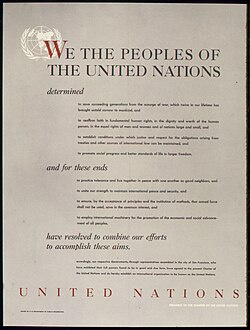
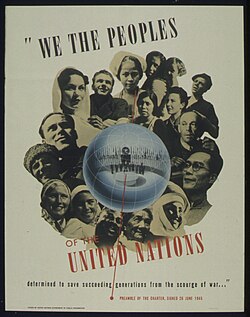
The document begins with a Preamble, which serves as an interpretative guide. While it does not grant specific rights or impose legal obligations on member states, it highlights the core motives of the founders: saving future generations from the scourge of war, reaffirming faith in fundamental human rights, and promoting social progress and better standards of life.
Key Facts
- Primary Goal: To maintain international peace and security and prevent acts of aggression.
- Core Principle: The organization is based on the sovereign equality of all its members.
- Security Council: Consists of 15 members, including 5 permanent members with veto power.
- Legal Precedence: Obligations under the UN Charter take precedence over other international agreements (Article 103).
- Amendment Process: Requires a two-thirds vote of the General Assembly and ratification by two-thirds of member states, including all permanent Security Council members.
Purposes and Principles of the United Nations
The Charter defines the mission of the UN through two primary lenses: its overarching purposes and the principles that guide its operations.
The Purposes of the UN
According to Article 1, the UN exists to:
- Maintain international peace and security through collective measures to prevent threats and suppress aggression.
- Develop friendly relations among nations based on equal rights and the self-determination of peoples.
- Achieve international cooperation to solve economic, social, cultural, or humanitarian problems.
- Promote respect for human rights and fundamental freedoms regardless of race, sex, language, or religion.
- Serve as a center for harmonizing the actions of nations.
Guiding Principles
To achieve these purposes, Article 2 mandates that the organization and its members adhere to specific rules. These include the sovereign equality of all members and the requirement to settle international disputes by peaceful means. Members must refrain from the threat or use of force against the territorial integrity or political independence of any state.
Notably, the Charter protects the domestic jurisdiction of states, meaning the UN generally cannot intervene in matters that are essentially internal to a country, except when applying enforcement measures under Chapter VII.
The Structure of the Organization
The UN operates through several principal organs, each with distinct roles in global governance.
| Organ | Primary Role/Function |
|---|---|
| General Assembly | Main deliberative body of the UN. |
| Security Council | Primary responsibility for maintaining international peace and security. |
| Economic and Social Council (ECOSOC) | Coordinates economic, social, and environmental work. |
| Trusteeship Council | Established to oversee trust territories. |
| International Court of Justice | The principal judicial organ for settling legal disputes between states. |
| Secretariat | The administrative arm providing services to other organs. |
The Security Council
The Security Council is tasked with the most critical function: the maintenance of peace. It consists of 15 members. Five are permanent members (China, France, the Soviet Union/Russia, the United Kingdom, and the United States), and ten are non-permanent members elected by the General Assembly for two-year terms.
Voting in the Council is split between procedural matters (requiring nine affirmative votes) and substantive matters (requiring nine votes, including the concurring votes of all permanent members). This structure ensures that major powers must agree before significant enforcement actions are taken.
The Secretariat
Led by the Secretary-General, who is appointed by the General Assembly upon the recommendation of the Security Council, the Secretariat is the UN's operational hub. Based in New York with regional commissions in Baghdad, Bangkok, Geneva, and Santiago, it handles:
- Preparation of reports, analysis, and policy suggestions.
- Editorial, translation, and document reproduction services.
- Organization of international conferences and seminars.
- Provision of technical assistance to developing countries.
Enforcement and Security Measures
When peace is threatened, the Security Council has the authority to act under Chapter VII. Article 39 allows the Council to determine the existence of a threat or act of aggression. Depending on the severity, the Council can employ two levels of response:
- Non-Military Measures (Article 41): This includes economic sanctions, the interruption of rail, sea, air, and postal communications, and the severance of diplomatic relations.
- Military Measures (Article 42): If non-military measures are inadequate, the Council may authorize action by air, sea, or land forces to restore international security.
While the UN manages collective security, Article 51 preserves the inherent right of individual or collective self-defence if an armed attack occurs, provided the action is reported immediately to the Security Council.
Frequently Asked Questions
What is the purpose of the Preamble in the UN Charter?
The Preamble serves as an interpretative guide. It outlines the core motives and aspirations of the founders, such as the desire to save future generations from war and promote human rights, though it does not establish legal rights or obligations.
Who are the permanent members of the Security Council?
The permanent members are the Republic of China, France, the Union of Soviet Socialist Republics, the United Kingdom of Great Britain and Northern Ireland, and the United States of America.
Can the UN intervene in a country's internal affairs?
Generally, no. The Charter states that the UN shall not intervene in matters which are essentially within the domestic jurisdiction of any state, although this does not prevent the application of enforcement measures under Chapter VII.
What happens if a UN obligation conflicts with another international treaty?
According to Article 103, in the event of a conflict between obligations under the UN Charter and those under any other international agreement, the obligations of the UN Charter take precedence.
How is the Secretary-General appointed?
The Secretary-General is appointed by the General Assembly based on a recommendation provided by the Security Council.