United Kingdom of Great Britain and Ireland (1801–1922)
The United Kingdom of Great Britain and Ireland existed as a unitary parliamentary constitutional monarchy from 1801 until 1922. Formed by the Acts of Union, this state oversaw the height of the British Empire, navigating a tumultuous century of industrialization, sweeping social reforms, and global conflict. From the Napoleonic Wars to the eventual secession of the Irish Free State, this era defined the modern British identity.
The state was governed by a Parliament consisting of the House of Lords (upper house) and the House of Commons (lower house), with London serving as its capital and largest city.
Key Facts
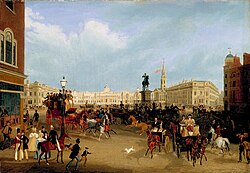
- Duration: 1801 to 1922.
- Formation: Established on January 1, 1801, via the Acts of Union.
- Major Reforms: The Reform Act 1832 and the Slavery Abolition Act 1833.
- Population: 45,221,000 according to the 1911 census.
- Successor State: The United Kingdom of Great Britain and Northern Ireland (renamed in 1927).
- Currency: Pound sterling (and the Irish pound from 1801–1826).
The Early Union and Napoleonic Era (1801–1820)
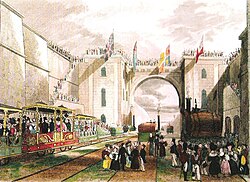
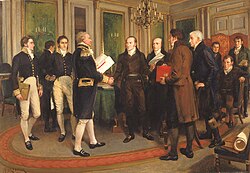
The union of Great Britain and Ireland began under the reign of George III. This period was dominated by the Napoleonic Wars and the War of 1812 against the United States, which concluded with the Treaty of Ghent.
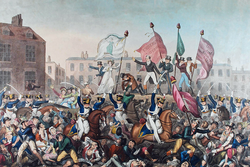
Following the wars, Britain faced internal unrest. The "Ultra Tories" responded to social instability with restrictive measures, most notably the Six Acts. This era of tension was epitomized by the Peterloo Massacre of 1819, where a crowd demanding parliamentary reform was violently dispersed, resulting in 18 deaths and hundreds of injuries.
The Age of Reform (1820–1837)
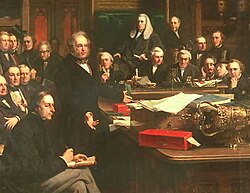
The early 19th century saw a shift toward modernization and social justice. A pivotal moment occurred in 1829 with Catholic emancipation, a victory led by lawyer Daniel O'Connell. This allowed Roman Catholics to sit in Parliament, overcoming the previous objections of George III.
Under Prime Minister Earl Grey and the Whig Party (1830–1834), the state enacted the Reform Act 1832, which fundamentally refashioned the electoral system. Other critical achievements included the restriction of child labor and the update of poor laws.
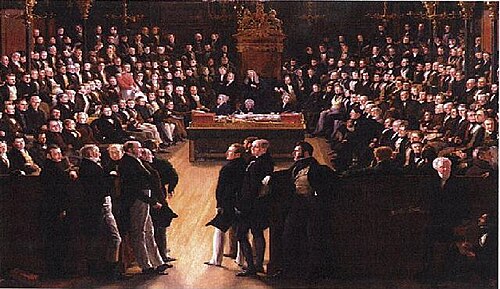
In 1833, the Slavery Abolition Act ended slavery across the Empire. The government paid £20,000,000 to plantation owners to compensate for the loss of their slaves, who were primarily located in the Caribbean sugar islands.
The Victorian Era and Global Expansion
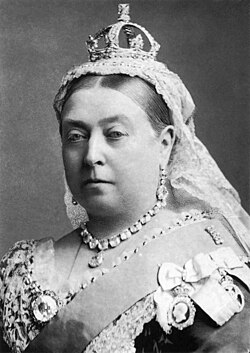
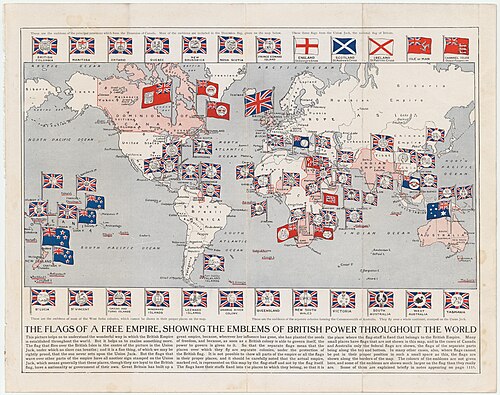
The reign of Queen Victoria (1837–1901) marked a period of immense imperial growth and industrial dominance. Britain adopted a policy of "free trade imperialism," expanding its influence across the globe.
In 1867, Britain consolidated its North American colonies into the Dominion of Canada, granting it self-government and responsibility for its own defense. The latter half of the century also saw the "scramble for Africa," leading to diplomatic tensions such as the Fashoda Incident of 1898 with France.
Political Leadership
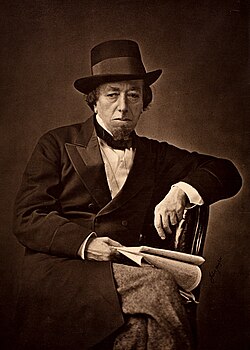
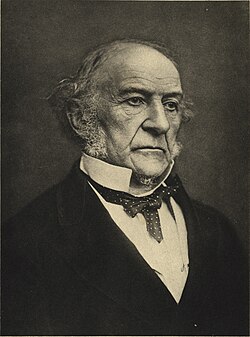
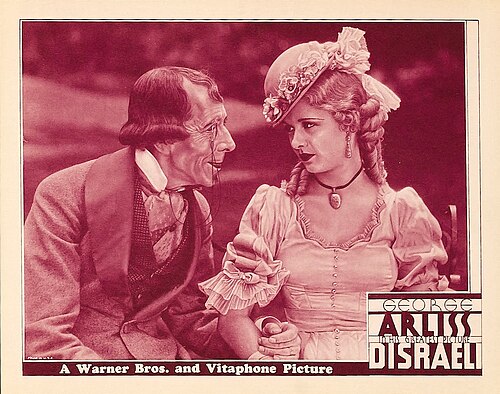
The era was characterized by the rivalry between two towering political figures: Benjamin Disraeli and William Ewart Gladstone. Their differing visions for the empire and domestic morality shaped British policy for decades.
The 20th Century and the Path to Independence
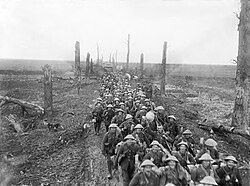
The Edwardian era (1901–1914) transitioned into the catastrophe of the Great War (World War I). Despite the victory, the postwar period was marked by the escalating campaign for Irish Home Rule—the demand for Ireland to have its own devolved government.
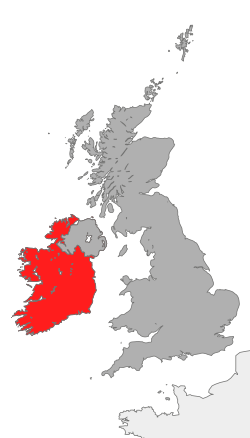
The Irish War of Independence eventually led to the Anglo-Irish Treaty of 1921. In 1922, the Irish Free State was recognized as a dominion. While not fully independent, it ceased to be part of the United Kingdom and was no longer represented in the Westminster Parliament. Six northeastern counties opted out of the Free State and remained part of the Union.
Consequently, the state was renamed the United Kingdom of Great Britain and Northern Ireland via the Royal and Parliamentary Titles Act 1927. This modern state is a direct continuation of the entity that remained after the Irish secession.
Summary of the State (1801–1922)
| Category | Details |
|---|---|
| Official Language | English |
| Government Type | Unitary parliamentary constitutional monarchy |
| First Prime Minister | William Pitt the Younger (1801) |
| Last Prime Minister | Bonar Law (1922) |
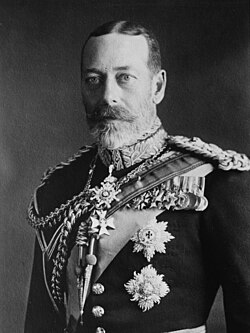
| Key Monarchs | George III, George IV, William IV, Victoria, Edward VII, George V |
| Major Territorial Change | Secession of the Irish Free State (1922) |
Frequently Asked Questions
How was the United Kingdom of Great Britain and Ireland formed?
It was formed on January 1, 1801, through the Acts of Union, which merged the Kingdom of Great Britain and the Kingdom of Ireland.
What was the significance of the Reform Act 1832?
The Reform Act 1832 was a landmark piece of legislation that refashioned the British electoral system, making it more representative and reducing the influence of "rotten boroughs."
How did Britain abolish slavery in its empire?
Slavery was abolished via the Slavery Abolition Act 1833. The government paid £20,000,000 to plantation owners as compensation for the freed slaves, most of whom were in the Caribbean.
What led to the creation of the Irish Free State?
A long-standing desire for self-governance and the subsequent Irish War of Independence led to the Anglo-Irish Treaty of 1921 and the recognition of the Irish Free State in 1922.
Is the modern United Kingdom a new state or a continuation?
The modern United Kingdom is a direct continuation of the state that existed from 1801 to 1922, simply renamed as the United Kingdom of Great Britain and Northern Ireland in 1927 after the secession of the Irish Free State.