United Kingdom Declaration of War on Germany (1939)
On Sunday, September 3, 1939, the United Kingdom officially declared war on Germany. This pivotal moment occurred two days after the German invasion of Poland, marking a critical escalation in global conflict. France followed suit, declaring war on Germany later that same day.
The declaration was delivered to the British public via a radio broadcast by Prime Minister Neville Chamberlain at 11:00 am BST. Chamberlain expressed his deep regret that his efforts to maintain peace had failed, stating that Adolf Hitler could only be stopped by force.
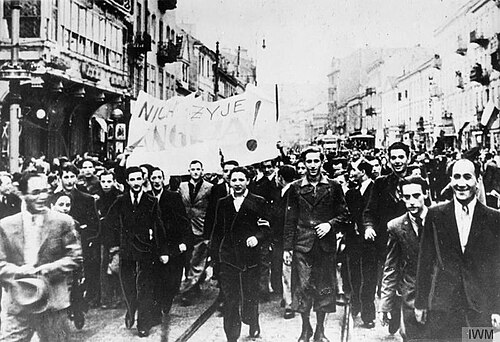
Key Facts
- Date of Declaration: September 3, 1939.
- Trigger Event: The German invasion of Poland on September 1, 1939.
- Key Figures: Prime Minister Neville Chamberlain and Adolf Hitler.
- Allied Response: Both the UK and France honored guarantees to protect Polish independence.
- Immediate Action: The Royal Navy began a naval blockade of Germany on September 4.
The Road to War: Historical Context
The Legacy of World War I
The roots of the 1939 conflict trace back to the end of the First World War. Following the Armistice of November 11, 1918, the Allied powers—primarily Britain, France, the United States, Italy, and Japan—negotiated the terms of peace. This process culminated in the Treaty of Versailles on June 28, 1919.
The Treaty of Versailles imposed severe punitive measures on Germany, including significant military restrictions, the loss of overseas colonies and territory, and heavy war reparations. Germany was also forced to accept primary blame for initiating the war. These burdens led to extreme economic instability; by November 1922, hyperinflation had rendered the German Mark nearly worthless, with one US dollar equaling 4.2 billion Marks.
The Rise of the Third Reich
Following the abdication of the Emperor in 1918, Germany transitioned into the Weimar Republic, a democratic system that faced internal instability and lacked support from the military officer class and civilian elites. This instability paved the way for Adolf Hitler, who was appointed Chancellor on January 30, 1933.
Under Hitler's leadership, the government became a dictatorship via the Enabling Act of 1933. Hitler systematically dismantled the restrictions of the Treaty of Versailles by resuming conscription in 1935 and remilitarizing the Rhineland in 1936. His expansionist agenda continued with the annexation of Austria and the seizure of the Sudetenland (a German-speaking region of Czechoslovakia) in 1938, followed by the full invasion of Czechoslovakia and the acquisition of Memelland in 1939.

The Anglo-Polish Agreement and the Outbreak of War
In response to German aggression, the United Kingdom and France provided guarantees to Poland. On March 31, 1939, Neville Chamberlain informed the House of Commons that the British government would lend all possible support to Poland if its independence were threatened.
When Germany invaded Poland on September 1, the UK issued a final ultimatum demanding the withdrawal of German troops by 11:00 am on September 3. When no such undertaking was received, the state of war was declared.
| Date | Event | Significance |
|---|---|---|
| June 28, 1919 | Treaty of Versailles signed | Imposed punitive terms on Germany after WWI. |
| January 30, 1933 | Hitler appointed Chancellor | Beginning of the Nazi dictatorship in Germany. |
| March 31, 1939 | UK Guarantee to Poland | Commitment to defend Polish independence. |
| September 1, 1939 | Invasion of Poland | Germany attacks Poland, triggering Allied guarantees. |
| September 3, 1939 | UK and France declare war | Official start of the war for the Western powers. |
The Aftermath of the Declaration
Despite the formal declaration, practical assistance to Poland was limited, and the country was quickly defeated. This period of limited land engagement between the major Western powers was later termed the Phoney War.
The geopolitical situation was further complicated on September 17, 1939, when the Soviet Union invaded Poland from the east. While the Polish ambassador, Edward Bernard Raczyński, argued that this constituted aggression by a European power, the British Foreign Secretary, Lord Halifax, maintained that the Anglo-Polish Agreement applied specifically to Germany. Consequently, the UK and France did not declare war on the Soviet Union.
Frequently Asked Questions
Why did the UK declare war on Germany in 1939?
The UK declared war because Germany invaded Poland on September 1, 1939, violating a formal guarantee provided by the British government to protect Polish independence.
What was the "Phoney War"?
The Phoney War refers to the early stages of the conflict where, despite the declarations of war by Britain and France, there was very little actual combat or practical military assistance provided to Poland before its defeat.
How did the Treaty of Versailles contribute to the war?
The treaty imposed harsh economic reparations and military restrictions on Germany, which led to hyperinflation and national resentment. This environment helped Adolf Hitler rise to power by promising to overturn the treaty's terms.
Did the UK declare war on the Soviet Union for invading Poland?
No. The British government, via Foreign Secretary Lord Halifax, determined that their obligations under the Anglo-Polish Agreement were restricted to German aggression, not Soviet aggression.
Who announced the declaration of war to the British public?
Prime Minister Neville Chamberlain announced the state of war via a BBC Home Service radio broadcast at 11:00 am on September 3, 1939.