United Artists: A Century of Cinematic Independence and Evolution
The story of United Artists is more than just a corporate history; it is a saga of artistic rebellion. Founded by some of the most influential figures in early cinema, the studio was conceived as a sanctuary for creators who sought to escape the restrictive grip of the traditional studio system. From its origins as a bold joint venture to its various incarnations under corporate ownership, United Artists has left an indelible mark on global entertainment.
The Birth of Artistic Freedom (1919–1930s)
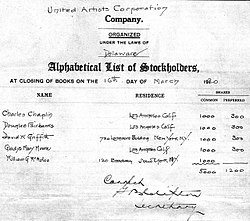
In 1918, the landscape of Hollywood was shifting toward consolidation. Charlie Chaplin, despite his massive success, found his production budgets capped by First National Pictures. Simultaneously, Mary Pickford and Douglas Fairbanks were facing the expiration of their own contracts. Recognizing a coordinated effort by exhibition companies to lock producers into restrictive five-year contracts, the stars decided to take control of their own destinies.
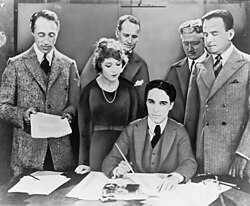
On February 5, 1919, Charlie Chaplin, Mary Pickford, Douglas Fairbanks, and D.W. Griffith incorporated United Artists. This joint venture allowed the founders to maintain creative control over their work. Each of the four founders held a 25% stake in preferred shares and a 20% stake in common shares, with the remaining 20% of common shares held by their advisor, William Gibbs McAdoo.
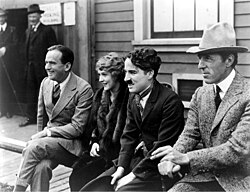
The early years were defined by this spirit of independence. The studio attracted other independent producers such as Walt Disney, Alexander Korda, and David O. Selznick. However, the business dynamics of the 1930s led to a gradual drift of these partners. By the late 1930s, while the company began turning a profit, it faced internal strife, including lawsuits from Samuel Goldwyn and the death of co-founder Douglas Fairbanks in 1939.
The Krim and Benjamin Era (1950s–1960s)
By the early 1950s, United Artists needed a new direction. On February 15, 1951, Arthur B. Krim, Robert Benjamin, and Matty Fox proposed a ten-year takeover plan to Pickford and Chaplin. Their goal was to modernize the studio's operations. With a $3 million loan from 20th Century-Fox president Spyros Skouras, they transformed UA into a powerhouse for independent talent.
The studio saw immediate success with hits like High Noon and The African Queen. As the industry struggled with declining theater attendance in the mid-1950s, the original founders eventually exited; Chaplin sold his shares in 1955 for $1.1 million, and Pickford followed in 1956 for $3 million.
Going Public and Diversifying
United Artists went public in 1957, averaging 50 films a year. The company expanded beyond film, creating the United Artists Records and Music Corporations. In the 1960s, while other mainstream studios declined, UA prospered, winning 11 Academy Awards, including five for Best Picture. A crowning achievement came in 1961 with the release of West Side Story, which earned ten Academy Awards.

The studio also ventured into television, purchasing Ziv Television Programs and producing hits like Gilligan's Island and The Fugitive. This era also saw the birth of legendary franchises. In 1963, UA backed the James Bond series with Dr. No, followed by the Pink Panther series and the Spaghetti Westerns that propelled Clint Eastwood to stardom.
The Transamerica Years and the Oscar Streak (1967–1981)
In 1967, the Transamerica Corporation purchased 98% of UA's stock, introducing a new corporate identity and logo. Despite some financial volatility in the early 1970s, the studio continued to champion new talent, including Woody Allen, Robert Altman, and Sylvester Stallone.

The mid-1970s marked a historic peak for the studio. After other studios passed on One Flew Over the Cuckoo's Nest (1975), UA released it to massive success. This began an unprecedented streak where UA won the Academy Award for Best Picture for three consecutive years: One Flew Over the Cuckoo's Nest, Rocky, and Annie Hall. By this time, the studio had amassed a total of 11 Best Picture wins.
Consolidation, Turmoil, and the MGM Merger
In 1981, Kirk Kerkorian's Tracinda Corp, which also owned Metro-Goldwyn-Mayer (MGM), purchased United Artists. This began a complex period of mergers and acquisitions. In 1986, Ted Turner briefly acquired MGM/UA for $1.5 billion, but due to heavy debt, he was forced to sell the production and distribution assets back to United Artists shortly after.

The late 1980s and early 1990s were characterized by instability. The studio fell under the ownership of Italian financier Giancarlo Parretti, whose tenure was marked by financial chaos and legal battles, eventually leading to a foreclosure by Crédit Lyonnais in 1992. While the studio attempted a revival in the mid-90s with the James Bond and Pink Panther franchises, it remained volatile.

Modern Era and Digital Transition (2000–Present)
Entering the 21st century, MGM began consolidating UA's international operations. Under the leadership of Bingham Ray (2001–2004), the company focused on art-house cinema, distributing acclaimed films such as Bowling for Columbine and Hotel Rwanda.
In 2014, the brand was revived through the United Artists Media Group (UAMG), a partnership involving Mark Burnett and Roma Downey. This entity focused on television and faith-based content, eventually being fully absorbed into MGM's television division in 2015.
Key Facts
- Founded: February 5, 1919, by Charlie Chaplin, Mary Pickford, Douglas Fairbanks, and D.W. Griffith.
- Core Mission: To provide independent filmmakers control over their own creative work and distribution.
- Historic Achievement: First studio to win the Academy Award for Best Picture three years in a row (1975–1977).
- Major Franchises: Launched the James Bond, Pink Panther, and Rocky series.
- Corporate Shifts: Passed through ownership by Transamerica, Tracinda Corp, Ted Turner, and Giancarlo Parretti.
| Era | Primary Leadership/Owner | Key Focus/Achievement |
|---|---|---|
| 1919–1950 | Founding Stars | Artistic independence and founder-led productions. |
| 1951–1966 | Krim & Benjamin | Modernization and rise of independent producers. |
| 1967–1980 | Transamerica Corp | Blockbuster franchises and record-breaking Oscar wins. |
| 1981–1990s | Kerkorian / Turner / Parretti | Mergers with MGM and period of financial instability. |
| 2000–Present | MGM / UAMG | Art-house films and transition to digital/TV media. |
Frequently Asked Questions
Why was United Artists founded?
It was founded to allow filmmakers to escape the restrictive contracts and budget controls of the major studio system, giving creators like Chaplin and Pickford full control over their artistic output.
Which famous franchises started at United Artists?
United Artists was instrumental in launching the James Bond series, the Pink Panther films, and the Rocky franchise.
What was the "three-year streak" of Best Picture wins?
United Artists became the first studio to win the Oscar for Best Picture three years consecutively with One Flew Over the Cuckoo's Nest (1975), Rocky (1976), and Annie Hall (1977).
How did the company's ownership change over time?
Originally a joint venture of four stars, it was later bought by Transamerica Corporation, then by Kirk Kerkorian's Tracinda Corp, and underwent various mergers and acquisitions involving Ted Turner and Giancarlo Parretti before being integrated into MGM.
What happened to the United Artists brand in the 2010s?
The brand was revived as United Artists Media Group (UAMG) in 2014 to focus on television and faith-based content before being fully absorbed into MGM Television in 2015.