Unicameralism: The Structure and Global Prevalence of Single-Chamber Legislatures
Unicameralism (derived from the Latin uni meaning "one" and camera meaning "chamber") refers to a legislative system consisting of a single house or assembly. In this model, the body legislates and votes as a single unit, rather than splitting duties between an upper and lower house. This structure has become increasingly prevalent worldwide, now accounting for nearly 60% of all national legislatures and an even larger proportion of subnational governing bodies.
The transition to a unicameral system occurs in various ways. Some nations, such as Denmark and New Zealand, achieved this by abolishing one of their two existing chambers. Others, like Sweden, merged two chambers into one. In many other cases, a second chamber was simply never established from the onset of the state's governance.
![Countries with a bicameral legislature[6] Countries with a unicameral legislature Countries with a unicameral legislature and an advisory body Countries with no legislature](/images/3f/3a/3f3ad173a28bcc03ed7f014d7e730a2522bddc72ebeea36548c3411187edc2a9.webp)
Key Facts
- Global Reach: Nearly 60% of national legislatures worldwide are unicameral.
- Diverse Adoption: Systems are established through the abolition of a second chamber, the merger of two chambers, or by original design.
- US Exception: Nebraska is the only US state with a unicameral legislature.
- Varied Power: While most unicameral bodies hold legislative power, some (like those in Saudi Arabia or Brunei) are purely advisory.
National Unicameral Legislatures
Unicameralism is found across both federal and unitary states. In federal systems, where power is shared between a central government and regional entities, examples include Germany's Bundestag and Iraq's Council of Representatives. In unitary states, where the central government holds supreme authority, the system is even more widespread.
Federal and Unitary Examples
The size and scope of these bodies vary wildly. For instance, China's National People's Congress is one of the largest with 2,878 seats, while the Vatican City's Pontifical Commission consists of only 8 members. Some bodies, such as the Leadership Council of Afghanistan or the Consultative Assembly of Saudi Arabia, serve a purely advisory role, with ultimate power residing in a Supreme Leader or King.
| Country | Legislative Body | Seats | System Type |
|---|---|---|---|
| Germany | Bundestag | 630 | Federal |
| China | National People's Congress | 2878 | Unitary |
| South Korea | National Assembly | 300 | Unitary |
| Denmark | Folketing | 179 | Unitary |
| Israel | Knesset | 120 | Unitary |
Subnational and Territorial Unicameralism
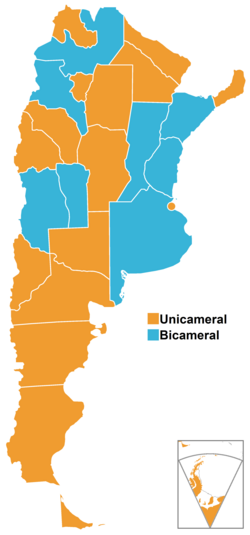
Beyond national governments, unicameralism is the dominant form for regional and local governance. This includes all legislative assemblies in the states of Brazil and provinces of Canada, as well as the Landtage of Germany's states.
In the United Kingdom, devolved governments such as the Scottish Parliament, the Welsh Senedd, and the Northern Ireland Assembly operate as unicameral bodies. Similarly, various autonomous territories—such as Greenland, the Faroe Islands, and Hong Kong—utilize single-chamber systems.
Unicameralism in the United States
The United States is primarily a bicameral nation, but the state of Nebraska stands as a unique exception. The Nebraska Legislature (often called the Unicameral) is the only single-chamber state legislature in the US. It is nonpartisan, officially recognizing no party affiliation, and is the smallest state legislature with 49 members. It was formed in 1937 after the Nebraska House of Representatives was dissolved.
Efforts to introduce unicameralism in other US states have generally failed. In Ohio and Missouri, rural opposition played a significant role; residents in rural communities feared that a single chamber would diminish their political influence. Historical attempts in Pennsylvania during the 18th century also saw a reversal, as conservatives replaced a unicameral system with a bicameral one to limit universal male suffrage and increase the power of the governor.
Historical Transitions
Many nations have shifted between these two systems over time. The United States itself operated under a unicameral Congress from 1781 to 1788 under the Articles of Confederation. Similarly, the Confederate States of America utilized a unicameral Congress during its provisional period (1861–1862).
In the Philippines, the country experienced unicameralism during the First Philippine Republic, the Commonwealth era, and under the 1973 Constitution via the Batasang Pambansa, before returning to its current bicameral structure.
Frequently Asked Questions
What is the difference between unicameralism and bicameralism?
Unicameralism is a system with one legislative chamber, while bicameralism is a system with two separate chambers (typically an upper and lower house).
Why do some countries prefer a unicameral system?
While the source does not detail specific ideological arguments, it notes that many countries have moved toward unicameralism through the abolition or merger of chambers to streamline their legislative process.
Is the Nebraska Legislature truly nonpartisan?
Yes, the Nebraska Legislature is notable for being nonpartisan and does not officially recognize party affiliation for its members.
Are all unicameral legislatures powerful?
No. Some unicameral bodies, such as those in Brunei and Saudi Arabia, are purely advisory, meaning the actual legislative power resides with the monarch.
How common is unicameralism globally?
It is very common, making up nearly 60% of all national legislatures and an even higher percentage of subnational legislatures.