UNHCR: Protecting the World's Forcibly Displaced Populations
The Office of the United Nations High Commissioner for Refugees (UNHCR) is a global United Nations agency dedicated to the protection of refugees, stateless people, and forcibly displaced communities. Headquartered in Geneva, Switzerland, the organization works to ensure that everyone has the right to seek asylum and find safe refuge. Its primary mission is to assist individuals in achieving voluntary repatriation to their home countries, local integration in their host countries, or resettlement to a third country.
As of December 2023, the UNHCR operates with a dedicated workforce of 20,305 staff members across 136 countries, managing complex humanitarian crises in an increasingly volatile global landscape.
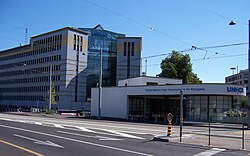
Key Facts
- Established: December 14, 1950.
- Headquarters: Geneva, Switzerland.
- Current Head: Barham Salih (High Commissioner for Refugees).
- Global Reach: Operates in 136 countries with over 20,000 staff.
- Major Donors: The United States, the European Union, and Germany.
- Key Awards: Two-time Nobel Peace Prize winner (1954 and 1981).
Historical Evolution
Early Precursors
The roots of the UNHCR trace back to the Nansen International Office for Refugees, which continued the work of Fridtjof Nansen after 1930. In 1938, James McDonald was appointed as High Commissioner for Refugees Coming from Germany. During his tenure, McDonald helped resettle over 80,000 refugees, primarily to Palestine, though he eventually resigned in protest against the League of Nations' failure to stop the persecution of Jews under the Nuremberg Laws.
Post-War Establishment
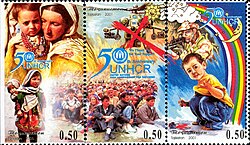
Following World War II, the United Nations General Assembly recognized the need for a permanent body to oversee global refugee issues. The UNHCR was established in December 1949 via Resolution 319 (IV). Interestingly, the agency was originally intended to operate for only three years starting in January 1951, as many member states were hesitant about the implications of a permanent organization.
Mandate and Operational Functions
Persons of Concern
While initially focused on refugees, the UNHCR's mandate has expanded to include other persons of concern. This includes internally displaced persons (IDPs)—individuals who meet the legal definition of a refugee but remain within their own country's borders—and stateless persons, who are not considered nationals by any state.
Core Services and Aid
The agency provides a comprehensive suite of emergency and long-term services, including:
- Emergency relief, shelter, and healthcare.
- Legal protection and advocacy for national and multilateral policies.
- Assistance with resettlement and voluntary repatriation.
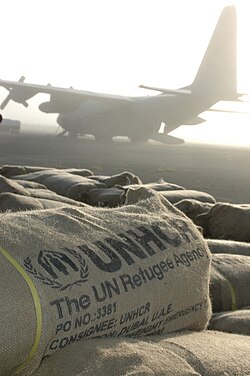
To manage aid distribution efficiently, the UNHCR utilizes ProGres, a database created during the Kosovo War. This system stores biometric data, such as iris scans and fingerprints, for over 11 million refugees. In 2013, the use of biometric verification in Kenya's Kakuma and Dadaab camps helped the World Food Programme eliminate $1.4 million in waste and fraud.
Global Presence and Scale
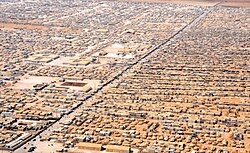
The scale of forced migration has grown dramatically. By June 2020, the UNHCR had over 20 million refugees under its mandate. By the end of 2024, estimates showed 123.2 million people forcibly displaced worldwide due to persecution, conflict, violence, or human rights abuses. Major current missions are concentrated in Lebanon, South Sudan, Chad/Darfur, the Democratic Republic of Congo, Iraq, Afghanistan, and Kenya.
Funding and Transparency
The UNHCR is one of the largest UN agencies by expenditure. Its annual budget grew from a modest US$300,000 in 1951 to US$8.6 billion by 2019. The vast majority of this funding comes from voluntary contributions from member states.
To ensure accountability, the agency publishes data to the International Aid Transparency Initiative (IATI). In the 2024 Aid Transparency Index, the UNHCR received an overall score of 63.4, which is categorized as "good" by Publish What You Fund.
Summary of UNHCR Operations
| Category | Details |
|---|---|
| Legal Status | Nonprofit United Nations Programme |
| Parent Organizations | UN General Assembly & UN Economic and Social Council |
| Staff Count (2023) | 20,305 |
| Primary Funding Source | Voluntary contributions from member states |
| Key Database | ProGres (Biometric verification) |
Frequently Asked Questions
Who does the UNHCR protect?
The UNHCR protects refugees, stateless people, and internally displaced persons (IDPs) who have been forced to flee their homes due to conflict, persecution, or violence.
How is the UNHCR funded?
The agency relies primarily on voluntary contributions from UN member states, with the United States, the European Union, and Germany serving as the largest donors.
What is the difference between a refugee and an IDP?
A refugee is someone who has crossed an international border to escape danger, while an internally displaced person (IDP) has fled their home but remains within their country of origin.
What is the ProGres database?
ProGres is a biometric database used by the UNHCR to track refugee information and verify identities via fingerprints and iris scans to ensure aid reaches the correct recipients and to reduce fraud.
Has the UNHCR received any major awards?
Yes, the agency was awarded the Nobel Peace Prize twice, in 1954 and 1981, as well as the Prince of Asturias Award for International Cooperation in 1991 and the Indira Gandhi Prize in 2015.