UNC Law: A History of Legal Education and Integration
The University of North Carolina (UNC) School of Law stands as a cornerstone of legal education in the American South. From its mid-19th-century origins to its role in the pivotal struggle for civil rights, the institution has evolved from a single professorship into a modern, diverse center for legal scholarship.
The Foundations of Legal Instruction
The journey of UNC Law began on December 12, 1842, when the university's trustees authorized President David L. Swain to establish a law professorship following discussions within the North Carolina legal community. This vision became a reality in 1845 with the appointment of William Horn Battle as the first professor of law.
In the years that followed, the program expanded its academic infrastructure, adding assistant professors, a structured faculty, and a dedicated law library to support its growing student body.
Modernization and Breaking Barriers
The early 20th century marked a period of significant transition. In 1915, Margaret Berry broke gender barriers by becoming the first woman to graduate from the law school. By the 1920s, the institution began aligning itself with the guidelines published by the American Bar Association to adopt the characteristics of a modern law school.
This reorganization was led by University President Harry Woodburn Chase, who pushed for these changes despite notable opposition, including resistance from the governor of North Carolina.
The Struggle for Integration
One of the most defining eras of the school's history occurred in the 1950s. In March 1951, a U.S. Court of Appeals ruled that the state law school for African Americans in Durham was not equal to the facilities at Chapel Hill, ordering UNC to stop excluding Black applicants.
In June 1951, five Black students—Harvey Beech, James L. Lassiter, J. Kenneth Lee, Floyd McKissick, and James Robert Walker Jr.—enrolled, effectively integrating the University of North Carolina at Chapel Hill.
These students faced immense challenges, including racial bias from administration and threats from the Ku Klux Klan that necessitated round-the-clock armed police escorts. While the university chancellor vetoed an integrated Barrister's Ball in 1952, the students often found more support among their peers than within the school's leadership.
Despite these institutional hurdles, Harvey Beech became the first African American graduate of both the law school and UNC-Chapel Hill in June 1952. Later, in 1962, Sylvia X. Allen, a mother of six, became the first Black female student to graduate.
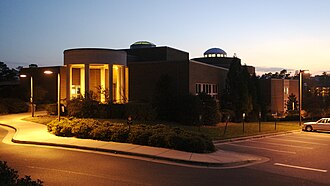
UNC Law in the 21st Century
Today, the law school is a diverse and competitive institution. As of 2023, the school maintains a student-faculty ratio of 8.8 to 1 with a total enrollment of 572 students.
The 2023 entering class of 179 students reflected a broad geographic and demographic reach, including students from 27 U.S. states, the District of Columbia, and Canada. While 60% of the incoming class hailed from North Carolina, students of color represented 32.52% of the group, and 60% of the students were female.
| Category/Year | Key Detail |
|---|---|
| 1845 | William Horn Battle appointed first professor of law |
| 1915 | Margaret Berry becomes first female graduate |
| 1951 | Integration begins with five Black students |
| 1952 | Harvey Beech becomes first Black graduate |
| 1962 | Sylvia X. Allen becomes first Black female graduate |
| 2023 Enrollment | 572 students |
| 2023 Student-Faculty Ratio | 8.8 to 1 |
Key Facts
- Established: Legal instruction began in 1845.
- Integration: Five Black students integrated the school in June 1951 following a U.S. Court of Appeals order.
- Pioneers: Harvey Beech (1952) and Sylvia X. Allen (1962) were the first Black and first Black female graduates, respectively.
- Modern Scale: The 2023 first-year class included 179 students from across North America.
- Diversity: As of 2023, students of color make up 32.52% of the entering class.
Frequently Asked Questions
Who was the first law professor at UNC?
William Horn Battle was named the first professor of law in 1845.
When did UNC Law integrate?
Integration began in June 1951 when Harvey Beech, James L. Lassiter, J. Kenneth Lee, Floyd McKissick, and James Robert Walker Jr. enrolled.
Who was the first African American to graduate from UNC Law?
Harvey Beech became the first African American graduate of the law school and UNC-Chapel Hill in June 1952.
Who was the first woman to graduate from the law school?
Margaret Berry became the first woman to graduate from the law school in 1915.
What is the current student-faculty ratio at UNC Law?
As of 2023, the student-faculty ratio is 8.8 to 1.