Ulsan: The Industrial Powerhouse of South Korea
Ulsan is a city of immense scale and economic significance. Known as the industrial heart of South Korea, it serves as a global hub for manufacturing, energy, and advanced technology. From the world's largest automobile assembly plant to massive shipbuilding yards and petrochemical complexes, Ulsan drives much of the nation's economic momentum. Beyond its heavy industry, the city is evolving into a leader in green energy, pioneering hydrogen-based infrastructure to shape a sustainable future.
Key Facts
- Economic Status: Holds the highest GDP per capita in South Korea (US$ 77,511 as of 2023).
- Industrial Giants: Home to the world's largest automobile assembly plant (Hyundai Motor Company) and the world's largest shipyard (Hyundai Heavy Industries).
- Energy Leader: Features the world's third-largest oil refinery (SK Energy).
- Green Innovation: A pioneer in hydrogen technology, including the development of the Ulsan Green Hydrogen Town.
- Population: Approximately 1,098,421 residents (as of February 2026).
A Global Industrial Leader
Ulsan's economy is defined by its massive industrial capacity. The city is the corporate base for the multinational Hyundai conglomerate and hosts several world-leading facilities. The Hyundai Motor Company operates an assembly plant with an annual capacity of 1.7 million units, a complex inspired by the integrated design of the Ford River Rouge Complex in Michigan.
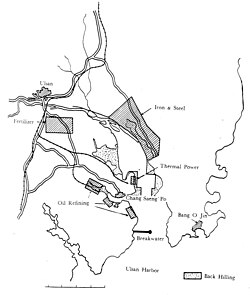
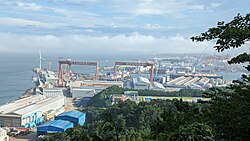
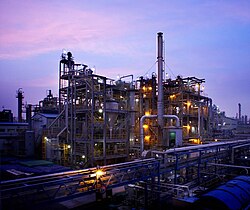
In the maritime sector, the Hyundai Heavy Industries shipyard stands as the largest in the world. Complementing these heavy industries is a robust energy sector. Ulsan is home to the world's third-largest oil refinery, owned by SK Energy, which has a refining capacity of 840,000 barrels per day (BPD). Additionally, S-Oil operates a refinery with a capacity of 669,000 BPD and is currently investing nine trillion won into the Shaheen Project, one of the world's largest petrochemical facilities, expected to be completed by 2026.
The city is also a critical player in the future of battery technology. Samsung SDI operates an advanced car-battery production facility here, with a planned 16 trillion won investment to mass-produce solid-state batteries—a next-generation technology that promises higher energy density and safety.
Pioneering the Hydrogen Economy
Ulsan is actively transitioning toward sustainable energy through the Ulsan Green Hydrogen Town project. This pilot project aims to create a "hydrogen city" by connecting the urban center to a hydrogen power plant. As of late 2024, 188km of underground pipelines have been installed to transport hydrogen produced as a byproduct from petrochemical complexes directly to the city.
The city's commitment to hydrogen began years ago; in 2009, Ulsan built South Korea's first automobile hydrogen charging station. In 2021, the country's first hydrogen ship charging station was established at Jangsaengpo Port. The city even led the way in public transport innovation when it began test operations of the first hydrogen fuel cell taxis in the country in 2016.
Geography and Climate
Located in the Yeongnam region, Ulsan features a monsoon-influenced humid subtropical climate (Köppen classification: Cfa/Cwa). This results in cold, relatively dry winters and hot, humid summers. The warmest months are typically August, with average highs near 30°C (86°F), while January sees mean temperatures around 2.0°C (35.6°F). Precipitation is seasonal, with significant rainfall occurring between April and September.
Culture, Sports, and Tourism
Despite its industrial reputation, Ulsan offers significant recreational and natural attractions. The Ulsan Grand Park is one of the largest urban ecology parks in Korea, offering a massive green space for residents. For nature lovers, the Taehwagang (River) National Garden and the Simnidaesup (10-ri bamboo grove) provide serene environments to observe local wildlife.
Coastal beauty is also a hallmark of the region. Visitors can explore the lush pine forests of Daewangam Park or visit Ganjeolgot Cape, famous as the first place on the Korean peninsula to witness the sunrise. The city also celebrates this event with the annual Ganjeolgot Sunrise Festival on New Year's Day.
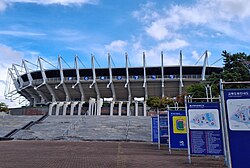
Sports enthusiasts can follow Ulsan HD FC, a premier K League 1 football club. The team plays at the Munsu Stadium, a venue that gained international recognition for hosting matches during the 2002 FIFA World Cup. The club has achieved significant success, being crowned champions of Asia twice in 2012 and 2020.
Administrative Overview
Ulsan is organized into five administrative divisions, consisting of four districts (gu) and one county (gun):
- Buk District
- Dong District
- Jung District
- Nam District
- Ulju County
Ulsan Quick Reference Summary
| Category | Details |
|---|---|
| Country | South Korea |
| Region | Yeongnam |
| Total Area | 1,057.136 km² |
| Population | 1,098,421 (Feb 2026) |
| GDP per capita (2023) | US$ 77,511 |
| Major Industries | Automobiles, Shipbuilding, Petrochemicals, Batteries |
Frequently Asked Questions
What makes Ulsan economically unique in South Korea?
Ulsan is the nation's industrial powerhouse, boasting the highest GDP per capita in the country. It hosts several world-leading industrial facilities, including the world's largest automobile assembly plant and the world's largest shipyard.
Is Ulsan a leader in green energy?
Yes. Ulsan is a pioneer in hydrogen technology, developing the Ulsan Green Hydrogen Town and hosting the country's first hydrogen charging stations for both vehicles and ships.
What is the best time of year to visit Ulsan?
While the city is accessible year-round, visitors may enjoy the warmer months from April to September. Specific festivals, such as the Rose Festival in June or the Ganjeolgot Sunrise Festival on New Year's Day, offer unique cultural experiences.
How is Ulsan connected to the rest of South Korea?
Ulsan is well-connected via the KTX high-speed train network, which links the city to Seoul in just over two hours. Additionally, Ulsan Airport provides regular flights to Seoul and Jeju.
What are the main administrative divisions of Ulsan?
Ulsan is divided into four districts—Buk, Dong, Jung, and Nam—and one county, known as Ulju County.