Ukraine Media and Telecommunications Landscape
The media landscape in Ukraine is a complex ecosystem where modern technology intersects with deep-rooted political and economic influences. While the industry is heavily centralized in Kyiv, with Lviv serving as another significant national hub, the sector is characterized by a high degree of private ownership and a rapid evolution in digital communications.
Key Facts
- Ownership: Most media outlets are privately owned, often linked to wealthy investors or political figures.
- Television: Remains the most popular medium, dominated by large financial holdings.
- Internet: Highly developed and ranked among the fastest in the world as of 2011.
- Cinema: Boasts a rich history of "poetic cinema" and internationally recognized actors.
- Telecommunications: One of the fastest-growing sectors, with mobile penetration reaching 125 phones per 100 people.
Media Ownership and Influence
A defining characteristic of Ukrainian media is the influence of wealthy investors. Many outlets reflect the political and economic interests of their owners, a situation exacerbated by declining advertising revenues. This dependency often hinders editorial independence and leads to the prevalence of jeansa—paid content disguised as legitimate news—particularly during election cycles.
Despite a 2014 bill requiring the disclosure of ownership structures, transparency remains an issue. Major media groups are frequently linked to prominent figures:
- Inter Media Group: Linked to Dmytro Firtash and Serhiy Lyovochkin.
- StarLightMedia: Linked to billionaire Viktor Pinchuk.
- 1+1 Media Group: Associated with Ihor Kolomoyskyi.
- Media Group Ukraine: Controlled by Rinat Akhmetov.
- 5 Kanal: Owned by former President Petro Poroshenko.
Television and Radio Broadcasting
Television is the preferred medium for the Ukrainian public. While the market is fragmented enough to allow for a degree of pluralism, most main channels are owned by financial holdings with strict editorial policies. The National Public Broadcasting Company of Ukraine (UA:PBC) manages public services including UA:Pershyi and UA:Culture.
In response to politically controlled commercial outlets, Hromadske.TV emerged in 2013 as an internet-based alternative, gaining significant traction during the Euromaidan protests. Similarly, Hromadske Radio provides non-commercial broadcasting.
Radio broadcasting, which began officially in Kyiv in 1939, is largely commercial. Most stations are grouped into holdings such as the Business Radio Group, Communicorp Group, Tavr Media, and Ukrainian Media Holding. Most stations focus on music and entertainment, with Era FM serving as a primary talk radio option.
Television Viewership Shares
| Position | Channel | Group | Viewing Share (%) |
|---|---|---|---|
| 1 | 1+1 | 1+1 Media | 10.87% |
| 2 | Channel Ukraine | Media Group Ukraine | 10.80% |
| 3 | ICTV | StarLightMedia | 10.10% |
| 4 | STB | StarLightMedia | 7.78% |
| 5 | Inter | Inter Media Group | 7.35% |
Print Media and Publishing
While over 30,000 periodicals are registered, only a fraction are active. By 2009, approximately 4,000 were operational, consisting of 2,400 newspapers and 1,700 magazines. The market is highly concentrated, with six publishing houses controlling three-quarters of the market by 2010, including foreign entities like Burda-Ukraine and Edipress-Ukraine.
Notable publications include the Kyiv Post (the leading English-language weekly), Ukrayinska Pravda (focused on politics), and national newspapers such as Den and Zerkalo Nedeli. The National News Agency of Ukraine, Ukrinform, has been a staple of the industry since 1918.
Ukrainian Cinema
Ukraine has made significant contributions to global cinema. Pioneers like Alexander Dovzhenko influenced Soviet montage theory, while Sergei Parajanov developed "Ukrainian poetic cinema," a style that diverged from the state-mandated socialist realism.
The industry has produced internationally acclaimed actors such as Milla Jovovich, Olga Kurylenko, and Mila Kunis. The Ukrainian State Film Agency oversees the National Oleksandr Dovzhenko Film Centre and supports festivals like the Odesa International Film Festival and Molodist.
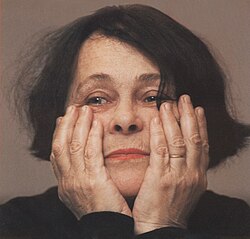
Despite its artistic success, the industry has faced identity struggles regarding Russian and European influences. In 2009, the government banned the screening of movies in the Russian language, a move that caused friction with cinema owners and viewers due to increased dubbing costs.
Telecommunications and the Internet
Telecommunications is one of Ukraine's most modern and fastest-growing economic sectors. The industry has moved toward de-monopolization following the privatization of Ukrtelekom. Mobile connectivity is nearly universal, with a saturation rate of 125 phones per 100 people.
The mobile market is shared primarily between Kyivstar, MTS-Ukraine, and Astelit (life:). The internet sector is equally robust; by 2014, internet penetration reached 43%. In 2011, Ukraine was ranked 8th globally for average download speeds (1,190 kbit/s).
While Freedom House classifies the Ukrainian internet as "Free," the broader news media is considered only "Partly Free." In 2017, the government blocked several Russian servers, including VKontakte and Yandex, citing an information war, a move that met with significant public opposition in online polls.
Frequently Asked Questions
What is "jeansa" in the context of Ukrainian media?
Jeansa refers to paid content that is disguised as objective news. This practice is widespread, particularly during electoral campaigns, and is noted for weakening the credibility of journalists and media outlets.
Who are the primary owners of Ukrainian television?
Most major channels are owned by large financial holdings linked to wealthy individuals (oligarchs), such as Rinat Akhmetov (Media Group Ukraine), Viktor Pinchuk (StarLightMedia), and Ihor Kolomoyskyi (1+1 Media Group).
How does the Ukrainian internet compare to its traditional news media?
According to Freedom House, the internet in Ukraine is rated as "Free," whereas the general news media is rated as "Partly Free," reflecting the higher level of independence found in digital spaces compared to traditional outlets.
What is the status of public broadcasting in Ukraine?
The National Public Broadcasting Company of Ukraine (UA:PBC) operates several channels and radio stations, including UA:Pershyi and UA:Ukrainske radio, aiming to provide public service broadcasting.
Which mobile operators dominate the Ukrainian market?
The market is led by Kyivstar, MTS-Ukraine, and Astelit (TM life:), with Kyivstar holding the largest share of subscribers.