TV Asahi: The Evolution of a Japanese Broadcasting Giant
From its humble beginnings as an educational broadcaster to its current status as a global media powerhouse, TV Asahi has played a pivotal role in shaping the Japanese television landscape. Headquartered in the vibrant Roppongi Hills district of Minato, Tokyo, the network has transitioned through several identities and strategic shifts to become a leader in news, entertainment, and specialized programming.
Key Facts
- Founded: November 1, 1957, as Nippon Educational Television (NET).
- Headquarters: Roppongi Hills, Minato, Tokyo, Japan.
- Network Affiliation: All-Nippon News Network (ANN).
- Major Shareholders: The Asahi Shimbun Company (24.73%) and Toei (17.5%).
- Digital Channel: Channel 24 (Virtual Channel 5).
- Financials: Reported revenue of JP¥324.06 billion for FY 2025.
The Early Years: From Education to Entertainment
The network was established on November 1, 1957, originally known as Nippon Educational Television Co., Ltd. (NET). After a period of test transmissions, the station officially signed on the air on February 1, 1959. In its early days, the broadcaster was bound by strict licensing requirements: 50% of its content had to be educational, 30% cultural, and only 20% entertainment.
To meet these quotas while remaining competitive, NET creatively classified programs like Japanese professional wrestling and golf tournaments as "educational." Similarly, samurai historical dramas were framed as lessons in Japanese history. Despite these constraints, the network began finding its footing in the 1960s by introducing foreign films and pioneering the news-talk format with The Morning Show in 1964.

The Shift to Color and National Reach
By April 1967, NET began broadcasting in color, completing the full transition by 1969. As regional broadcasting expanded across Japan, the network launched the All-Nippon News Network (ANN) on April 1, 1970. This move transformed NET from a local Tokyo station into the fourth national network in Japan, shifting its target audience from primarily women to a broader, family-oriented demographic.


The Transition to TV Asahi
The 1970s marked a turning point for the broadcaster. In November 1973, the Ministry of Posts abolished the requirement for education-focused broadcasting, allowing NET to obtain a general-purpose television license. During this era, The Asahi Shimbun became the largest shareholder, leading to a corporate rebranding. On April 1, 1977, the company was renamed Asahi National Broadcasting Co., Ltd., and the channel became known as TV Asahi.

This era saw the network establish itself as a powerhouse in tokusatsu (special effects) productions and anime. The debut of Himitsu Sentai Gorenger in 1975 laid the groundwork for the legendary Super Sentai franchise, cementing the network's reputation for high-energy action programming.
Growth, Global Ambitions, and Modernization
In the 1980s and 90s, TV Asahi strengthened its news presence with the launch of News Station (1985) and Super J Channel (1997), partnering with international giants like CNN and ABC News. The network also made a bold, albeit controversial, move in 1980 by securing exclusive broadcasting rights for the Moscow Summer Olympics—the first time a private Japanese station had achieved such a feat.

The late 1990s brought a fresh visual identity. In 1996, American designer Tim Girvin created the "Network Symbol" logo to celebrate the completion of the ANN network.

The Roppongi Hills Era
On September 29, 2003, the network moved its head office to Roppongi Hills and officially became TV Asahi Corporation. This move coincided with the transition to digital broadcasting on channel 5. The network saw a significant ratings surge in the mid-2000s, eventually achieving a "Triple Crown" in ratings (primetime, evening, and whole day) between April and June 2012.

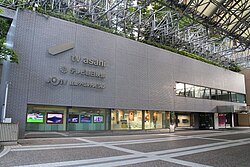
Corporate Profile and Programming
Today, TV Asahi operates as a public company (TYO: 9409) with a diverse portfolio of content ranging from high-profile news to iconic variety shows.
| Category | Details |
|---|---|
| Current Name | TV Asahi Corporation (under TV Asahi Holdings) |
| Key Leadership | Hiroshi Hayakawa (Chairman & CEO), Hiroshi Shinozuka (President) |
| Primary Services | Television Broadcasting |
| Digital Channel | 24 (UHF) / Virtual 5 |
| Major Sports Coverage | FIFA World Cup, NPB Baseball, World Baseball Classic, Olympics |
| Flagship News | Hōdō Station, Super J Channel, Good! Morning |
Frequently Asked Questions
Why was the network originally called Nippon Educational Television?
The network was founded under a license that required it to dedicate the majority of its airtime to educational and cultural programming, which dictated its original name and early content strategy.
What is the All-Nippon News Network (ANN)?
The ANN is the national network of regional affiliated stations that collaborate with TV Asahi to produce and distribute national news and programming across Japan.
Which famous franchises are associated with TV Asahi?
TV Asahi is well-known for broadcasting the Super Sentai and Kamen Rider franchises, making it a central hub for tokusatsu and anime fans.
Where is TV Asahi's current headquarters located?
The headquarters are located in Roppongi Hills, Minato, Tokyo, Japan.
Who are the primary owners of the network?
The largest shareholders are The Asahi Shimbun Company, holding 24.73%, and Toei, holding 17.5%.