Tuxtla Gutiérrez Coat of Arms: History and Symbolism
The municipal coat of arms of Tuxtla Gutiérrez is more than just a civic emblem; it is a visual bridge to the city's pre-Columbian roots. Unlike many municipal symbols in Mexico that follow European heraldic traditions, the imagery of Tuxtla Gutiérrez is deeply tied to its indigenous toponymy—the study of place names—and the historical influence of the Mexica people.
Key Facts
- Origin: Based on pre-Columbian heraldic figures from the era of Mexica control.
- Core Symbolism: A grey rabbit standing on a jawbone with three teeth.
- Meaning: Represents "Tochtlan" (place of an abundance of rabbits) in Náhuatl.
- Current Design: Created by Luis Ernesto Moran Villatoro and officially adopted in 1996.
- Historical References: Similar imagery is found in the Mendocino Codex and the Matriculation of the Aztecan tribute.
The Evolution of the Municipal Emblem
The journey toward a formalized coat of arms began in 1941. Following a suggestion by historian Fernando Castañón Gamboa, the city council, led by Fidel Martínez, adopted figures used during the period of Mexica control. These figures—a rabbit standing upright on a jawbone—were first documented in the Municipal Gazette of Tuxtla Gutiérrez and in Gamboa's scholarly work, Tuchtlan: Documents and unpublished information for the particular history of Tuxtla Gutiérrez.
Between 1941 and 1996, the emblem underwent a period of instability. The design was modified six times, though these changes were never officially ratified by the city council. During this era, the rabbit was occasionally placed inside a shield mimicking royal Spanish blazons. Consequently, the image functioned more as a government logo than a formal civic emblem.
The definitive change occurred on June 20, 1996, when the town hall launched a public competition to redesign the coat of arms. After evaluating 57 sketches submitted by the community, a panel of historians, writers, and painters selected the winning design created by a young boy, Luis Ernesto Moran Villatoro. This version was officially adopted on December 23, 1996.
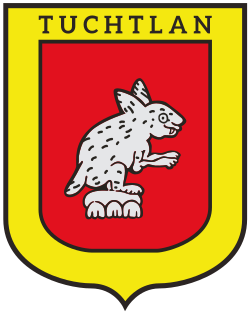
Interpretation of the Blazons
In heraldry, a blazon is the formal description of a coat of arms. The current design of Tuxtla Gutiérrez utilizes specific colors and figures to convey its historical identity:
- The Border: Rendered in gold (heraldic yellow).
- The Field: The background area of the shield is heraldic red.
- The Rabbit: A grey rabbit symbolizing the abundance of the species in the region.
- The Jawbone: A grey upper jawbone with three teeth, which serves as a symbol for an area of abundance.
Together, these elements translate to Tochtlan in Náhuatl, the name given by the Mexicas to the valley surrounding the Zoque settlement. By prioritizing these indigenous symbols over European norms, the coat of arms serves as a permanent reminder of the city's ancestral origins.
| Feature | Detail |
|---|---|
| Primary Figures | Grey rabbit and three-toothed jawbone |
| Field Color | Heraldic Red |
| Border Color | Gold (Heraldic Yellow) |
| Náhuatl Meaning | Tochtlan ("Place of an abundance of rabbits") |
| Official Adoption Date | December 23, 1996 |
| Designer | Luis Ernesto Moran Villatoro |
Frequently Asked Questions
What does the rabbit and jawbone symbolize?
The grey rabbit and the jawbone with three teeth together symbolize "Tochtlan," which means "place of an abundance of rabbits" in Náhuatl. This refers to the natural characteristics of the valley where the city is located.
Who designed the current coat of arms?
The current design was created by Luis Ernesto Moran Villatoro, a young boy who won a public competition organized by the city council in 1996.
Where else can these symbols be found historically?
Similar heraldic figures appear in historical documents such as the Mendocino Codex and the paintings of the Matriculation of the Aztecan tribute.
How does this coat of arms differ from European heraldry?
Unlike traditional European heraldry, which often uses familial or royal symbols, this emblem is based on indigenous toponymy and pre-Columbian figures, specifically those from the Mexica period.
When was the first version of the coat of arms proposed?
The first version was proposed in 1941 by historian Fernando Castañón Gamboa and adopted by the city council presided over by Fidel Martínez.