Tulcea: The Historic Gateway to the Danube Delta
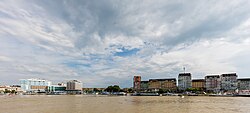
Located in the heart of Northern Dobruja, Tulcea is a city of profound historical depth and strategic importance. As the administrative center of Tulcea County and one of only six Romanian county seats situated along the river Danube, it serves as a vital link between the interior of Romania and the Black Sea. With a population of 65,624 as of 2021, the city blends ancient ruins with modern municipal life, offering a unique glimpse into the diverse cultures that have shaped the region.
From its origins as an Iron Age settlement to its role as a Roman military stronghold and an Ottoman trade hub, Tulcea has always been defined by its geography. Its position on the Danube has made it a prize for empires and a sanctuary for diverse ethnic groups, including Romanians, Lipovans, Turks, and Greeks.
Key Facts
- Location: Northern Dobruja, Romania, on the banks of the Danube.
- Ancient Name: Founded in the 7th century BC as Aegyssus.
- Population: 65,624 (2021 Census).
- Climate: Transitional between continental and temperate (Köppen Dfa/Cfa).
- Key Landmarks: Monument of Independence, Azizyie Mosque, and the ruins of Aegyssus.
- Administrative Role: Capital of Tulcea County.
A Journey Through History
Ancient Foundations and the Roman Era
Tulcea was founded in the 7th century BC under the name Aegyssus. According to local tradition recorded by Ovid, the city was named after a mythical founder, Aegisos the Caspian. Its high hill provided a strategic vantage point for guarding the Danube, a feature that became critical during the Roman period.
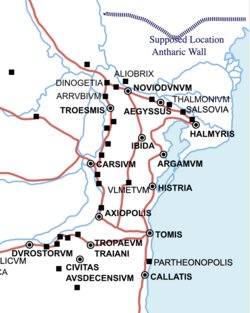
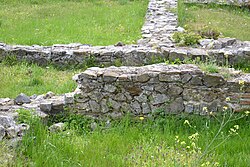
Following the conquest of the town after Getic raids (12–15 AD), the Romans established a new city. By the 2nd century AD, Aegyssus was integrated into the Moesian Limes—a defensive frontier system—serving as both a military fort and a port for the Classis Flavia Moesica. Archaeological evidence, including baths built at the end of the 1st century AD and a large palaestra (exercise ground), highlights the city's sophistication. The town hosted various military units, including the cohors II Flavia Brittonum from Britain, before being destroyed by Hun invasions in the 5th century and later rebuilt under Justinian I.
The Middle Ages and Ottoman Influence
After the downfall of the Danubian limes and attacks by Avars and Slavs in the 7th century, the town was largely abandoned. However, the Byzantines reconquered the region in the 10th century, establishing a fort that was briefly destroyed by the Uzes in 1064. By the 14th century, a larger settlement emerged, leading into the era of Ottoman rule, which began around 1420 and lasted for four centuries.
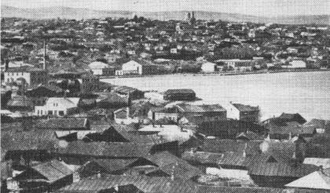
By 1506, the city appeared in Ottoman customs records under its modern name, Tulcea, described as an important center for transit trade. In the mid-19th century, it evolved into a shipyard city and was granted city status in 1860. During this period, it served as a sanjak center within the Silistre Eyaleti and later the Tuna Vilayeti.
Modern Era and Romanian Integration
The late 19th century was a period of intense conflict. During the Russo-Turkish War (1877–1878), the region saw significant strife between Muslim Circassians—who had settled there in 1864—and Christian populations. Interestingly, the wealth gained by Circassian raids indirectly funded the construction of the Azizyie Mosque and the modern Tulcea Art Museum. Following the Congress of Berlin in 1878, Tulcea was officially awarded to Romania.
The 20th century brought further turbulence, including occupation by the Central Powers from 1916 to 1918 during World War I. During this time, a statue of Mircea the Elder was removed by Bulgarian troops due to the historical incorporation of Dobruja into Wallachia under his reign.
Geography and Climate
Tulcea experiences a transitional climate, blending continental and temperate characteristics. This results in hot summers and cold winters. On average, the city sees about 79.5 days per year where minimum temperatures drop below 0°C, with snow cover lasting approximately 27.6 days annually.
| Metric | Winter (Jan) | Summer (July) | Annual Average |
|---|---|---|---|
| Mean Daily Max (°C) | 3.9 | 29.7 | 17.2 |
| Mean Daily Min (°C) | -3.3 | 17.6 | 7.1 |
| Average Precipitation (mm) | 35.3 | 58.0 | 494.2 |
| Sunshine Hours | 80.9 | 339.7 | 2,370.8 |
Culture and Landmarks
Tulcea is a center for both history and the arts. The George Georgescu Contest, an annual music competition established in 1992, honors the conductor George Georgescu and attracts international students to the city's Arts High School.
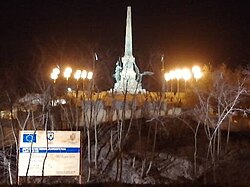
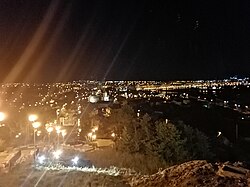
One of the most prominent landmarks is the Monument of Independence. This obelisk, featuring statues of an eagle and a soldier, commemorates the War of Independence that brought Dobruja into Romania. Located on a hill alongside the history museum and the ruins of Aegyssus, it provides a panoramic view of the city.
Frequently Asked Questions
What is the historical significance of Aegyssus?
Aegyssus was the ancient name of Tulcea, founded in the 7th century BC. It served as a strategic Roman military fort and trading port, guarding the Danube frontier as part of the Moesian Limes.
Who is the Monument of Independence dedicated to?
The monument commemorates the War of Independence, which resulted in the region of Dobruja becoming part of Romania. Its construction began on October 17, 1879, in the presence of Prince Carol I.
What is the ethnic composition of Tulcea?
As of 2021, the majority of the population is Romanian (74.83%), with significant minorities including Lipovans (1.9%), Roma (1.57%), and Turks (0.67%).
What is the George Georgescu Contest?
It is an annual international music competition held since 1992, named after the influential Romanian conductor George Georgescu, who was born in Tulcea county.
How does the climate in Tulcea behave?
Tulcea has a transitional climate with cold winters (averaging 79.5 days below 0°C) and hot summers, with July seeing mean daily maximums of 29.7°C.