Trudeaumania and the Rise of Pierre Elliott Trudeau
In the late 1960s, Canada experienced a political phenomenon known as Trudeaumania. This surge of public enthusiasm centered on Pierre Elliott Trudeau, an energetic and nonconformist figure who captured the imagination of a generation. To many, especially young people and women influenced by the 1960s counterculture, Trudeau represented a modern, "hip and happening" alternative to the traditional political establishment.
Trudeau's appeal was rooted in his persona as a "swinger"—a term used at the time to describe someone modern and socially liberated. His charm, good looks, and celebrity relationships made him a magnet for media attention, often resulting in him being stopped in the streets for photographs and autographs.
The Ideological Roots of a Nonconformist
Beyond his celebrity status, Trudeau brought a distinct ideological perspective to Canadian politics. He had previously sympathized with Marxists and spent time with the Cooperative Commonwealth Federation, a democratic socialist party. This background informed his culturally liberal approach to governance.
While serving as Justice Minister under Prime Minister Lester B. Pearson, Trudeau implemented several landmark reforms, including the legalization of homosexuality and the creation of more flexible laws regarding divorce and abortion. These stances solidified his image as a symbol of generational change and social progress.
The Path to Power: 1968
When Prime Minister Pearson announced his retirement, Trudeau entered the race for the Liberal leadership. His campaign was characterized by high energy and widespread media coverage. On April 6, Trudeau secured the leadership on the fourth ballot, winning the support of 51 percent of the delegates.
After being sworn in as prime minister on April 20, Trudeau called an election for June 25. A defining moment of the campaign occurred during the Saint-Jean-Baptiste Day parade in Montreal. Despite rioting Quebec separatists throwing bottles and rocks at the grandstand, Trudeau refused to take cover, remaining in his seat with visible courage. This act of defiance deeply impressed the Canadian public.
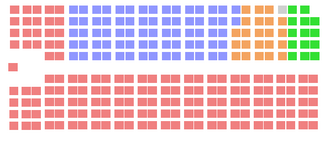
The result was a landslide victory. The Liberals won a comfortable majority government, marking the party's first majority win since 1953.
Legacy and Political Polarization
The intensity of Trudeaumania began to fade in the early 1970s as the country faced economic challenges, including rising unemployment and inflation. In the 1972 election, Trudeau lost his majority and was forced to lead a minority government.
Despite these fluctuations, Trudeau's influence on Canada was profound. He served a total of 15 and a half years as prime minister across two periods (1968–1979 and 1980–1984), securing additional majority governments in 1974 and 1980.
Trudeau remains one of Canada's most polarizing figures. While fondly remembered by many in Central and Eastern Canada, he was deeply unpopular among nationalists and conservatives. This was particularly evident in Alberta, where his National Energy Policy (1980–85) fueled a renewal of western alienation.
| Period | Duration | Government Type |
|---|---|---|
| 1968–1979 | 11 Years | Majority (1968, 1974) / Minority (1972) |
| 1980–1984 | 4.5 Years | Majority (1980) |
Key Facts
- Trudeaumania: A period of intense public fascination with Pierre Trudeau during the late 1960s.
- Political Milestone: Led the Liberals to their first majority government since 1953 in the 1968 election.
- Social Reforms: Legalized homosexuality and liberalized abortion and divorce laws as Justice Minister.
- Total Tenure: Served as Prime Minister for 15.5 years.
- Recognition: Named the Canadian Newsmaker of the 20th Century by the Canadian Press.
- Cultural Impact: Inspired the 1980s political satire board game "True Dough Mania."
Frequently Asked Questions
What was Trudeaumania?
Trudeaumania was a social phenomenon in the late 1960s where Pierre Trudeau became a celebrity-like figure, attracting massive support from young Canadians who viewed him as a symbol of modernism and generational change.
How did Trudeau handle the Quebec separatist riots in Montreal?
During the Saint-Jean-Baptiste Day parade, Trudeau refused to leave his seat or take cover while rioters threw rocks and bottles at him, demonstrating a courage that resonated with the Canadian electorate.
Why was Trudeau unpopular in Western Canada?
Trudeau was viewed as an adversary in the west, particularly in Alberta, due to the implementation of the National Energy Policy between 1980 and 1985, which increased western alienation.
What were some of Trudeau's early legal contributions?
As Justice Minister under Lester B. Pearson, he was responsible for legalizing homosexuality and creating more flexible laws for divorce and abortion.
How is Pierre Trudeau ranked in Canadian history?
He was named the Canadian Newsmaker of the 20th Century by the Canadian Press and was voted the third-Greatest Canadian by CBC viewers in 2004.