Tropics: Geography, Climate, and the Vital Ecosystems of the Equatorial Zone
The tropics represent the Earth's equatorial belt, a unique region where the Sun can shine directly overhead. This distinguishes the tropical zone from the temperate and polar regions, where the Sun's rays never reach a vertical position. Because of the Earth's axial tilt—the angle at which our planet leans as it orbits the Sun—the width of the tropics is twice that tilt, creating a vast band of high solar energy.
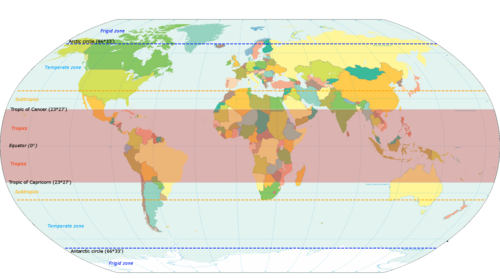
Due to the high angle of solar radiation throughout the year, the tropics receive more solar energy than any other region, resulting in the highest temperatures on the planet. Interestingly, because the Sun remains relatively close to the zenith (the point directly overhead) year-round, these regions experience the lowest seasonal temperature variations. In many tropical areas, the traditional distinction between "winter" and "summer" is less about temperature and more about variations in precipitation.
Key Facts
- Geographic Boundaries: Defined by the Tropic of Cancer (23.4° N) and the Tropic of Capricorn (23.4° S).
- Surface Area: The tropics cover 39.8% of Earth's surface and 36% of its landmass.
- Population: As of 2014, 40% of the world's population lived in the tropics, a figure projected to reach 50% by 2050.
- Climate Drivers: Seasonal changes are primarily driven by rainfall patterns rather than temperature shifts.
- Biodiversity: The region contains highly diverse ecosystems, including rainforests, savannahs, and deserts.
Astronomical and Geographic Definitions
The boundaries of the tropics are determined by the Earth's axial tilt, which is currently approximately 23.4°. The northern boundary is the Tropic of Cancer, and the southern boundary is the Tropic of Capricorn. These lines mark the maximum latitudes where the Sun can appear directly overhead at least once during the solar year.
![Relationship of Earth's axial tilt (ε) to the tropical and polar circles: the Tropic of Cancer is a subsolar point only at the June solstice, and the Tropic of Capricorn is only at the December solstice[9]](/images/88/a3/88a3613caa36887f27407b17bcc36c039f3bf2bb9089cfd517813afe3e64f6f9.webp)
The term "tropic" is derived from the Ancient Greek word tropē, meaning "to turn" or "change direction." This refers to the points where the Sun's path appears to reverse direction relative to the celestial equator. While the names were historically linked to constellations like Cancer and Capricorn, the precession of the equinoxes means the Sun's overhead position now occurs against different stellar backdrops.
Climate Patterns and Seasonal Variations
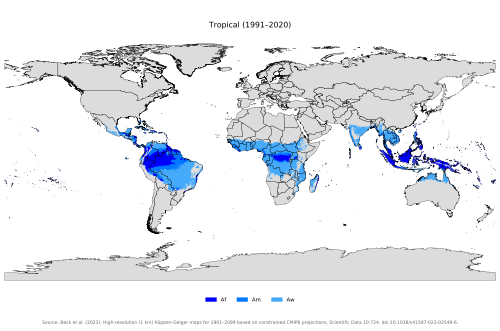
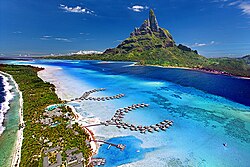
Tropical climates are characterized by diverse environments, ranging from lush rainforests and monsoons to arid deserts and high-altitude snow-capped mountains. Many areas follow a cycle of wet and dry seasons. Under the Köppen climate classification, a tropical wet season is defined by months receiving 60 mm (2.4 in) or more of average precipitation.
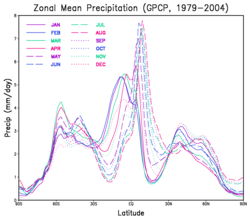
The movement of the Intertropical Convergence Zone (ITCZ)—a belt of low pressure near the equator—plays a critical role in these patterns. When the wet season coincides with the warm season, heavy rainfall often occurs in the late afternoon. While this moisture supports massive vegetation growth and improves freshwater quality, it can also lead to flooding, soil erosion, and an increased incidence of diseases like malaria.
Diverse Tropical Landscapes
It is a common misconception that the entire tropical zone is a rainforest. In reality, much of the geographic tropics is classified as "dry" (arid or semi-arid), including the Sahara Desert, the Atacama Desert, and the Australian Outback. Furthermore, high-altitude regions like the Andes or Mount Kilimanjaro provide alpine tundra environments within these latitudes.
Ecosystems and Biodiversity
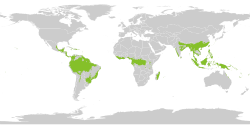
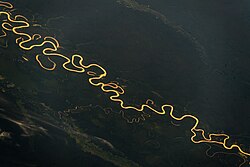
Tropical ecosystems are among the most biodiverse on Earth. Biogeographers divide these regions into the Paleotropics (Africa, Asia, and Australia) and the Neotropics (the Caribbean, Central America, and South America). Together, they are often referred to as the Pantropic region.
Rainforests, such as the Amazon, are famous for their high levels of species endemism—where species are found nowhere else on Earth. However, these ecosystems are often fragile; tropical soils can be low in nutrients, making them particularly vulnerable to damage from techniques like slash-and-burn agriculture.
Notable Tropical Flora
The tropics are home to a vast array of plants, many of which are essential to global agriculture and ecology. Notable examples include:
- Fruits: Banana, coconut, papaya, mango, avocado, and cacao.
- Trees: Bamboo, rubber trees, and various palm species.
- Exotics: Orchids, bird of paradise flowers, and the giant water lily, which can support up to 32 kilograms of weight.
Climate Change and the Future of the Tropics
The tropics are facing significant challenges due to global warming. While natural variability like the El Niño-Southern Oscillation (ENSO) causes fluctuations, the long-term trend shows a warming of 0.7–0.8 °C over the last century. Climate models predict further warming of 1–2 °C by 2050. These changes are causing tropical weather patterns to expand into subtropical areas, leading to more intense storms and heatwaves, which may eventually render certain parts of the tropics uninhabitable.
Summary of Tropical Characteristics
| Feature | Description |
|---|---|
| Latitudinal Range | Approximately 23.4° N to 23.4° S |
| Primary Energy Source | High direct solar radiation |
| Main Seasonal Driver | Precipitation (Wet vs. Dry seasons) |
| Major Ecosystems | Rainforests, Savannahs, Deserts, and Monsoons |
| Biogeographic Divisions | Paleotropics and Neotropics |
Frequently Asked Questions
What defines the boundaries of the tropics?
The tropics are bounded by the Tropic of Cancer in the North and the Tropic of Capricorn in the South, which correspond to the Earth's axial tilt.
Are all tropical regions hot and rainy?
No. While many are hot and wet, the tropics also include arid deserts like the Sahara and high-altitude snow-capped mountains.
What is the difference between the Paleotropics and Neotropics?
The Neotropics include the Caribbean, Central America, and South America, while the Paleotropics encompass Africa, Asia, and Australia.
How does climate change affect the tropics?
Climate change is causing warming and expanding tropical weather conditions into subtropical zones, leading to more extreme heatwaves and intense storms.
Why is rainfall more important than temperature in the tropics?
Because the Sun remains high in the sky year-round, temperature variation is minimal; therefore, the distinction between seasons is primarily defined by changes in precipitation.