Trinity College Master: History, Role, and Legacy
At the heart of the University of Cambridge lies Trinity College, an institution defined by its academic prestige and storied leadership. The college is headed by the Master, a pivotal figure who oversees general operations and serves as the primary representative of the college to the wider world.
The role of the Master is one of both tradition and administration. Officially appointed by the monarch based on the college's recommendation, the Master presides over the governing body and the college council. While executive powers are limited, the Master plays a crucial role as an ambassador for global development and maintains vital relationships with students and alumni.
Key Facts
- Founded: 1546 by Henry VIII through the merger of Michaelhouse and King's Hall.
- First Master: John Redman.
- Current Appointment: Sir David Baulcombe (appointed June 15, 2026).
- Term Limit: Currently a fixed term of up to eight years.
- Residence: The Grade I listed Master's Lodge in Great Court.
- Notable Architecture: Great Court, Nevile's Court, and Whewell's Court.
The Evolution of the Mastership
Since its inception, the requirements for becoming the Master have shifted. Historically, candidates were required to hold a degree from the University of Cambridge and were typically members of Trinity College. Statutes once limited the tenure of the office to an age of 70 or 75, as determined by the fellows.
In modern times, these restrictions have evolved. There is no longer a mandatory requirement to have studied at Trinity or Cambridge, although recent appointees have consistently been distinguished academics. Regardless of the individual's gender, the title remains "the master" for historical reasons.
Throughout its history, there have been 40 appointments to the position. Some figures stand out for their longevity or controversy; for instance, William Bill served twice (1551 and 1558), while Richard Bentley holds the record for the longest tenure, serving from 1700 until 1741. Bentley's term was marked by a 30-year feud with the fellows, during which he faced criminal charges and had his university degree rescinded between 1718 and 1724.
The Master's Lodge and Royal Traditions
The Master resides in the Master's Lodge, a Grade I listed building located in Great Court. Built in 1554, the lodge is a blend of historical preservation and architectural expansion. The entrance hall features 16th-century panelling, while the drawing room is adorned with a plaster ceiling dating back to the late 15th century.
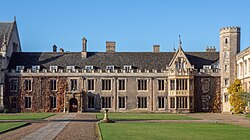
The building has undergone several significant updates. Between 1841 and 1843, Anthony Salvin renovated the façade facing Great Court. Later, in 1892, architect Arthur Blomfield added a west wing to provide private accommodation, allowing the historic rooms to be used for public functions. The lodge also serves as the official royal residence for visits to the university, featuring a state bedroom specifically refurbished for the 1843 visit of Queen Victoria and Prince Albert.
Architectural Contributions of the Masters
Many Masters have left a physical mark on the college's landscape. Thomas Nevile, who took office in 1593, was responsible for remodelling much of the college. He cleared space to create the Great Court, which is widely considered the largest enclosed courtyard in Europe. Nevile also provided the funds for the construction of Nevile's Court upon his death.
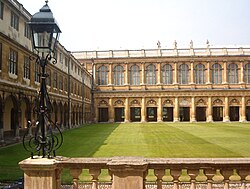
Further developments occurred in the late 17th century under Master Isaac Barrow, who commissioned Christopher Wren to develop Nevile's Court, resulting in the creation of the renowned Wren Library.
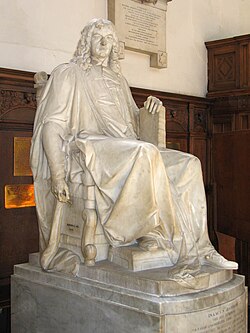
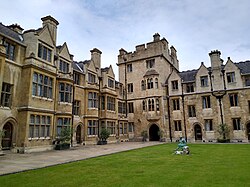
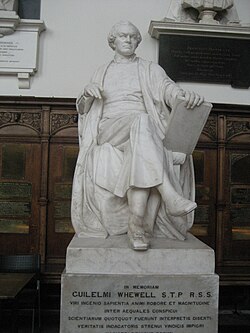
In the 1860s, William Whewell funded the construction of Whewell's Court, consisting of two neo-Gothic courts situated opposite Trinity Street.
Summary of Trinity College Leadership and Landmarks
| Category | Details |
|---|---|
| Founding Year | 1546 |
| Founding Monarch | Henry VIII |
| Current Master | Sir David Baulcombe (since 2026) |
| Previous Master | Dame Sally Davies |
| Key Residences | Master's Lodge (Grade I listed) |
| Major Courtyards | Great Court, Nevile's Court, Whewell's Court |
Frequently Asked Questions
Who is the current Master of Trinity College?
Sir David Baulcombe was appointed as the 40th Master of Trinity College on June 15, 2026, succeeding Dame Sally Davies.
How is the Master of Trinity College appointed?
The Master is officially appointed by the British monarch following a recommendation made by the college.
What are the current requirements to become the Master?
There is no longer a requirement to have studied at Trinity College or the University of Cambridge, though recent masters have typically been distinguished academics. The role is now held for a fixed term of up to eight years.
What is the significance of the Master's Lodge?
The Master's Lodge is a Grade I listed building that serves as the Master's residence and the official royal residence when the monarchy visits the university.
Which Master contributed most to the college's physical layout?
Thomas Nevile significantly remodelled the college, clearing the space for the Great Court and funding the construction of Nevile's Court.